storia

#DizzyGillespie

John Birks “Dizzy” Gillespie (Cheraw, 21 ottobre 1917 – New York, 6 gennaio 1993) è stato un trombettista, pianista e compositore statunitense. Jazzista, fu anche cantante, percussionista e bandleader. Con Charlie Parker fu, negli anni quaranta, uno degli inventori e delle figure chiave del bebop e del jazz moderno.

John BirksDizzyGillespie (/ɡɨˈlɛspi/; October 21, 1917 – January 6, 1993) was an American jazz trumpeter, bandleader, composer and occasional singer.

Allmusic’s Scott Yanow wrote, “Dizzy Gillespie’s contributions to jazz were huge. One of the greatest jazz trumpeters of all time (some would say the best), Gillespie was such a complex player that his contemporaries ended up copying Miles Davis and Fats Navarro instead, and it was not until Jon Faddis’s emergence in the 1970s that Dizzy’s style was successfully recreated […] Arguably Gillespie is remembered, by both critics and fans alike, as one of the greatest jazz trumpeters of all time.”

Gillespie was a trumpet virtuoso and improviser, building on the virtuoso style of Roy Eldridge but adding layers of harmonic complexity previously unknown in jazz. His beret and horn-rimmed spectacles, his scat singing, his bent horn, pouched cheeks and his light-hearted personality were essential in popularizing bebop.[citation needed]

In the 1940s Gillespie, together with Charlie Parker, became a major figure in the development of bebop and modern jazz. He taught and influenced many other musicians, including trumpeters Miles Davis, Jon Faddis, Fats Navarro, Clifford Brown, Arturo Sandoval, Lee Morgan, Chuck Mangione, and balladeer Johnny Hartman

John Birks « Dizzy » Gillespie, né à Cheraw (en) en Caroline du Sud le 21 octobre 1917, mort le 6 janvier 1993 à Englewood, New Jersey, est un trompettiste, compositeur et chef d’orchestre de jazz américain de jazz américain.

Avec Miles Davis et Louis Armstrong, il est considéré comme l’un des trois plus importants trompettistes de l’histoire du jazz, ayant participé à la création du style Bebop et contribué à introduire les rythmes latino-américains dans le jazz.

Dizzy Gillespie se distinguait en particulier par sa trompette au pavillon incliné vers le haut, il jouait parfois avec une sourdine. Ses joues gonflées à bloc comme celles d’un crapaud, ainsi que sa joie de vivre et son humour ravageur sont pour beaucoup dans sa popularité auprès du public. En tant que musicien, il avait une technique époustouflante et une vitesse de jeu impressionnante.

John Birks Gillespie (Cheraw, Carolina del Sur, Estados Unidos, 21 de octubre de 1917 – Englewood, Nueva Jersey, 6 de enero 1993), más conocido como Dizzy Gillespie, fue un trompetista, cantante y compositor estadounidense de jazz

Gillespie, con Charlie Parker, fue una de las figuras más relevantes en el desarrollo del bebop, y del jazz moderno. Fue durante toda su vida un incansable experimentador de música afroamericana, lo que le llevó a experimentar con el jazz afrocubano, colaborando con percusionistas como Chano Pozo, y otros géneros como el calipso, la bossa nova o a colaborar con músicos externos al mundo del jazz, como Stevie Wonder.
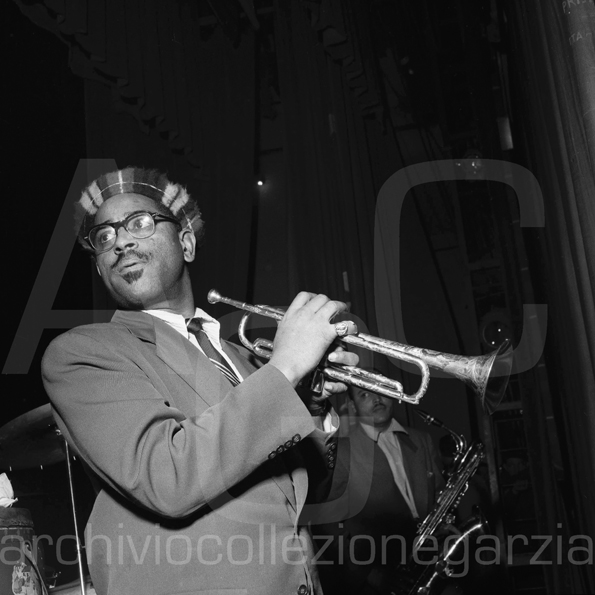
dizzy gillespie b0823011 W

#AnnaMagnani

1954

AnnaMagnani (Roma, 7 marzo 1908 – Roma, 26 settembre 1973) è stata un’attrice italiana.

È considerata una delle maggiori interpreti femminili della storia. Attrice simbolo del cinema italiano, è altresì particolarmente conosciuta per essere stata, insieme ad Aldo Fabrizi e Alberto Sordi, una delle figure preminenti della romanità cinematografica del XX secolo.

Celebri le sue interpretazioni, soprattutto in film come Roma città aperta, Bellissima, Mamma Roma e La rosa tatuata. Quest’ultimo le valse un Oscar alla miglior attrice protagonista.
Associazione Amici di Anna Magnani Anna Magnani

-Anna Magnani (Italian pronunciation: [ˈanna maɲˈɲaːni]; 7 March 1908 – 26 September 1973) was an Italian stage and film actress. She won the Academy Award for Best Actress, along with four other international awards, for her portrayal of a Sicilian widow in The Rose Tattoo.

-Anna Magnani, née le 7 mars 1908 à Rome (province du Latium, Italie) et morte le 26 septembre 1973 dans la même ville, est une actrice italienne.

anna magnani 1954-007 W

#GeorgeSimenon

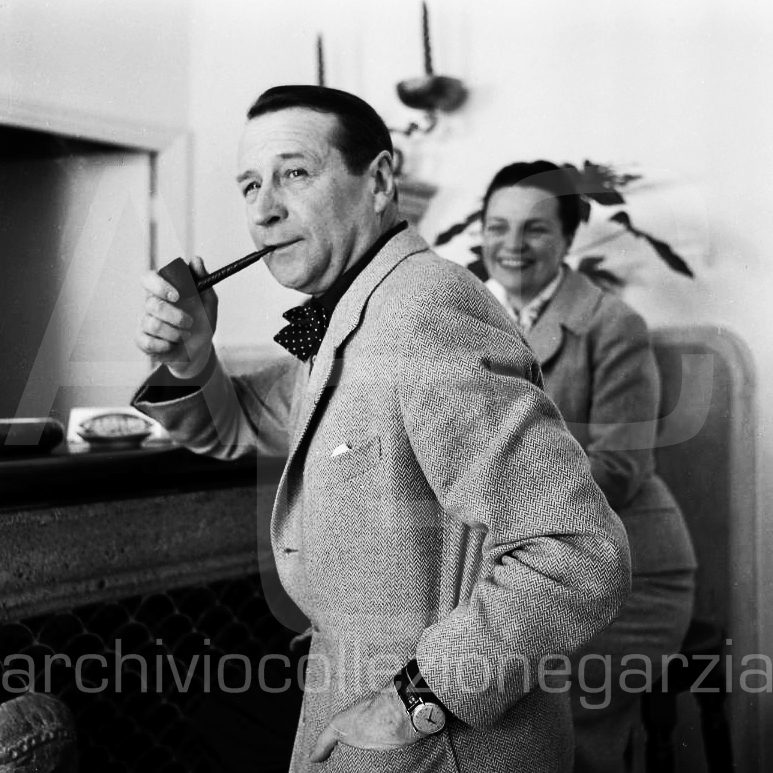
Georges Joseph Christian Simenon (Liegi, 13 febbraio 1903 – Losanna, 4 settembre 1989) è stato uno scrittore belga di lingua francese, autore di numerosi romanzi, noto al grande pubblico soprattutto per avere inventato il personaggio di Jules Maigret, commissario di polizia francese.

Tra i più prolifici scrittori del XX secolo, Simenon era in grado di produrre fino a ottanta pagine al giorno. A lui si devono centinaia di romanzi e racconti, molti dei quali pubblicati sotto diversi pseudonimi. La tiratura complessiva delle sue opere, tradotte in oltre cinquanta lingue e pubblicate in più di quaranta Paesi, supera i settecento milioni di copie[1]. Secondo l’Index Translationum, un database dell’UNESCO che raccoglie tutti i titoli tradotti nei Paesi membri, Georges Simenon è il sedicesimo autore più tradotto di sempre[2] e il terzo di lingua francese dopo Jules Verne e Alexandre Dumas (padre).

Georges Simenon est un écrivain belge francophone né à Liège (Belgique), officiellement, le 13 février 19031 et mort à Lausanne (Suisse) le 4 septembre 1989.

L’abondance et le succès de ses romans policiers (notamment les « Maigret ») éclipsent en partie le reste d’une œuvre beaucoup plus riche.

Simenon est en effet un romancier d’une fécondité exceptionnelle : on lui doit 193 romans, 158 nouvelles, plusieurs œuvres autobiographiques et de nombreux articles et reportages publiés sous son propre nom et 176 romans, des dizaines de nouvelles, contes galants et articles parus sous 27 pseudonymes. Il est l’auteur belge le plus lu dans le monde.

Georges Joseph Christian Simenon (French: [ʒɔʁʒ simnɔ̃]; 13 February 1903 – 4 September 1989) was a Belgian writer. A prolific author who published nearly 200 novels and numerous short works, Simenon is best known as the creator of the fictional detective Jules Maigret.

nella foto: lo scrittore con la moglie Denyse Ouimet

george simenon con Denyse  Ouimet W

#VittorioDeSica

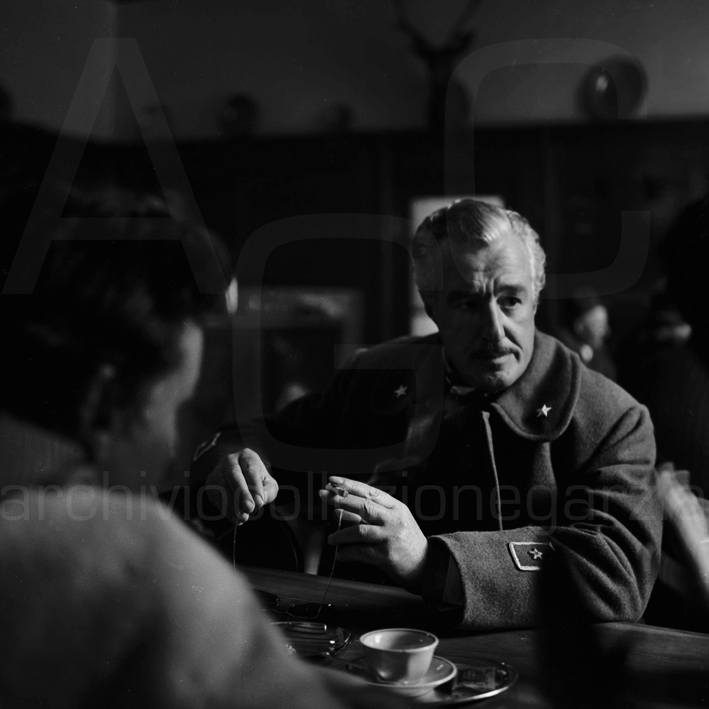
-Vittorio Domenico Stanislao Gaetano Sorano De Sica (Sora, 7 luglio 1901 – Neuilly-sur-Seine, 13 novembre 1974) è stato un attore, regista e sceneggiatore italiano.

Una delle figure preminenti del cinema italiano e mondiale, è stato inoltre attore di teatro e documentarista. È considerato uno dei padri del Neorealismo e, allo stesso tempo, uno dei più grandi registi ed interpreti della Commedia all’italiana.[1] Insieme a Marcello Mastroianni e Nino Manfredi è poi uno dei rappresentanti della ciociarietà cinematografica e, con in più Gina Lollobrigida, della lazialità non romana.

-Vittorio De Sica (7 July 1901 – 13 November 1974) was an Italian director and actor, a leading figure in the neorealist movement.

Four of the films he directed won Academy Awards: Sciuscià and Bicycle Thieves were awarded honorary Oscars, while Ieri, oggi, domani and Il giardino dei Finzi Contini won the Best Foreign Language Film Oscar. Indeed, the great critical success of Sciuscià (the first foreign film to be so recognized by the Academy of Motion Picture Arts and Sciences) and Bicycle Thieves helped establish the permanent Best Foreign Film Oscar. These two films generally are considered part of the canon of classic cinema. Bicycle Thieves was cited by Turner Classic Movies as one of the 15 most influential films in cinema history.

De Sica was also nominated for the 1957 Oscar for Best Supporting Actor for playing Major Rinaldi in American director Charles Vidor’s 1957 adaptation of Ernest Hemingway’s A Farewell to Arms, a movie that was panned by critics and proved a box office flop. De Sica’s acting was considered the highlight of the film.

-Vittorio De Sica, né à Sora(Italie), le 7 juillet 1901, et mort d’un cancer du poumon à Neuilly-sur-Seine (Hauts-de-Seine, France) le 13 novembre 1974, à l’âge de 73 ans, est un réalisateur, metteur en scène et acteur italien.

Il a obtenu quatre Oscar du meilleur film étranger à Hollywood (pour Sciuscià, Le Voleur de bicyclette, Hier, aujourd’hui et demain et Le Jardin des Finzi-Contini), le Grand prix du Festival de Cannes 1951 pour Miracle à Milan (Miracolo a Milano) et l’Ours d’or du Festival de Berlin 1971 pour Le Jardin des Finzi-Contini.


nella foto è il maggiore Rinaldi nel fil “addio alle armi” diretto da Charles Vidor nel 1957

de sica addio alle armi002 W

#EugèneIonesco

Eugène Ionesco,nato Eugen Ionescu (IPA: [e.uˈd͡ʒen i.oˈnesku]) (Slatina, 26 novembre 1909 – Parigi, 28 marzo 1994), è stato un drammaturgo e saggista francese di origini romene,

padre del

Teatro dell’assurdo è la denominazione di un particolare tipo di opere scritte da alcuni drammaturghi, soprattutto europei, sul finire degli anni ’40, ’50 e ’60. Con lo stesso termine si identifica anche tutto lo stile teatrale nato dall’evoluzione dei loro lavori.

Il termine è stato coniato dal critico Martin Esslin, che ne fece il titolo di una sua pubblicazione del 1961: “The Theatre of the Absurd”. Per Esslin il lavoro di questi autori consiste in una articolazione artistica del concetto filosofico di assurdità dell’esistenza, elaborato dagli autori dell’Esistenzialismo (si vedano le tesi di Jean-Paul Sartre negli anni ’30 e quelle successive di Albert Camus nei romanzi, nel teatro e nella saggistica).

Eugène Ionesco, né Eugen Ionescu le 26 novembre 1909 à Slatina (Roumanie) et mort le 28 mars 1994 à Paris, est un dramaturge et écrivain roumain et français. Il passe la majeure partie de sa vie à voyager entre la France et la Roumanie. Représentant du théâtre de l’absurde, il écrit de nombreuses œuvres dont les plus connues sont La Cantatrice chauve, Les Chaises et Rhinocéros.

Eugène Ionesco (born Eugen Ionescu, Romanian: [e.uˈd͡ʒen i.oˈnesku]; 26 November 1909 – 28 March 1994) was a Romanian playwright who wrote mostly in French, and one of the foremost figures of the French Avant-garde theatre. Beyond ridiculing the most banal situations, Ionesco’s plays depict the solitude and insignificance of human existence in a tangible way.

jonesco 10-1961-006 W


#EduardoDeFilippo

Sono passati trenta lunghi anni dalla morte del maestro Eduardo de Filippo.

Eduardo De Filippo, noto semplicemente come Eduardo (Napoli, 24 maggio 1900 – Roma, 31 ottobre 1984), è stato un drammaturgo, attore teatrale, attore cinematografico, regista teatrale, regista cinematografico, sceneggiatore e poeta italiano. Fra i massimi esponenti della cultura italiana del Novecento, è stato autore di numerosi drammi teatrali da lui stesso messi in scena e interpretati e, in seguito, tradotti e rappresentati da altri anche all’estero. Per i suoi meriti artistici e i contributi alla cultura, fu nominato senatore a vita dal presidente della Repubblica Sandro Pertini. Fu anche candidato per il premio Nobel per la letteratura


Eduardo De Filippo (24 May 1900 – 31 October 1984) was an Italian actor, playwright, screenwriter, author and poet, best known for his Neapolitan works Filumena Marturano, Napoli Milionaria, Natale in casa Cupiello.

Eduardo De Filippo (né le 24 mai 1900 à Naples – mort le 31 octobre 1984 à Rome) est un acteur, un poète, un scénariste et un dramaturge italien.

de filippo eduardo comp002

#archiviocollezionegarzia #mostrafotografica


locandina definitiva 17ott

#ArchivioCollezioneGarzia photographic exibithion in Rome

locandina definitiva 17ott

#MariaCalla #ΜαρίαΚάλλας

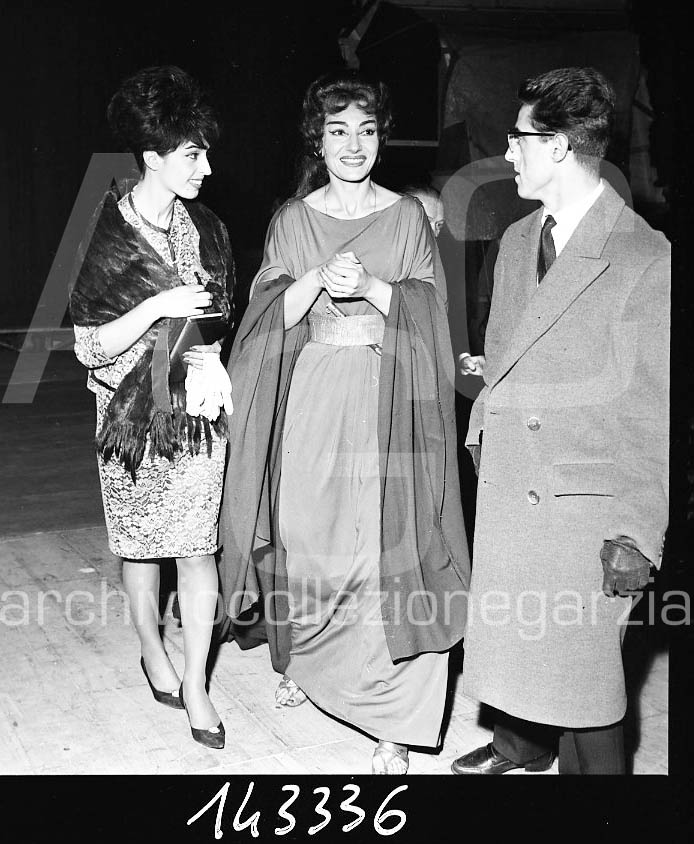
Maria Callas, nome d’arte di Anna Maria Cecilia Sophia Kalogeropoulou (greco: Άννα Μαρία Καικιλία Σοφία Καλογεροπούλου; New York, 2 dicembre 1923 – Parigi, 16 settembre 1977), è stata un soprano e mezzosoprano greco, in possesso della nazionalità statunitense e naturalizzata italiana fino al 1966, quando rinunciò ad entrambe per ottenere quella greca


Maria Callas, Commendatore OMRI (Greek: Μαρία Κάλλας; December 2, 1923 – September 16, 1977), was an American-born Greek soprano and one of the most renowned and influential opera singers of the 20th century. Critics praised her bel canto technique, wide-ranging voice and dramatic gifts. Her repertoire ranged from classical opera seria to the bel canto operas of Donizetti, Bellini and Rossini and further, to the works of Verdi and Puccini; and, in her early career, to the music dramas of Wagner. Her musical and dramatic talents led to her being hailed as La Divina.


nella foto Maria Callas alla prima di Medea di Luigi Cherubini, ruoli di cui ha dato un’interpretazione magistrale, sia vocalmente che propriamente teatrale, restandone la massima interprete.


maria callas medea 1961002


#LelioLuttazzi

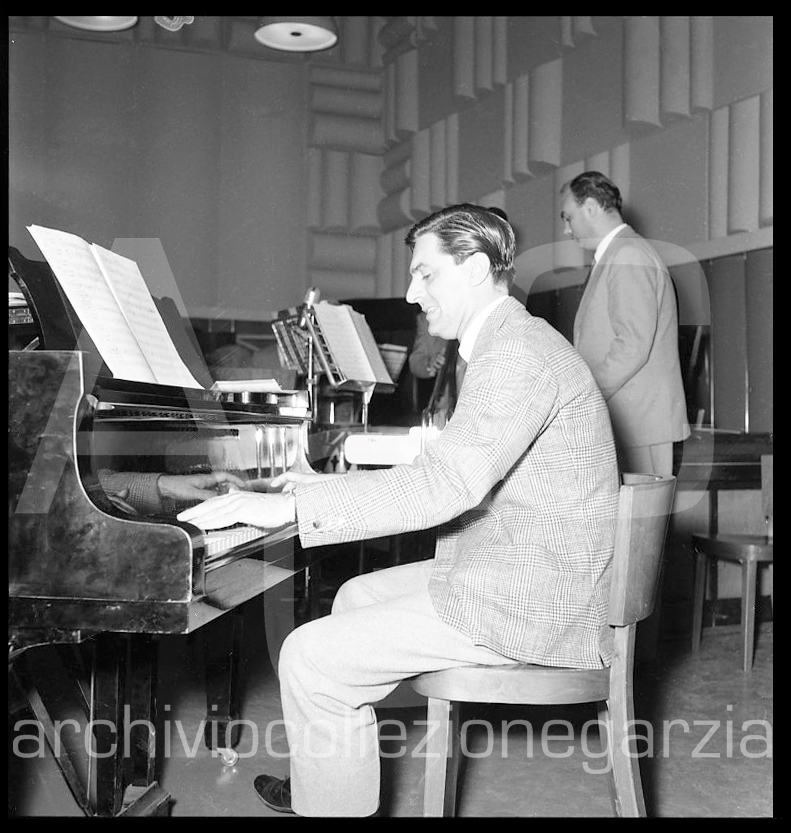
Lelio Luttazzi (Trieste, 27 aprile 1923 – Trieste, 8 luglio 2010) è stato un attore, cantante, direttore d’orchestra, musicista, regista, scrittore, showman e conduttore televisivo italiano.


Lelio Luttazzi (27 April 1923–8 July 2010) was an Italian composer, musician, actor, singer, conductor, writer, and television and radio presenter.

Born in Trieste, Luttazzi began playing the piano at Radio Trieste and composing his first songs when he was student in law at the University of Trieste during the Second World War.After the war, he had from SIAE a gain of 350,000 lire, a considerable sum for the time, so he decided to become a full-time composer and in 1948 he moved to Milan where he began working with fellow Teddy Reno at the record company CGD. He was among the first composers to place jazz structures in the Italian songs.

A multifaceted artist, he worked in revues and cinema as actor and composer of soundtracks;[1] he was also a successful television and radio presenter, and probably the peak of his popularity was the radio program Hit parade, one of the longest radio programs broadcast in Italy.[1][2][3] In the early 1970s Luttazzi was involved together with Walter Chiari in a story of drug dealing; Luttazzi went to prison for a month before being acquitted with the formula “because the fact does not exist” but from then he basically semi-retired, leading a life reserved and returning rarely into the spotlight.

(wikipedia)

lelio luttazzi


http://www.fondazionelelioluttazzi.it