volete Luis ? preferite Miles ? Chet che prende lezioni di chitarra da Franco Cerri ? oppure vorreste essere ripresi con la rollei da Max Roach?
per tutta la durata del Roma Jazz Festival trovate le nostre foto presso la libreria dell’auditorium !
per richiedere le nostre foto, non solo di musica scriveteci a:
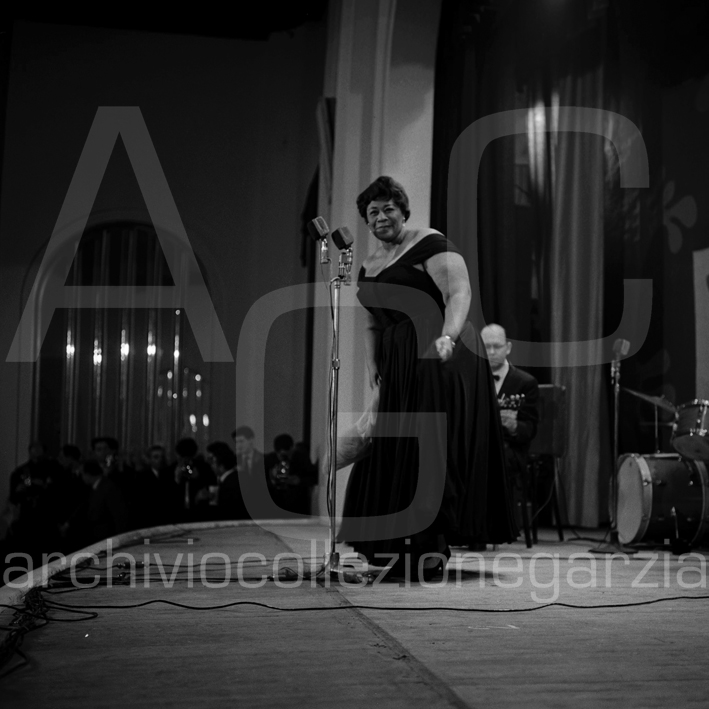
-Ella Jane Fitzgerald, nota anche come Lady Ella e First Lady of Song (Newport News, 25 aprile 1917 – Beverly Hills, 15 giugno 1996), è stata una cantante statunitense.
È considerata una delle migliori e più influenti cantanti jazz della storia. Vincitrice di tredici Grammy, era dotata di un potente strumento vocale, vantando un’estensione vocale di più di tre ottave.
Ella Fitzgerald è stata attiva per 59 anni vendendo circa 40 milioni di copie della sua settantina di album.
Esibiva spesso la sua grande capacità di improvvisazione jazzistica, soprattutto nello scat, una tecnica vocale tipica del jazz di cui è considerata la maggiore esponente di tutti i tempi: i suoi scat potevano durare oltre i cinque minuti, pur mantenendo una perfetta impronta melodica. Nell’ultima parte della sua carriera artistica, nei suoi concerti si divertiva sovente a imitare le voci di altri cantanti: particolarmente riuscite erano le imitazioni di Rose Murphy, Dinah Washington, Della Reese e Louis Armstrong.
-Ella Jane Fitzgerald (April 25, 1917 – June 15, 1996) was an American jazz vocalist with a vocal range spanning three octaves (D♭3 to D♭6).[1] Often referred to as the “First Lady of Song,” the “Queen of Jazz” and “Lady Ella,” she was noted for her purity of tone, impeccable diction, phrasing and intonation, and a “horn-like” improvisational ability, particularly in her scat singing.
Fitzgerald was a notable interpreter of the Great American Songbook.[2] Over the course of her 60-year recording career, she sold 40 million copies of her 70-plus albums, won 13 Grammy Awards and was awarded the National Medal of Arts by Ronald Reagan and the Presidential Medal of Freedom by George H. W. Bush.
-Ella Fitzgerald, née le 25 avril 1917 à Newport News et morte le 15 juin 1996 à Beverly Hills, est une chanteuse de jazz américaine.
D’abord connue sous le surnom de « The First Lady of Swing », qui est devenu « The First Lady of Song » après l’apogée du « Swing » (littéralement « La Première Dame de la chanson », mais traduit plus volontiers par « La Grande Dame du Jazz »), elle a remporté de nombreuses récompenses, dont 13 Grammy Awards.
Avec une tessiture de trois octaves, elle est remarquable pour la pureté de sa voix et sa capacité d’improvisation, particulièrement en scat.
La chanteuse a réalisé une de ses improvisations les plus célèbres en concert sur Mack the Knife (extrait de L’Opéra de quat’sous) à Berlin en 1960, morceau au cours duquel elle a eu un trou de mémoire et qu’elle a poursuivi sans hésitation en alternant scat et paroles improvisées. Cette version de Mack the Knife est certainement l’un des succès les plus connus d’Ella Fitzgerald, avec M. Paganini et How High the Moon.
Une autre de ses improvisations fameuses eut lieu au cours d’un concert à Antibes / Juan-les-Pins à l’été 1964, alors qu’elle se produisait dans la Pinède Gould à l’occasion du Festival Jazz à Juan, quand elle rendit hommage aux cigales qui y chantaient (The Cricket Song).
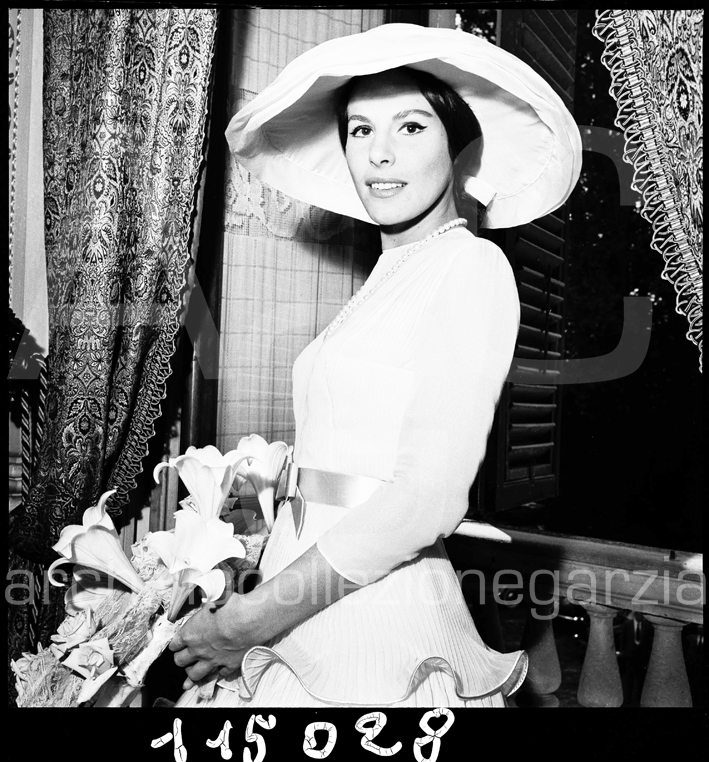
Ornella Vanoni (Milano, 22 settembre 1934) è una cantante e attrice italiana. È considerata una delle migliori interpreti, tra le più note ed importanti, della musica leggera italiana, con una carriera molto lunga durante la quale si è cimentata in generi diversi, dalle Canzoni della mala al jazz, alla bossa nova, alla canzone d’autore, rendendosi popolare grazie ad uno stile interpretativo ed un timbro vocale fortemente riconoscibili.
È l’unica cantante italiana ad aver vinto finora il Premio Tenco come cantautrice.
Il 6 giugno 1960 sposa l’impresario ed ex cantante Lucio Ardenzi
Ornella Vanoni (Italian pronunciation: [orˈnɛlːa vaˈnoːni]), OMRI (born 22 September 1934 in Milan) is one of the most credited pop singers of Italy.She is known for her sophisticated pop style.
Ornella Vanoni (née le 22 septembre 1934 à Milan) est une chanteuse et actrice italienne.
-Vittorio Domenico Stanislao Gaetano Sorano De Sica (Sora, 7 luglio 1901 – Neuilly-sur-Seine, 13 novembre 1974) è stato un attore, regista e sceneggiatore italiano.
Una delle figure preminenti del cinema italiano e mondiale, è stato inoltre attore di teatro e documentarista. È considerato uno dei padri del Neorealismo e, allo stesso tempo, uno dei più grandi registi ed interpreti della Commedia all’italiana.[1] Insieme a Marcello Mastroianni e Nino Manfredi è poi uno dei rappresentanti della ciociarietà cinematografica e, con in più Gina Lollobrigida, della lazialità non romana.
-Vittorio De Sica (7 July 1901 – 13 November 1974) was an Italian director and actor, a leading figure in the neorealist movement.
Four of the films he directed won Academy Awards: Sciuscià and Bicycle Thieves were awarded honorary Oscars, while Ieri, oggi, domani and Il giardino dei Finzi Contini won the Best Foreign Language Film Oscar. Indeed, the great critical success of Sciuscià (the first foreign film to be so recognized by the Academy of Motion Picture Arts and Sciences) and Bicycle Thieves helped establish the permanent Best Foreign Film Oscar. These two films generally are considered part of the canon of classic cinema. Bicycle Thieves was cited by Turner Classic Movies as one of the 15 most influential films in cinema history.
De Sica was also nominated for the 1957 Oscar for Best Supporting Actor for playing Major Rinaldi in American director Charles Vidor’s 1957 adaptation of Ernest Hemingway’s A Farewell to Arms, a movie that was panned by critics and proved a box office flop. De Sica’s acting was considered the highlight of the film.
-Vittorio De Sica, né à Sora(Italie), le 7 juillet 1901, et mort d’un cancer du poumon à Neuilly-sur-Seine (Hauts-de-Seine, France) le 13 novembre 1974, à l’âge de 73 ans, est un réalisateur, metteur en scène et acteur italien.
Il a obtenu quatre Oscar du meilleur film étranger à Hollywood (pour Sciuscià, Le Voleur de bicyclette, Hier, aujourd’hui et demain et Le Jardin des Finzi-Contini), le Grand prix du Festival de Cannes 1951 pour Miracle à Milan (Miracolo a Milano) et l’Ours d’or du Festival de Berlin 1971 pour Le Jardin des Finzi-Contini.
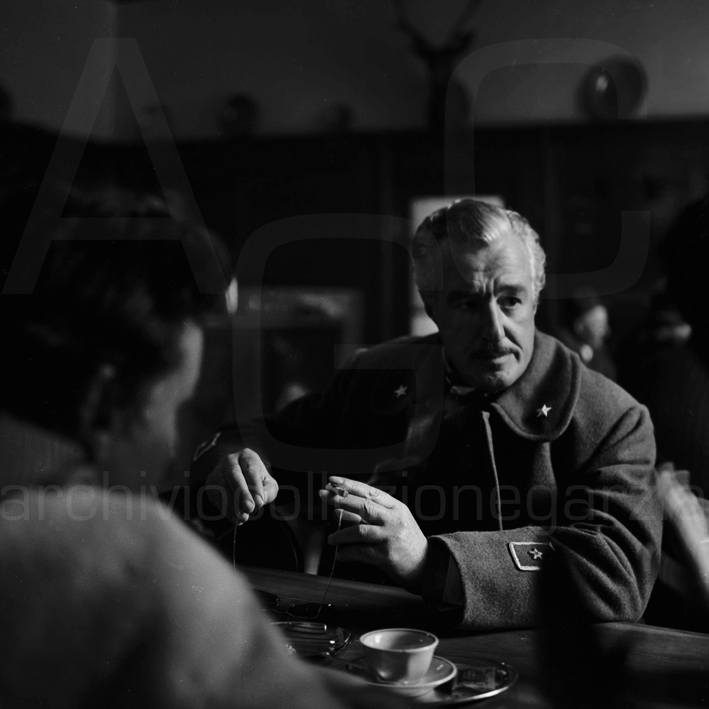
nella foto è il maggiore Rinaldi nel fil “addio alle armi” diretto da Charles Vidor nel 1957
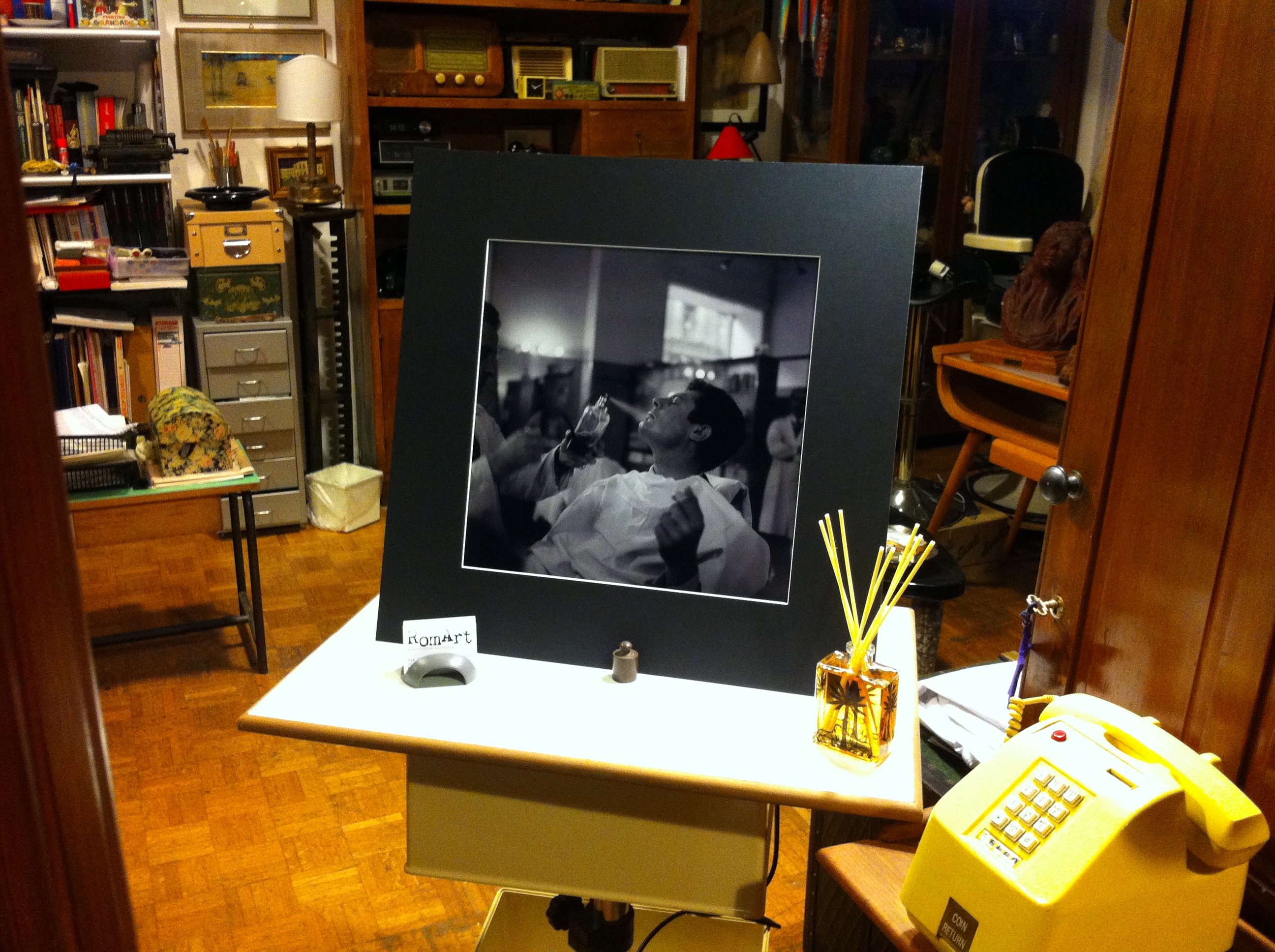
allo scopo di autofinanziare l’archiviazione e il mantenimento degli oltre 3 milioni di foto e negativi originali del quale è composto, l’Archivio Collezione Garzia ha messo in vendita le ristampe, realizzate direttamente dal negativo originale, nei formati cm 10 x 15 e cm 12 x 12 con sigillo a secco che ne garantisce l’originalita’ e montate su passepartout nero o bianco. il costo della singola stampa è di € 18 comprensiva delle spese di spedizione postale.
www.Archiviocollezionegarzia.com. in order to self finance the Archive and the upkeep of more than 3 million pictures and original negatives Archive Collezione Garzia has put up for sale reprints from the Originals in the 10-15 and 12-12 formats with a Dry Seal as Warranty of Originality set on blaick or white Framing.The cost for a single print is 18 Euros,inclusive of postal charges. You can send your orders to:’archiviocollezionegarzia@gmail.com please follow the publishing of photos from the Archive on our Site
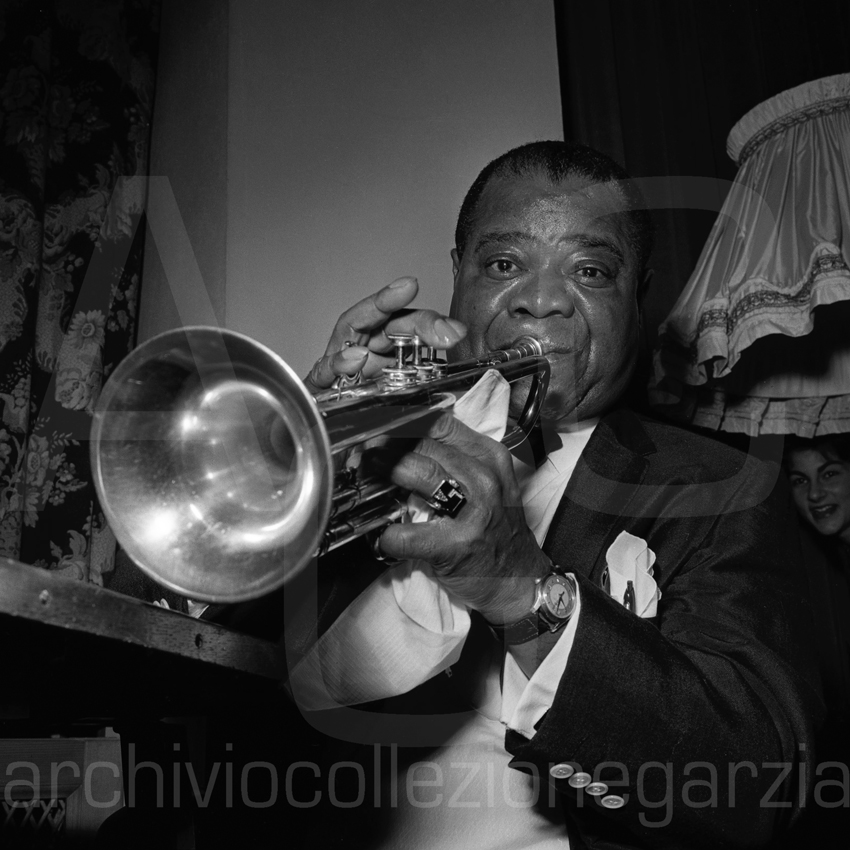
Louis Daniel Armstrong noto anche con il soprannome di Satchmo o Pops (New Orleans, 4 agosto 1901 – New York, 6 luglio 1971) è stato un trombettista e cantante statunitense.
Armstrong è stato uno tra i più famosi musicisti jazz del XX secolo. Carismatico e innovativo, al suo talento e alla sua personalità si aggiunge la sua straordinaria popolarità nel jazz, che esce dai confini della sua regione d’origine per diventare un genere musicale amato in tutto il mondo.
Armstrong raggiunse la fama inizialmente come trombettista, ma fu anche uno dei più importanti cantanti jazz, soprattutto verso la fine della carriera.
Louis Armstrong(August 4, 1901 – July 6, 1971), nicknamed Satchmo or Pops, was an American jazz trumpeter, singer, and an influential figure in jazz music.
Coming to prominence in the 1920s as an “inventive” trumpet and cornet player, Armstrong was a foundational influence in jazz, shifting the focus of the music from collective improvisation to solo performance. With his instantly recognizable gravelly voice, Armstrong was also an influential singer, demonstrating great dexterity as an improviser, bending the lyrics and melody of a song for expressive purposes. He was also skilled at scat singing (vocalizing using sounds and syllables instead of actual lyrics).
Renowned for his charismatic stage presence and voice almost as much as for his trumpet-playing, Armstrong’s influence extends well beyond jazz music, and by the end of his career in the 1960s, he was widely regarded as a profound influence on popular music in general. Armstrong was one of the first truly popular African-American entertainers to “cross over”, whose skin color was secondary to his music in an America that was severely racially divided. He rarely publicly politicized his race, often to the dismay of fellow African-Americans, but took a well-publicized stand for desegregation during the Little Rock Crisis. His artistry and personality allowed him socially acceptable access to the upper echelons of American society that were highly restricted for a black man.
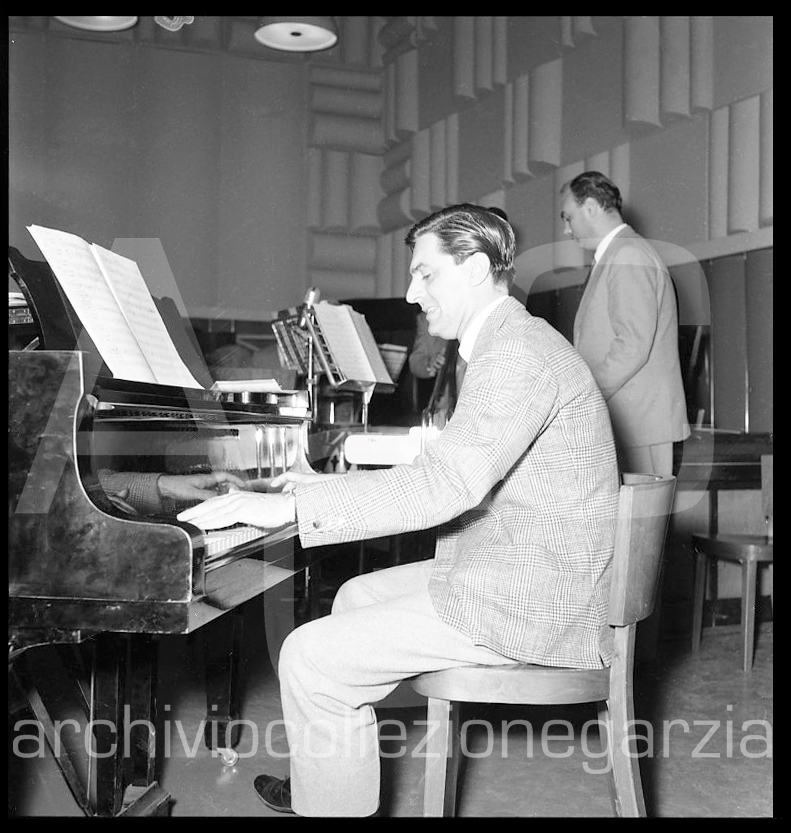
Lelio Luttazzi (Trieste, 27 aprile 1923 – Trieste, 8 luglio 2010) è stato un attore, cantante, direttore d’orchestra, musicista, regista, scrittore, showman e conduttore televisivo italiano.
Lelio Luttazzi (27 April 1923–8 July 2010) was an Italian composer, musician, actor, singer, conductor, writer, and television and radio presenter.
Born in Trieste, Luttazzi began playing the piano at Radio Trieste and composing his first songs when he was student in law at the University of Trieste during the Second World War.After the war, he had from SIAE a gain of 350,000 lire, a considerable sum for the time, so he decided to become a full-time composer and in 1948 he moved to Milan where he began working with fellow Teddy Reno at the record company CGD. He was among the first composers to place jazz structures in the Italian songs.
A multifaceted artist, he worked in revues and cinema as actor and composer of soundtracks;[1] he was also a successful television and radio presenter, and probably the peak of his popularity was the radio program Hit parade, one of the longest radio programs broadcast in Italy.[1][2][3] In the early 1970s Luttazzi was involved together with Walter Chiari in a story of drug dealing; Luttazzi went to prison for a month before being acquitted with the formula “because the fact does not exist” but from then he basically semi-retired, leading a life reserved and returning rarely into the spotlight.








 archiviocollezionegarzia.com