Lelio Luttazzi (Trieste, 27 aprile 1923 – Trieste, 8 luglio 2010) è stato un attore, cantante, direttore d’orchestra, musicista, regista, scrittore, showman e conduttore televisivo italiano.
Lelio Luttazzi (27 April 1923 – 8 July 2010) was an Italian composer, musician, actor, singer, conductor, writer, and television and radio presenter.
nella foto Lelio Luttazzi con Vera Valentini nel 1956
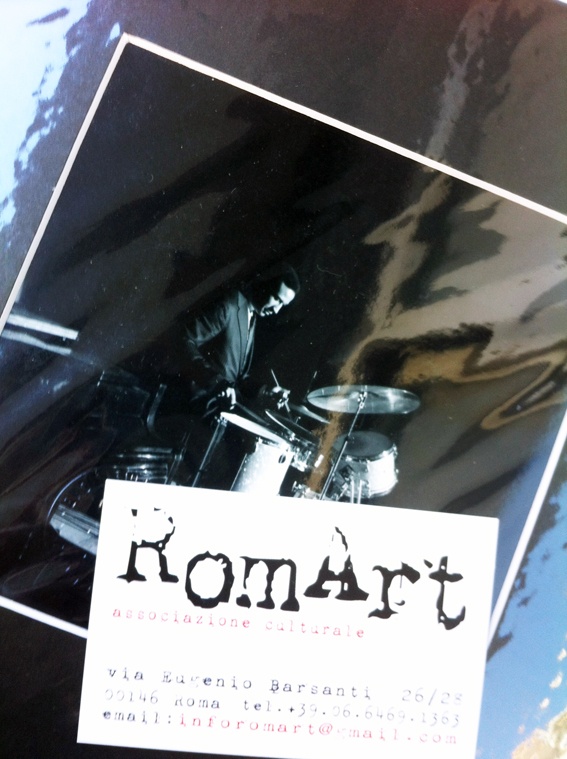
Chesney Henry Baker Jr., detto Chet (Yale, 23 dicembre1929 – Amsterdam, 13 maggio1988), è stato un trombettista e cantantestatunitense di musica jazz, noto per il suo stile lirico e intimista e per essere stato tra i principali esponenti del genere conosciuto come cool jazz.
Durante una tournée in Europa, il suo amico e pianista Dick Twardzik muore per overdose in un hotel di Parigi. Oppresso dai sensi di colpa, Baker inizia a drogarsi in maniera sempre più pesante. Il fisico ne è rimasto minato e sul palco è stato sempre più un disastro. Nessuno lo vuole ingaggiare e nessuno vuole suonare con lui. Per questo, con la sua seconda moglie, la giovane pachistana Halema, (che gli ha dato un figlio, Chesney) decide di andare a vivere in Europa. Per parecchio tempo il trombettista vive in Italia, osannato come un dio. A Milano prima e poi a Lucca, città in cui sconta un anno di reclusione per avere rubato e falsificato ricette mediche per acquistare narcotici. Uscito dal carcere Chet sembra un uomo rinato, ma presto ricade nel vizio e viene espulso dal Paese. La stessa cosa è accaduta in Germania, in Inghilterra e in Francia, posti nei quali rimaneva pulito solo quando era in prigione.
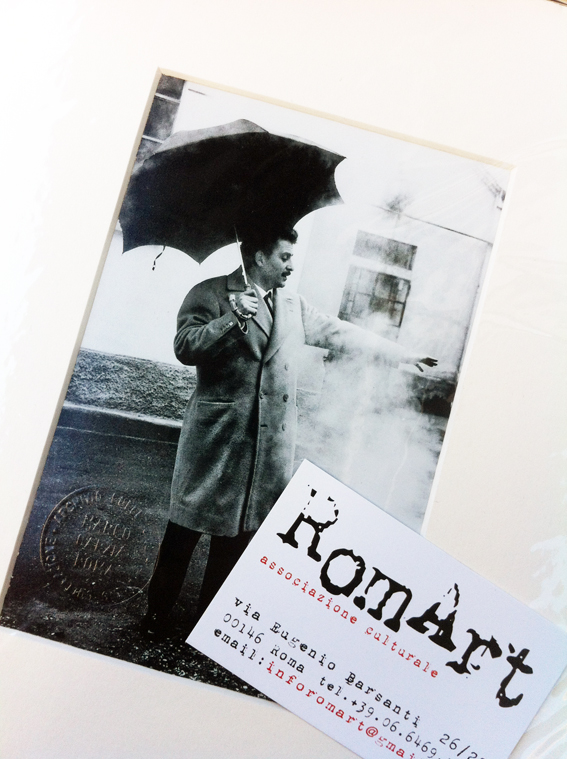
Dario Fo (Sangiano, 24 marzo 1926) è un drammaturgo, attore, regista, scrittore, autore, illustratore, pittore, scenografo e attivista italiano.
Vincitore del premio Nobel per la letteratura nel 1997 (già candidato nel 1975). I suoi lavori teatrali fanno uso degli stilemi comici propri della Commedia dell’arte italiana e sono rappresentati con successo in tutto il mondo. In quanto attore, regista, scrittore, scenografo, costumista e impresario della sua stessa compagnia, Fo è uomo di teatro a tutto tondo.
È famoso per i suoi testi teatrali di satira politica e sociale e per l’impegno politico di sinistra. Con la moglie Franca Rame fu tra gli esponenti del Soccorso Rosso Militante.
Dario Fo (Italian pronunciation: [ˈdaːrjo ˈfɔ]; born 24 March 1926) is an Italian actor-playwright, comedian, singer, theatre director, stage designer, songwriter, painter and political campaigner, and recipient of the 1997 Nobel Prize in Literature. “Arguably the most widely performed contemporary playwright in world theatre”, much of his dramatic work depends on improvisation and comprises the recovery of “illegitimate” forms of theatre, such as those performed by giullari (medieval strolling players) and, more famously, the ancient Italian style of commedia dell’arte.
His plays have been translated into 30 languages and performed across the world, including in Argentina, Chile, England, the Netherlands, Poland, Romania, South Africa, South Korea, Spain, Sri Lanka, Sweden, and Yugoslavia. His work of the 1960s, 1970s and 1980s is peppered with criticisms of assassinations, corruption, organised crime, racism, Roman Catholic theology and war. Throughout the 1990s and 2000s, he took to lampooning Forza Italia and its leader Silvio Berlusconi, while his targets of the 2010s have included the banks amid the European sovereign-debt crisis. Also in the 2010s, he became the main ideologue of the Five Star Movement, the anti-establishment party led by Beppe Grillo, often referred by its members as “the Master“.
Fo’s solo pièce célèbre, titled Mistero Buffo and performed across Europe, Canada and Latin America over a 30-year period, is recognised as one of the most controversial and popular spectacles in postwar European theatre and has been denounced by the Vatican as “the most blasphemous show in the history of television”. The title of the original English translation of Non Si Paga! Non Si Paga! (Can’t Pay? Won’t Pay!) has passed into the English language.
His receipt of the 1997 Nobel Prize in Literature marked the “international acknowledgment of Fo as a major figure in twentieth-century world theatre”. The Swedish Academy praised Fo as a writer “who emulates the jesters of the Middle Ages in scourging authority and upholding the dignity of the downtrodden”. He currently owns and operates a theatre company. Fo is an atheist.
Franca Rame (Parabiago, 18 luglio 1929 – Milano, 29 maggio 2013) è stata un’attrice teatrale, drammaturga e politica italiana.
Franca Rame (18 July 1929 – 29 May 2013) was an Italian theatre actress, playwright and political activist. She was married to Nobel laureate playwright Dario Fo and is the mother of writer Jacopo Fo. Fo dedicated his Nobel Prize to her.
-Luisita “Isa” Barzizza (Sanremo, 22 novembre 1929) è un’attrice italiana, considerata una delle più importanti interpreti della rivista, del cinema e della televisione italiani.
Figlia del direttore d’orchestra Pippo Barzizza e della di lui consorte Tatina Salesi, studiò al Liceo Classico Vincenzo Gioberti di Torino e iniziò parallelamente a partecipare a rappresentazioni teatrali di prosa in ruoli secondari, vicino ad attori come Ruggero Ruggeri, Elsa Merlini ed Eduardo De Filippo.
All’inizio Pippo Barzizza era contrario all’attività teatrale della figlia. Fu Erminio Macario che la lanciò nel mondo del teatro, dopo che la Barzizza ebbe terminato gli studi liceali. Il grande attore chiese personalmente al padre di Isa di farla debuttare in una sua rivista. Il padre accettò a patto che Isa fosse sempre seguita da una governante e così fu. Isa Barzizza debuttò con Le educande di San Babila del 1947, seguita poi da Follie di Amleto del 1947-48.
-Isa Barzizza (22 November 1929) is an Italian stage, film and television actress. She has appeared in 46 films since 1947. Born in Sanremo, Barzizza is the daughter of the conductor and composer Pippo Barzizza. She started working in amateur dramatics at very young age, and she made her professional debut while still being a high school student, notably working with the stage companies led by Ruggero Ruggeri, Elsa Merlini and by the brothers Eduardo, Peppino and Titina De Filippo.
Silvana Pampanini (Roma, 25 settembre 1925 – Roma, 6 gennaio 2016) è stata un’attrice cinematografica italiana che ha goduto di una grande notorietà negli anni cinquanta.
Di famiglia veneta trapiantata a Roma da tre generazioni, si diplomò all’istituto magistrale e al conservatorio musicale di Santa Cecilia. Era ancora una studentessa quando si iscrisse al concorso di Miss Italia rilanciato a Stresa nel settembre del 1946 dopo la pausa bellica: nonostante la vittoria ufficiale di Rossana Martini le vivaci proteste del pubblico determinarono l’assegnazione del premio “ex aequo” anche a Silvana.
Questo concorso di bellezza la lanciò nel mondo del cinema: la Pampanini iniziò la carriera come interprete di pellicole musicali e acquisì una popolarità crescente tramite i settimanali illustrati e i cinegiornali. Suo padre, inizialmente contrario alla carriera della figlia come attrice, lasciò il proprio lavoro e divenne il suo abile agente.
Nella prima metà degli anni cinquanta, poco prima che Sophia Loren e Gina Lollobrigida raggiungessero una grande notorietà, per una breve stagione la Pampanini fu il simbolo più rappresentativo della bellezza italiana a livello mondiale, assieme a Lucia Bosè e Silvana Mangano. Grazie alla sua solida preparazione musicale nel decennio 1947/1957 fu ingaggiata anche per registrare, su dischi in vinile a 78 e 45 giri, numerose canzoni che non sono mai state ripubblicate su supporti più moderni.
Born in Rome, Pampanini became one of the most popular movie actresses in her country and was considered a sex symbol in the 1950s. In 1955 she visited New York, Denver and Hollywood but rejected job offers because she could not speak English properly and had some problems with the tax office.
She was also appreciated in France, where they nicknamed her Ninì Pampan, Spain, where she appeared in Tirma, South America, especially in Mexico, where she starred in Sed de Amor with Pedro Armendáriz, and Egypt. She worked with other internationally important actors and directors such as Buster Keaton, Vittorio Gassman, Marcello Mastroianni, Alberto Sordi, Totò, Jean Gabin, Henri Vidal, Abel Gance, Vittorio De Sica.
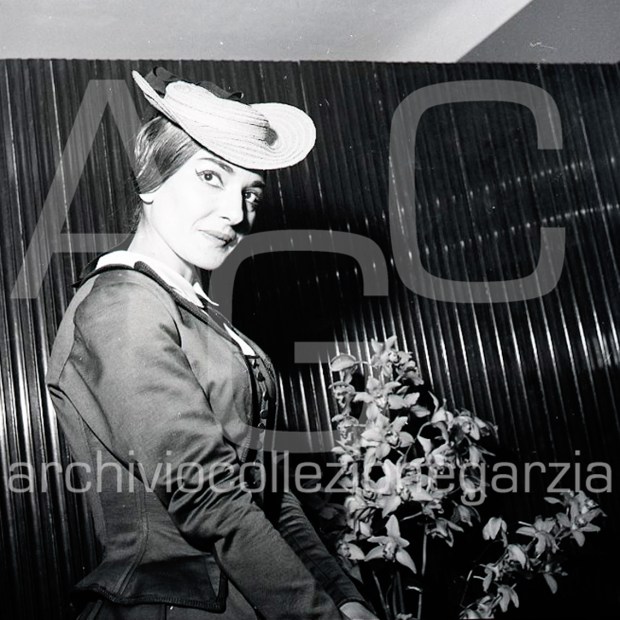
Maria Callas, nome d’arte di Anna Maria Cecilia Sophia Kalogeropoulou (greco: Άννα Μαρία Καικιλία Σοφία Καλογεροπούλου; New York, 2 dicembre 1923 – Parigi, 16 settembre 1977), è stata un soprano greco, in possesso della nazionalità statunitense e naturalizzata italiana fino al 1966, quando rinunciò ad entrambe per ottenere quella greca[1]. Nata a New York da genitori greci, Maria Callas studiò ad Atene dal 1939 al 1945, intraprendendo la carriera internazionale dai tardi anni quaranta agli anni sessanta.
Η Μαρία Κάλλας(Μαρία Άννα Σοφία Καικιλία Καλογεροπούλου) (Νέα Υόρκη, 2 Δεκεμβρίου 1923 – Παρίσι 16 Σεπτεμβρίου 1977) υπήρξε κορυφαία υψίφωνος και η πλέον γνωστή παγκοσμίως ντίβα της όπερας.
Maria Callas, Commendatore OMRI (Greek: Μαρία Κάλλας; December 2, 1923 – September 16, 1977), was an American-born Greek soprano and one of the most renowned and influential opera singers of the 20th century. Critics praised her bel canto technique, wide-ranging voice and dramatic interpretations. Her repertoire ranged from classical opera seria to the bel canto operas of Donizetti, Bellini and Rossini and further, to the works of Verdi and Puccini; and, in her early career, to the music dramas of Wagner. Her musical and dramatic talents led to her being hailed as La Divina.
Born in New York City and raised by an overbearing mother, she received her musical education in Greece and established her career in Italy. Forced to deal with the exigencies of wartime poverty and with myopia that left her nearly blind onstage, she endured struggles and scandal over the course of her career. She turned herself from a heavy woman into a svelte and glamorous one after a mid-career weight loss, which might have contributed to her vocal decline and the premature end of her career. The press exulted in publicizing Callas’s allegedly temperamental behavior, her supposed rivalry with Renata Tebaldi and her love affair with Greek shipping tycoon Aristotle Onassis. Although her dramatic life and personal tragedy have often overshadowed Callas the artist in the popular press, her artistic achievements were such that Leonard Bernstein called her “the Bible of opera” and her influence so enduring that, in 2006, Opera News wrote of her: “Nearly thirty years after her death, she’s still the definition of the diva as artist—and still one of classical music’s best-selling vocalists.
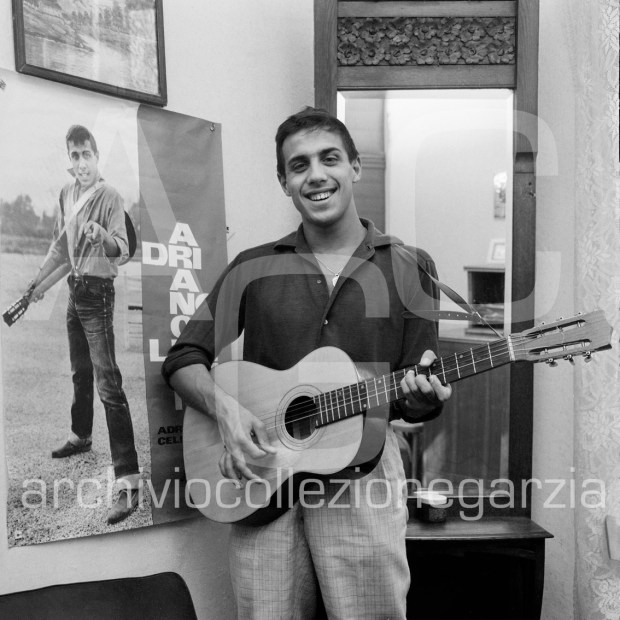
Adriano Celentano (Milano, 6 gennaio 1938) è un cantautore, ballerino, conduttore televisivo, attore, regista, sceneggiatore, produttore discografico, montatore, e showman italiano.
È soprannominato il molleggiato per via del suo modo di ballare. In tutta la sua carriera Celentano ha venduto oltre 150 milioni di dischi. Adriano Celentano è l’artista italiano con le più alte vendite di dischi stimati.
Molto spesso anche autore delle musiche e canzoni (a volte coautore di musica e testi, anche se, secondo la moglie Claudia Mori, li lasciò firmare ad altri) grazie alla sua carriera e ai suoi grandi successi, non solo in Italia ma anche nel resto del mondo, è considerato uno dei pilastri della musica leggera italiana. Il suo carattere ha fatto sì che attorno a Celentano si costruisse un personaggio divenuto un emblema e un’icona per molti italiani del secondo dopoguerra.
Gli viene riconosciuto il merito di avere capito che qualcosa nel mondo della musica (e del costume) stava cambiando, e quindi di avere introdotto in Italia, influenzato dalle nuove stelle del rock and roll proveniente dagli Stati Uniti, un nuovo tipo di musica, sfrenata e di grande appeal soprattutto per i giovani di allora.
Ha recitato in circa 40 film, e pubblicato altrettanti album discografici riscuotendo enorme successo sia nel campo musicale sia nel mondo del cinema che lo ha visto trionfare dalla fine degli anni sessanta fino agli inizi dei novanta con Jackpot che ad oggi rimane il suo ultimo film.
Adriano Celentano (Italian pronunciation: [adriˈaːno tʃelenˈtaːno]; born 6 January 1938) is an Italian singer, composer, comedian, actor, film director and TV host. He is the best-selling male Italian singer.
Celentano was born in Milan at 14 Via Gluck, about which he later wrote the famous song “Il ragazzo della via Gluck” (“The boy from Gluck Street”). His parents were from Foggia, in Apulia, and had moved north for work.
Heavily influenced by his idol Elvis Presley and the 1950s rock revolution and by the American actor Jerry Lewis, he has retained his popularity in Italy for over 50 years, selling millions of records and appearing in numerous TV shows and movies. In the latter respect, he has also been a creator of a comic genre, with his characteristic walking and his facial expressions. For the most part, his films were commercially successful; indeed in the 1970s and part of the 1980s, he was the king of the Italian box office in low budget movies. As an actor, critics point to Serafino (1968), directed by Pietro Germi, as his best performance.
He has released forty albums, comprising twenty nine studio albums, three live albums, and eight compilations. His most famous songs are “La coppia piu’ bella del mondo”, which sold over one million copies, and was awarded a gold disc; “Azzurro” (1968), written by Paolo Conte; and “Prisencolinensinainciusol” (1972), which was written to mimic the way English sounds to non-English speakers despite being almost entirely nonsense.
Celentano was referenced in the 1979 Ian Dury and the Blockheads song and single, “Reasons to be Cheerful, Part 3”, as one of the aforementioned “reasons to be cheerful,” and in Fellini’s 1986 film Ginger and Fred.
Adriano Celentano has been a vegetarian since 2005 and defends animal rights.
Marcello Marchesi (Milano, 14 aprile 1912 – Cabras, 19 luglio 1978) è stato uno scrittore, sceneggiatore, regista cinematografico e teatrale, paroliere e attore italiano.
Fu anche giornalista, scrittore, autore di canzoni e cantante, autore di programmi televisivi e radiofonici, pubblicitario e talent scout (lanciò fra gli altri Sandra Mondaini, Gino Bramieri, Walter Chiari, Gianni Morandi, Cochi e Renato, Paolo Villaggio). La sua vita privata e la sua carriera si incrociarono con le fasi salienti e i personaggi più importanti della storia italiana del 1900.
Marcello Marchesi (4 April 1912 – 19 July 1978) was an Italian screenwriter and film director. He wrote 64 films between 1939 and 1977. He also directed six films between 1951 and 1952.
He was born in Rome, Italy and died in San Giovanni in Sinis, Italy.
Ermanno Olmi (Bergamo, 24 luglio 1931) è un regista, sceneggiatore, montatore, direttore della fotografia, produttore cinematografico, scrittore e scenografo italiano.
Ermanno Olmi (born July 24, 1931 in Bergamo) is a renowned Italian film director and screenwriter.










 archiviocollezionegarzia.com