fashion

#KimNovak

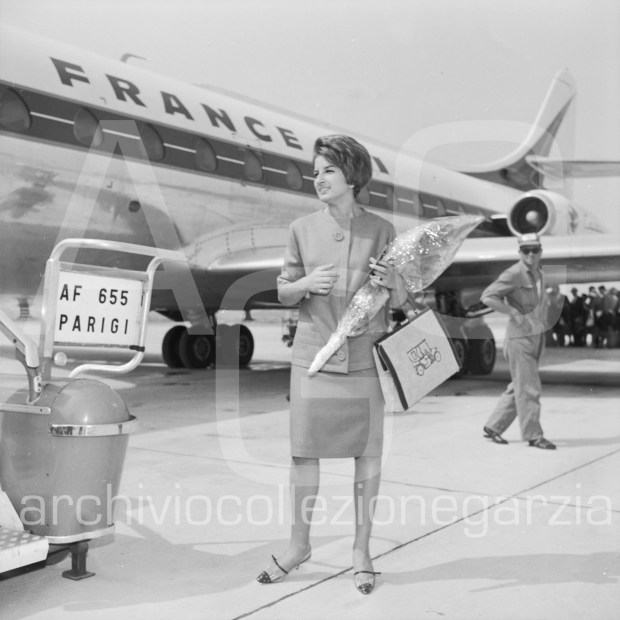
  • Kim Novak, nome d’arte di Marylin Pauline Novak (Chicago, 13 febbraio 1933), è un’attrice statunitense.  Inizia la sua carriera come modella e, nel 1951, viene scelta per la campagna pubblicitaria di una marca di frigoriferi.

Trasferitasi a Los Angeles, viene scelta per una particina senza battute in La linea francese (1954), accanto a Jane Russell e Gilbert Roland; il film non riscuote un grande successo e il nome della Novak non compare neppure nei titoli di coda, ma i produttori hollywoodiani la notano ugualmente; dopo il rifiuto di Rita Hayworth, è chiamata a sostituirla in Criminale di turno (1954) di Richard Quine, accanto a Fred MacMurray, film in cui la Novak già dimostra la sua abilità nell’impersonare una scaltra seduttrice. È l’inizio della sua brillante carriera.

Durante tutti gli anni cinquanta, i produttori la contrappongono a Marilyn Monroe, di cui ha le forme, e a Grace Kelly, di cui possiede la grazia. Viene diretta da Otto Preminger nel dramma sociale L’uomo dal braccio d’oro (1955), a fianco di Frank Sinatra, mentre l’anno successivo è protagonista accanto a William Holden nel romantico Picnic (1956). Interpreta principalmente commedie, come i successi Una strega in paradiso (1958), in cui forma un affiatato terzetto con James Stewart e Jack Lemmon, e Pal Joey (1957), in cui dà prova di un notevole talento, tanto da non temere la concorrenza della co-protagonista Rita Hayworth.

La Novak ha 25 anni quando entra nel gotha del cinema grazie al capolavoro La donna che visse due volte (Vertigo) (1958) di Alfred Hitchcock, in cui interpreta efficacemente il doppio ruolo di Madeleine/Judy, in sostituzione di Vera Miles, che essendo incinta aveva rifiutato il film (ma che avrà poi un ruolo in Psyco).

  • Marilyn Pauline Novak, professionally known as Kim Novak (born February 13, 1933), is a retired American film and television actress.

She began her career in 1954 after signing with Columbia Pictures. There, she became a successful actress, starring in a string of movies, among them the critically acclaimed Picnic (1955). She later starred in such popular successes as The Man with the Golden Arm (1955) and Pal Joey (1957). However, she is perhaps best known today for her “dual role” as both Judy Barton and Madeleine Elster in Alfred Hitchcock’s classic thriller Vertigo (1958). Novak was popular in box office popularity polls, and she starred opposite several top leading men of the era, including James Stewart, William Holden, Frank Sinatra, Tyrone Power, and Kirk Douglas.

Although still young, her career declined in the early 1960s, and after several years in a series of lackluster films, she withdrew from acting in 1966. She has only sporadically returned since. She later returned to the screen in The Mirror Crack’d (1980), and had a regular role on the prime time series Falcon Crest (1986–87). After a disappointing experience during the filming of Liebestraum (1991), she has permanently retired from acting, stating she has no desire to return.

k. novak b.3960001

#Mina #MinaMazzini

Mina, nome d’arte di Mina Anna Maria Mazzini (Busto Arsizio, 25 marzo 1940), è una cantante, conduttrice televisiva, attrice e produttrice discografica italiana naturalizzata svizzera. Dopo il matrimonio del 10 gennaio 2006 con Eugenio Quaini è diventata, per l’anagrafe elvetica, Mina Anna Maria Quaini. Tale variazione non viene applicata nelle registrazioni anagrafiche italiane.

Annoverata tra le più grandi cantanti di tutti i tempi, è nota per le qualità della sua voce che si possono definire di soprano drammatico d’agilità , pur non avendo l’impostazione accademica del soprano classico. Il suo strumento, dal timbro caldo e personalissimo, subito riconoscibile, è dotato di grande ampiezza, estensione, agilità, capace di coniugare la potenza vocale con la duttilità, ed è sostenuto da una tecnica saldissima; Mina si distingue anche per le doti interpretative e l’ecletticità, che l’hanno portata ad affrontare con successo generi musicali spesso lontani tra loro.

Durante la sua carriera, iniziata alla fine degli anni cinquanta, Mina ha interpretato oltre 1 500 brani e venduto più di 150 milioni di dischi fino al 2010[9], ottenendo primati e ricevendo premi e riconoscimenti, con due partecipazioni al Festival di Sanremo, tre alla Mostra Internazionale di Musica Leggera, una Targa Tenco, e l’assegnazione dell’onorificenza di Grande Ufficiale al Merito della Repubblica Italiana. Sulla scena internazionale ha raccolto il plauso di artisti quali Frank Sinatra, Louis Armstrong, Michael Jackson, Aretha Franklin, Antony and the Johnsons, Jennifer Lopez, Mónica Naranjo, Céline Dio, Barbra Streisand, Liza Minnelli, Luciano Pavarotti.

mina per bw 3-8-61 b5622001

https://youtu.be/WMjC_f95iSQ

#RaymondBurr

Raymond William Stacey Burr (New Westminster, 21 maggio 1917 – Sonoma, 12 settembre 1993) è stato un attore canadese naturalizzato statunitense, noto per le sue interpretazioni teatrali, cinematografiche e televisive, specialmente per le serie televisive di Perry Mason e di Ironside.

Raymond William Stacey Burr (May 21, 1917 – September 12, 1993) was a Canadian-American actor, primarily known for his title roles in the television dramas Perry Mason and Ironside. He was prominently involved in multiple charitable endeavors, such as working on behalf of the United Service Organizations.

Burr’s early acting career included roles on Broadway, radio, television and in film, usually as the villain. His portrayal of the suspected murderer in the Alfred Hitchcock thriller Rear Window (1954) is regarded as his best-known film role. He won two Emmy Awards, in 1959 and 1961, for the role of Perry Mason, which he played for nine seasons between 1957 and 1966. His second hit TV series, Ironside, earned him six Emmy nominations and two Golden Globe nominations.
After Burr’s death from cancer in 1993, his personal life came into question, as details of his known biography appeared to be unverifiable.[1][2]

In 1996, Burr was listed as one of the 50 Greatest TV Stars of All Time by TV Guide. A 2014 study found that Burr was rated as the favorite actor by Netflix users, with the greatest number of dedicated microgenres.

raymond burr b 5574001 copia

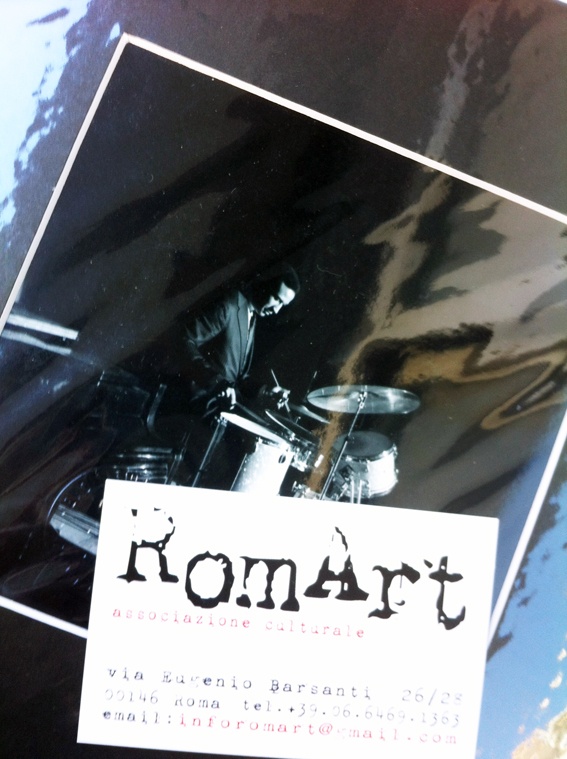
#ChetBaker #HalimaBaker

Chesney Henry Baker Jr., detto Chet (Yale, 23 dicembre1929 – Amsterdam, 13 maggio1988), è stato un trombettista e cantantestatunitense di musica jazz, noto per il suo stile lirico e intimista e per essere stato tra i principali esponenti del genere conosciuto come cool jazz.

Durante una tournée in Europa, il suo amico e pianista  Dick Twardzik muore per overdose in un hotel di Parigi. Oppresso dai sensi di colpa, Baker inizia a drogarsi in maniera sempre più pesante. Il fisico ne è rimasto minato e sul palco è stato sempre più un disastro. Nessuno lo vuole ingaggiare e nessuno vuole suonare con lui. Per questo, con la sua seconda moglie, la giovane pachistana Halema, (che gli ha dato un figlio, Chesney) decide di andare a vivere in Europa. Per parecchio tempo il trombettista vive in Italia, osannato come un dio. A Milano prima e poi a Lucca, città in cui sconta un anno di reclusione per avere rubato e falsificato ricette mediche per acquistare narcotici. Uscito dal carcere Chet sembra un uomo rinato, ma  presto ricade nel vizio e viene  espulso dal Paese.  La stessa cosa è accaduta in Germania, in Inghilterra e in Francia, posti nei quali rimaneva pulito solo quando era in prigione.

chet baker tribunale016

Moglie Chet Baker b.5482002


#CharlieChaplin

  • Sir Charles Spencer Chaplin, noto come Charlie Chaplin (Londra, 16 aprile 1889 – Corsier-sur-Vevey, 25 dicembre 1977), è stato un attore, regista, sceneggiatore, comico, compositore e produttore cinematografico britannico, autore di oltre novanta film e tra i più importanti e influenti cineasti del XX secolo.

Il personaggio attorno al quale costruì larga parte delle sue sceneggiature, e che gli diede fama universale, fu quello del “vagabondo” (The Tramp in inglese; Charlot in italiano, francese e spagnolo): un omino dalle raffinate maniere e la dignità di un gentiluomo, vestito di una stretta giacchetta, pantaloni e scarpe più grandi della sua misura, una bombetta e un bastone da passeggio in bambù; tipici del personaggio erano anche i baffetti e l’andatura ondeggiante. L’emotività sentimentale e il malinconico disincanto di fronte alla spietatezza e alle ingiustizie della società moderna, fecero di Charlot l’emblema dell’alienazione umana – in particolare delle classi sociali più emarginate – nell’era del progresso economico e industriale.

Chaplin fu una delle personalità più creative e influenti del cinema muto. La sua vita lavorativa nel campo dello spettacolo ha attraversato oltre 75 anni. Fu influenzato dal comico francese Max Linder, a cui dedicò uno dei suoi film. Star mondiale del cinema, fu oggetto di adulazione e di critiche serrate, anche a causa delle sue idee politiche. Nei primi anni cinquanta, durante le persecuzioni del cosiddetto Maccartismo, le sue idee di forte stampo progressista lo avversarono alla maggior parte della stampa; fu inviso anche al governo federale statunitense.

Mentre si trovava a Londra, gli fu negato il permesso di rientro negli USA: visse il resto della sua esistenza in Svizzera, “riabilitato” dall’opinione pubblica americana solo all’inizio degli anni settanta, quando tornò nella sua patria di adozione per ritirare l’Oscar alla carriera. Tra gli attori più famosi dalla nascita dell’industria hollywoodiana, L’American Film Institute lo ha inserito al decimo posto tra le più grandi star della storia del cinema.

Charles Chaplin era ateo.


  • Sir Charles Spencer “Charlie” Chaplin, KBE (16 April 1889 – 25 December 1977) was an English comic actor, filmmaker, and composer who rose to fame in the silent era. Chaplin became a worldwide icon through his screen persona “the Tramp” and is considered one of the most important figures in the history of the film industry.[1] His career spanned more than 75 years, from childhood in the Victorian era until a year before his death in 1977, and encompassed both adulation and controversy.

Chaplin’s childhood in London was one of poverty and hardship. As his father was absent and his mother struggled financially, he was sent to a workhouse twice before the age of nine. When he was 14, his mother was committed to a mental asylum. Chaplin began performing at an early age, touring music halls and later working as a stage actor and comedian. At 19 he was signed to the prestigious Fred Karno company, which took him to America. Chaplin was scouted for the film industry, and began appearing in 1914 for Keystone Studios. He soon developed the Tramp persona and formed a large fan base. Chaplin directed his own films from an early stage, and continued to hone his craft as he moved to the Essanay, Mutual, and First National corporations. By 1918, he was one of the best known figures in the world.

In 1919, Chaplin co-founded the distribution company United Artists, which gave him complete control over his films. His first feature-length was The Kid (1921), followed by A Woman of Paris (1923), The Gold Rush (1925), and The Circus (1928). He refused to move to sound films in the 1930s, instead producing City Lights (1931) and Modern Times (1936) without dialogue. Chaplin became increasingly political, and his next film, The Great Dictator (1940), satirised Adolf Hitler. The 1940s were a decade marked with controversy for Chaplin, and his popularity declined rapidly. He was accused of communist sympathies, while his involvement in a paternity suit and marriages to much younger women caused scandal. An FBI investigation was opened, and Chaplin was forced to leave the United States and settle in Switzerland. He abandoned the Tramp in his later films, which include Monsieur Verdoux (1947), Limelight (1952), A King in New York (1957), and A Countess from Hong Kong (1967).

Chaplin wrote, directed, produced, edited, starred in, and composed the music for most of his films. He was a perfectionist, and his financial independence enabled him to spend years on the development and production of a picture. His films are characterised by slapstick combined with pathos, typified in the Tramp’s struggles against adversity. Many contain social and political themes, as well as autobiographical elements. In 1972, as part of a renewed appreciation for his work, Chaplin received an Honorary Academy Award for “the incalculable effect he has had in making motion pictures the art form of this century”. He continues to be held in high regard, with The Gold Rush, City Lights, Modern Times, and The Great Dictator often ranked on industry lists of the greatest films of all time.

charlie chaplin famiglia003

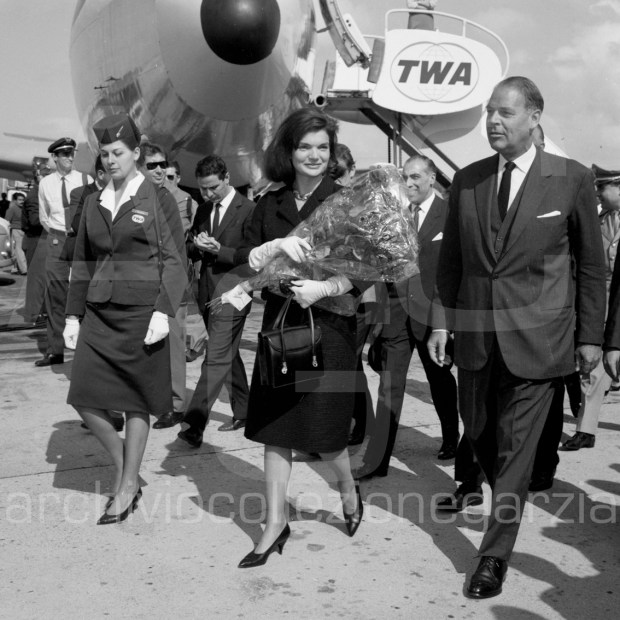
#JaquelineKennedyOnassis

Jacqueline Lee Bouvier, detta Jackie (Jackie Kennedy, durante il primo matrimonio, Jackie O, durante il secondo), coniugata Kennedy in prime nozze e Onassis in seconde nozze (Southampton, 28 luglio 1929 – New York, 19 maggio 1994), è stata una first lady statunitense.

Fu la moglie di John Fitzgerald Kennedy, 35º presidente degli Stati Uniti, First Lady dal 20 gennaio 1961 al 22 novembre 1963, data dell’assassinio del marito. Vedova, sposò poi l’armatore greco Aristotele Onassis.

Jacqueline LeeJackieKennedy Onassis (née Bouvier, pronounced /ˌˈækln ˈl ˈbvi/; July 28, 1929 – May 19, 1994) was the wife of the 35th President of the United States, John F. Kennedy, and First Lady of the United States during his presidency from 1961 until his assassination in 1963. Five years later, she married Greek shipping magnate Aristotle Onassis; they remained married until his death in 1975.

Jacqueline was the elder daughter of Wall Street stockbroker John Vernou Bouvier III and socialite Janet Norton Lee, who divorced in 1940. In 1951, she graduated with a Bachelor of Arts degree in French literature at George Washington University and went on to work for the Washington Times-Herald as an Inquiring Photographer.

In 1952, Jacqueline met Congressman John F. Kennedy at a dinner party. Shortly after, he was elected to the United States Senate and the couple married the following year. They had four children, two of whom died in infancy. As First Lady, she aided her husband’s administration with her presence in social events and with her highly publicized restoration of the White House. On November 22, 1963, she was riding with her husband in a motorcade in Dallas, Texas, when he was assassinated. She and her children withdrew from public view after his funeral, and she remarried in 1968 after the assassination of Robert F. Kennedy.

Following her second husband’s death, for the final two decades of her life, Jacqueline Kennedy Onassis had a career as a book editor. She is remembered for her contributions to the arts and preservation of historic architecture, as well as for her style, elegance, and grace. She was a fashion icon; her famous ensemble of pink Chanel suit and matching pillbox hat has become symbolic of her husband’s assassination and one of the lasting images of the 1960s. She ranks as one of the most popular First Ladies and in 1999 was named on Gallup’s list of Most Admired Men and Women in 20th century America.jaqueline kennedy a fiumino siste

#SilvanaPampanini

Silvana Pampanini (Roma, 25 settembre 1925 – Roma, 6 gennaio 2016) è stata un’attrice cinematografica italiana che ha goduto di una grande notorietà negli anni cinquanta.

Di famiglia veneta trapiantata a Roma da tre generazioni, si diplomò all’istituto magistrale e al conservatorio musicale di Santa Cecilia. Era ancora una studentessa quando si iscrisse al concorso di Miss Italia rilanciato a Stresa nel settembre del 1946 dopo la pausa bellica: nonostante la vittoria ufficiale di Rossana Martini le vivaci proteste del pubblico determinarono l’assegnazione del premio “ex aequo” anche a Silvana.

Questo concorso di bellezza la lanciò nel mondo del cinema: la Pampanini iniziò la carriera come interprete di pellicole musicali e acquisì una popolarità crescente tramite i settimanali illustrati e i cinegiornali. Suo padre, inizialmente contrario alla carriera della figlia come attrice, lasciò il proprio lavoro e divenne il suo abile agente.

Nella prima metà degli anni cinquanta, poco prima che Sophia Loren e Gina Lollobrigida raggiungessero una grande notorietà, per una breve stagione la Pampanini fu il simbolo più rappresentativo della bellezza italiana a livello mondiale, assieme a Lucia Bosè e Silvana Mangano. Grazie alla sua solida preparazione musicale nel decennio 1947/1957 fu ingaggiata anche per registrare, su dischi in vinile a 78 e 45 giri, numerose canzoni che non sono mai state ripubblicate su supporti più moderni.


Born in Rome, Pampanini became one of the most popular movie actresses in her country and was considered a sex symbol in the 1950s. In 1955 she visited New York, Denver and Hollywood but rejected job offers because she could not speak English properly and had some problems with the tax office.

She was also appreciated in France, where they nicknamed her Ninì Pampan, Spain, where she appeared in Tirma, South America, especially in Mexico, where she starred in Sed de Amor with Pedro Armendáriz, and Egypt. She worked with other internationally important actors and directors such as Buster Keaton, Vittorio Gassman, Marcello Mastroianni, Alberto Sordi, Totò, Jean Gabin, Henri Vidal, Abel Gance, Vittorio De Sica.

silvana pampanini 6-57 023

https://youtu.be/S1j2wOKBkNU

#AnnaMagnani

Anna Magnani (Roma, 7 marzo 1908 – Roma, 26 settembre 1973) è stata un’attrice italiana.

Considerata una delle maggiori interpreti femminili della storia.Attrice simbolo del cinema italiano, è altresì particolarmente conosciuta per essere stata, insieme ad Alberto Sordi e Aldo Fabrizi, una delle figure preminenti della romanità cinematografica del XX secolo. Celebri le sue interpretazioni, soprattutto in film come Roma città aperta, Bellissima, Mamma Roma e La rosa tatuata. Quest’ultimo le valse un Oscar alla miglior attrice protagonista.


Anna Magnani (Italian pronunciation: [ˈanna maɲˈɲaːni]; 7 March 1908 – 26 September 1973) was an Italian stage and film actress. She won the Academy Award for Best Actress, along with four other international awards, for her portrayal of a Sicilian widow in The Rose Tattoo.

Born in Rome,she worked her way through Rome’s Academy of Dramatic Art by singing at night clubs. During her career, her only child was stricken by polio when he was 18 months old and remained crippled.

She was referred to as “La Lupa,” the “perennial toast of Rome” and a “living she-wolf symbol” of the cinema. Time magazine described her personality as “fiery”, and drama critic Harold Clurman said her acting was “volcanic”. In the realm of Italian cinema she was “passionate, fearless, and exciting,” an actress that film historian Barry Monush calls “the volcanic earth mother of all Italian cinema.”Director Roberto Rossellini called her “the greatest acting genius since Eleonora Duse”. Playwright Tennessee Williams became an admirer of her acting and wrote The Rose Tattoo specifically for her to star in, a role for which she received an Oscar in 1955.

After meeting director Goffredo Alessandrini she received her first screen role in La cieca di Sorrento (The Blind Woman of Sorrento) (1934) and later achieved international fame in Rossellini’s Rome, Open City (1945), considered the first significant movie to launch the Italian neorealism movement in cinema. As an actress she became recognized for her dynamic and forceful portrayals of “earthy lower-class women” in such films as L’Amore (1948), Bellissima (1951), The Rose Tattoo (1955), The Fugitive Kind (1959) and Mamma Roma (1962). As early as 1950 Life magazine had already stated that Magnani was “one of the most impressive actresses since Garbo”.

Anna Magnani a Parigi acquista dei regali per il natale del 1960 in compagnia del bassotto “Madame” che aveva lavorato con lei nel film “Siamo donne” del 1953

anna magnani053


https://youtu.be/HCrSEJOhWZg

#LouisArmstrong #BrigitteBardot #JeanPaulBelmondo’ #ClaudiaCardinale #ChetBaker #NatKingCole #EllaFitzgerald #FedericoFellini #PaulNewman #AnnaMagnani #PierPaoloPasolini #MilesDavis #MaxRoach #MinaMazzini #MarcelloMastroianni #DomenicoModugno #PierpaoloPasolini #GinoPaoli #AlbertoSordi #Litz Taylor and more…

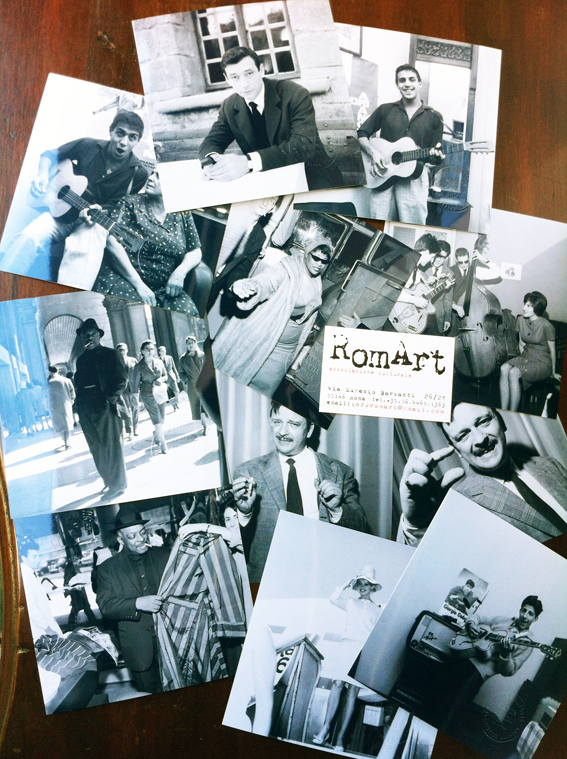
COMPRA UNA FOTO E SOSTIENI L’ ARCHIVIO COLLEZIONE GARZIA

Tutto pronto per le prime spedizioni! Ordina adesso le foto!

E’ molto semplice: copia la foto desiderata, spedisci una email a: inforomart@gmail.com e riceverai le modalità per il pagamento e la ricezione.

Stiamo predisponendo il pagamento tramite PayPal o in alternativa un bonifico all’associazione.

( Sono stampate e montate a mano nei passepartout e richiedono circa 2 giorni per essere preparate.)


IMG_7032 IMG_7033 IMG_7034 IMG_7035 IMG_7036 IMG_7037 IMG_7038 IMG_7039 IMG_7040 IMG_7041 IMG_7042 IMG_7043 IMG_7044 IMG_7045 IMG_7046 IMG_7047 IMG_7048 IMG_7049 IMG_7050 IMG_7051 IMG_7052 IMG_7053 IMG_7054 IMG_7055 IMG_7056 IMG_7057 IMG_7058 IMG_7059

#MariaCallas

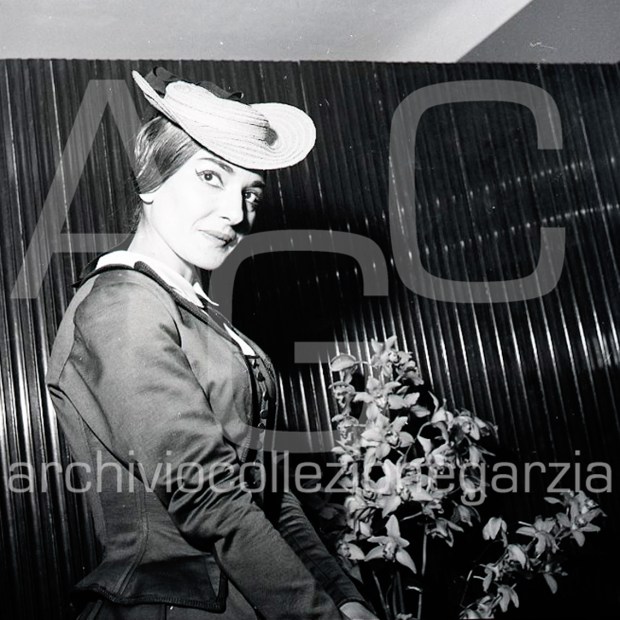
Maria Callas, nome d’arte di Anna Maria Cecilia Sophia Kalogeropoulou (greco: Άννα Μαρία Καικιλία Σοφία Καλογεροπούλου; New York, 2 dicembre 1923 – Parigi, 16 settembre 1977), è stata un soprano greco, in possesso della nazionalità statunitense e naturalizzata italiana fino al 1966, quando rinunciò ad entrambe per ottenere quella greca[1]. Nata a New York da genitori greci, Maria Callas studiò ad Atene dal 1939 al 1945, intraprendendo la carriera internazionale dai tardi anni quaranta agli anni sessanta.


Η Μαρία Κάλλας (Μαρία Άννα Σοφία Καικιλία Καλογεροπούλου) (Νέα Υόρκη, 2 Δεκεμβρίου 1923 – Παρίσι 16 Σεπτεμβρίου 1977) υπήρξε κορυφαία υψίφωνος και η πλέον γνωστή παγκοσμίως ντίβα της όπερας.


Maria Callas, Commendatore OMRI (Greek: Μαρία Κάλλας; December 2, 1923 – September 16, 1977), was an American-born Greek soprano and one of the most renowned and influential opera singers of the 20th century. Critics praised her bel canto technique, wide-ranging voice and dramatic interpretations. Her repertoire ranged from classical opera seria to the bel canto operas of Donizetti, Bellini and Rossini and further, to the works of Verdi and Puccini; and, in her early career, to the music dramas of Wagner. Her musical and dramatic talents led to her being hailed as La Divina.

Born in New York City and raised by an overbearing mother, she received her musical education in Greece and established her career in Italy. Forced to deal with the exigencies of wartime poverty and with myopia that left her nearly blind onstage, she endured struggles and scandal over the course of her career. She turned herself from a heavy woman into a svelte and glamorous one after a mid-career weight loss, which might have contributed to her vocal decline and the premature end of her career. The press exulted in publicizing Callas’s allegedly temperamental behavior, her supposed rivalry with Renata Tebaldi and her love affair with Greek shipping tycoon Aristotle Onassis. Although her dramatic life and personal tragedy have often overshadowed Callas the artist in the popular press, her artistic achievements were such that Leonard Bernstein called her “the Bible of opera” and her influence so enduring that, in 2006, Opera News wrote of her: “Nearly thirty years after her death, she’s still the definition of the diva as artist—and still one of classical music’s best-selling vocalists.

callas-visconti00 W

https://youtu.be/7rjGwS20V94