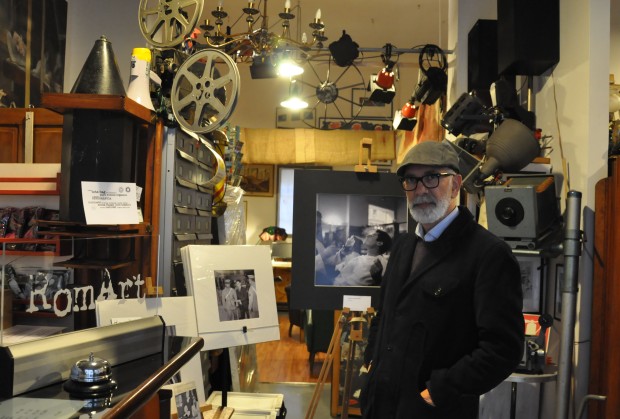
Marco Garzia fotografo e cineasta, si occupa di fotografia dal 1976, quando durante il periodo di leva in marina trasformò quella che era una passione in professione.
Dall’anno 2008 trasforma quello che era l’archivio della sua attività di fotografo e d’agenzia in una raccolta chiamata ARCHIVIO COLLEZIONE GARZIA
Da 35 anni l’archivio fotografico si arricchisce, acquisendo fotografie e fondi fotografici di professionisti ed agenzie che hanno cessato l’attività, salvando spesso dalla perdita assoluta immagini uniche. Diventato ormai una raccolta con più di 5 milioni di negativi e stampe originali, che coprono un periodo temporale che va dal 1947 ai nostri giorni, rivelandosi una preziosa testimonianza della nostra società, nel 2012 l’Archivio è stato riconosciuto di interesse storico particolare dal Ministero dei Beni Culturali Italiano.
L’ Archivio Collezione Garzia si compone di più di cinque milioni di immagini (negativi, diapositive, stampe originali) realizzate o acquisite tramite fotografi, agenzie, antiquari e donazioni, nel corso della sua vita professionale come fotografo, da Marco Garzia.
Nel 2012 l’archivio/collezione è stato dichiarato di interesse storico particolare dal MiBac.
L’archivio non usufruisce di nessun finanziamento pubblico.
Da oggi potete donare tramite bonifico bancario specificando nella causale: sostengo con donazione l’ associazione culturale Romart per la cura, l’archiviazione e conservazione dell’ ArchivioCollezioneGarzia, via Eugenio Barsanti, 28 00146 Roma
Fai una donazione a: Associazione Culturale ROMART:
IBAN: IT 96 H 07601 03200 0010 2360 1287
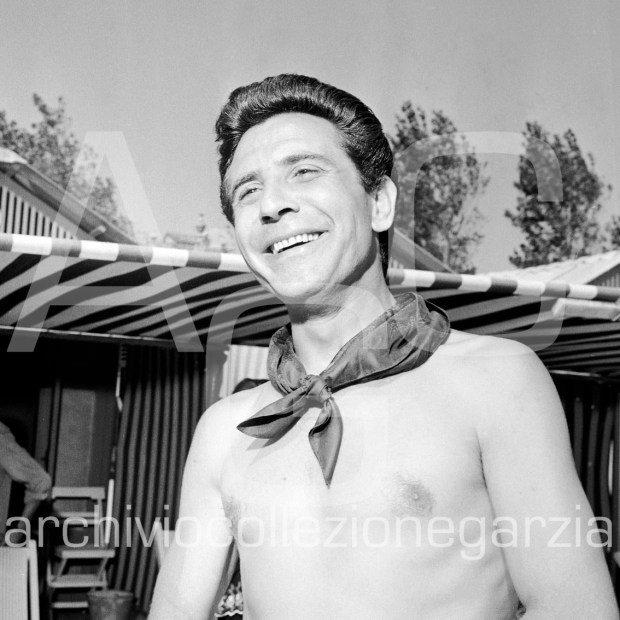
Gilbert Bécaud, pseudonimo di François Gilbert Silly (Tolone, 24 ottobre 1927 – Parigi, 18 dicembre 2001), è stato un cantante e compositore francese. Fu soprannominato Monsieur 100.000 volt (Signor 100.000 volt) per la sua grande energia sulla scena e per le sue oltre 400 canzoni. Il suo successo più celebre Et maintenant è del 1961.
François Gilbert Léopold Silly, dit Gilbert Bécaud , né le 24 octobre 1927 à Toulon et mort le 18 décembre 2001 à Boulogne-Billancourt est un chanteur, compositeur, pianiste et acteur français.
Au cours de sa carrière, il se produit trente-trois fois sur la scène de l’Olympia, où il gagne son surnom de « Monsieur 100 000 volts » en raison de son sens du swing, à cause des passions qu’il soulevait dans son sillage et de ses fans qui, souvent, cassaient par enthousiasme les fauteuils. Il laisse l’image d’un homme électrique, toujours en mouvement. Sa cravate à pois, ses quelque quatre cents chansons et sa main sur l’oreille (pour être sûr de chanter juste) sont d’autres images spécifiques qui ont marqué les esprits.
Gilbert Bécaud (French pronunciation: [ʒil.bɛːʁ be.ko], 24 October 1927 – 18 December 2001) was a French singer, composer, pianist and actor, known as “Monsieur 100.000 Volts” for his energetic performances. His best-known hits are “Nathalie” and “Et Maintenant”, a 1961 release that became an English language hit as “What Now My Love”. He remained a popular artist for nearly fifty years, identifiable in his dark blue suits, with a white shirt and “lucky tie”; blue with white polka dots. When asked to explain his gift he said, “A flower doesn’t understand botany.” His favourite venue was the Paris Olympia under the management of Bruno Coquatrix. He debuted there in 1954 and headlined in 1955, attracting 6,000 on his first night, three times the capacity. On November 13, 1997, Bécaud was present for the re-opening of the venue after its reconstruction.
Anna Magnani (Roma, 7 marzo 1908 – Roma, 26 settembre 1973) è stata un’attrice italiana. È considerata una delle maggiori interpreti femminili della storia. Attrice simbolo del cinema italiano, è altresì particolarmente conosciuta per essere stata, insieme ad Aldo Fabrizi e Alberto Sordi, una delle figure preminenti della romanità cinematografica del XX secolo.
Celebri le sue interpretazioni, soprattutto in film come Roma città aperta, Bellissima, Mamma Roma e La rosa tatuata. Quest’ultimo le valse un Oscar alla miglior attrice protagonista.
Anna Magnani (Italian pronunciation: [ˈanna maɲˈɲaːni]; 7 March 1908 – 26 September 1973) was an Italian stage and film actress. She won the Academy Award for Best Actress, along with four other international awards, for her portrayal of a Sicilian widow in The Rose Tattoo.
Born in Rome, she worked her way through Rome’s Academy of Dramatic Art by singing at night clubs. During her career, her only child was stricken by polio when he was 18 months old and remained crippled.
She was referred to as “La Lupa,” the “perennial toast of Rome” and a “living she-wolf symbol” of the cinema. Time magazine described her personality as “fiery”, and drama critic Harold Clurman said her acting was “volcanic”. In the realm of Italian cinema she was “passionate, fearless, and exciting,” an actress that film historian Barry Monush calls “the volcanic earth mother of all Italian cinema.”Director Roberto Rossellini called her “the greatest acting genius since Eleonora Duse”. Playwright Tennessee Williams became an admirer of her acting and wrote The Rose Tattoo specifically for her to star in, a role for which she received an Oscar in 1955.
After meeting director Goffredo Alessandrini she received her first screen role in La cieca di Sorrento (The Blind Woman of Sorrento) (1934) and later achieved international fame in Rossellini’s Rome, Open City (1945), considered the first significant movie to launch the Italian neorealism movement in cinema. As an actress she became recognized for her dynamic and forceful portrayals of “earthy lower-class women” in such films as L’Amore (1948), Bellissima (1951), The Rose Tattoo (1955), The Fugitive Kind (1959) and Mamma Roma (1962). As early as 1950 Life magazine had already stated that Magnani was “one of the most impressive actresses since Garbo”.
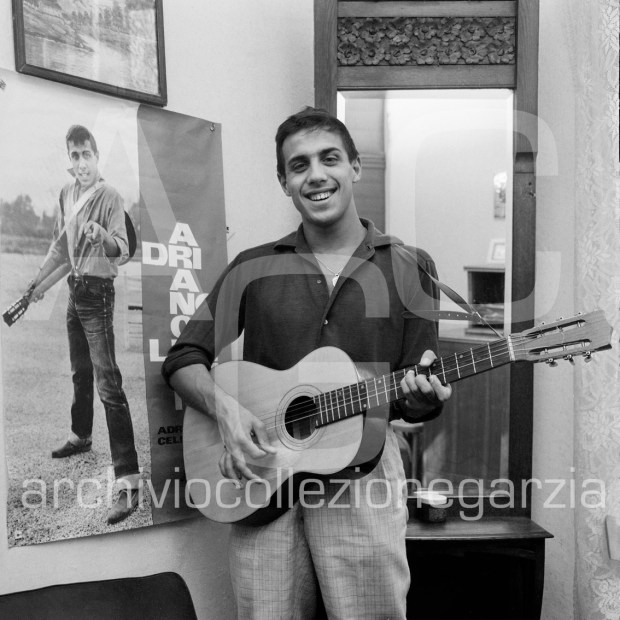
Adriano Celentano (Milano, 6 gennaio 1938) è un cantautore, ballerino, conduttore televisivo, attore, regista, sceneggiatore, produttore discografico, montatore, e showman italiano.
È soprannominato il molleggiato per via del suo modo di ballare. In tutta la sua carriera Celentano ha venduto oltre 150 milioni di dischi. Adriano Celentano è l’artista italiano con le più alte vendite di dischi stimati.
Molto spesso anche autore delle musiche e canzoni (a volte coautore di musica e testi, anche se, secondo la moglie Claudia Mori, li lasciò firmare ad altri) grazie alla sua carriera e ai suoi grandi successi, non solo in Italia ma anche nel resto del mondo, è considerato uno dei pilastri della musica leggera italiana. Il suo carattere ha fatto sì che attorno a Celentano si costruisse un personaggio divenuto un emblema e un’icona per molti italiani del secondo dopoguerra.
Gli viene riconosciuto il merito di avere capito che qualcosa nel mondo della musica (e del costume) stava cambiando, e quindi di avere introdotto in Italia, influenzato dalle nuove stelle del rock and roll proveniente dagli Stati Uniti, un nuovo tipo di musica, sfrenata e di grande appeal soprattutto per i giovani di allora.
Ha recitato in circa 40 film, e pubblicato altrettanti album discografici riscuotendo enorme successo sia nel campo musicale sia nel mondo del cinema che lo ha visto trionfare dalla fine degli anni sessanta fino agli inizi dei novanta con Jackpot che ad oggi rimane il suo ultimo film.
Adriano Celentano (Italian pronunciation: [adriˈaːno tʃelenˈtaːno]; born 6 January 1938) is an Italian singer, composer, comedian, actor, film director and TV host. He is the best-selling male Italian singer.
Celentano was born in Milan at 14 Via Gluck, about which he later wrote the famous song “Il ragazzo della via Gluck” (“The boy from Gluck Street”). His parents were from Foggia, in Apulia, and had moved north for work.
Heavily influenced by his idol Elvis Presley and the 1950s rock revolution and by the American actor Jerry Lewis, he has retained his popularity in Italy for over 50 years, selling millions of records and appearing in numerous TV shows and movies. In the latter respect, he has also been a creator of a comic genre, with his characteristic walking and his facial expressions. For the most part, his films were commercially successful; indeed in the 1970s and part of the 1980s, he was the king of the Italian box office in low budget movies. As an actor, critics point to Serafino (1968), directed by Pietro Germi, as his best performance.
He has released forty albums, comprising twenty nine studio albums, three live albums, and eight compilations. His most famous songs are “La coppia piu’ bella del mondo”, which sold over one million copies, and was awarded a gold disc; “Azzurro” (1968), written by Paolo Conte; and “Prisencolinensinainciusol” (1972), which was written to mimic the way English sounds to non-English speakers despite being almost entirely nonsense.
Celentano was referenced in the 1979 Ian Dury and the Blockheads song and single, “Reasons to be Cheerful, Part 3”, as one of the aforementioned “reasons to be cheerful,” and in Fellini’s 1986 film Ginger and Fred.
Adriano Celentano has been a vegetarian since 2005 and defends animal rights.
Marcello Marchesi (Milano, 14 aprile 1912 – Cabras, 19 luglio 1978) è stato uno scrittore, sceneggiatore, regista cinematografico e teatrale, paroliere e attore italiano.
Fu anche giornalista, scrittore, autore di canzoni e cantante, autore di programmi televisivi e radiofonici, pubblicitario e talent scout (lanciò fra gli altri Sandra Mondaini, Gino Bramieri, Walter Chiari, Gianni Morandi, Cochi e Renato, Paolo Villaggio). La sua vita privata e la sua carriera si incrociarono con le fasi salienti e i personaggi più importanti della storia italiana del 1900.
Marcello Marchesi (4 April 1912 – 19 July 1978) was an Italian screenwriter and film director. He wrote 64 films between 1939 and 1977. He also directed six films between 1951 and 1952.
He was born in Rome, Italy and died in San Giovanni in Sinis, Italy.
Ermanno Olmi (Bergamo, 24 luglio 1931) è un regista, sceneggiatore, montatore, direttore della fotografia, produttore cinematografico, scrittore e scenografo italiano.
Ermanno Olmi (born July 24, 1931 in Bergamo) is a renowned Italian film director and screenwriter.
Ugo Tognazzi (Cremona, 23 marzo 1922 – Roma, 27 ottobre 1990) è stato un attore, regista, sceneggiatore teatrale, cinematografico e televisivo italiano.
Con Alberto Sordi, Vittorio Gassman, Marcello Mastroianni e Nino Manfredi fu uno dei “mostri” della commedia all’italiana.
Ugo Tognazzi (Italian pronunciation: [ˈuːɡo toɲˈɲattsi]; 23 March 1922 – 27 October 1990) was an Italian film, TV, and theatre actor, director, and screenwriter.
Mina è la più grande voce italiana di sempre. Ma non solo. Per gli italiani Mina è un’icona al pari di altri grandi “marchi”che parlano di qualità eccelsa nel mondo, quali Ferrari o Fellini. Nell’immaginario collettivo per gli italiani Mina è un patrimonio del quale andare orgogliosi.
Mina ha incarnato il modello del talento e della diva dello spettacolo sulle scene, in televisone e nei suoi dischi. Ha fatto la storia della televisione italiana negli anni ’60 e ’70 per poi decidere di non apparirvi più. Ha interpretato le canzoni di successo che hanno accompagnato la vita quotidiana degli italiani per 40 anni. Mina pubblica un lavoro discografico inedito ogni anno.
Oggi è forse l’unico caso al mondo di un artista che non si concede ai media (infatti non rilascia interviste e non fa né recitals né apparizioni pubbliche da più di 20 anni) rimanendo ugualmente al primo posto in classifica ogni volta che pubblica un nuovo disco.
Oltre a intensificare la sua attività discografica, negli ultimi anni Mina ha scritto su importanti testate, incarico in cui si è rivelata padrona di un pensiero importante: protagonista di seguitissimi editoriali dove il suo talento come artista e la sua acutezza e credibilità l’hanno portata ad essere autorevole come editorialista tanto quanto come cantante.
Con l’ironia che il suo “talento totale” le ha costantemente assicurato, Mina, già da molti anni prima che si parlasse di “look”, ha sempre giocato con la sua immagine, stravolgendola nelle copertine dei suoi dischi, che sono anche state oggetto di mostre nei musei italiani. Mina ha sempre precorso i tempi e amato confrontarsi con le nuove tecnologie. Nel 2001 ha aperto le porte del suo studio di registrazione attraverso internet, dando in streaming un filmato dove registrava live.
Le richieste di poter vedere Mina in questo documento filmato al server dell’operatore Wind telecomunicazioni s.p.a. sono state addirittura 50 milioni, facendo collassare l’intero sistema…
Mina è un’artista eclettica e versatile che ha interpretato musica di tutti i generi spaziando tra i diversi stili con assoluta proprietà di linguaggio.
Mina, nome d’arte di Mina Anna Maria Mazzini (Busto Arsizio, 25 marzo 1940)
Mina is the greatest Italian singer of all times, but not only. For Italians, Mina is an icon equally as important as the biggest and best known names about which they boast as proof that Italy has the highest quality everything in the world, like Ferrari or Fellini. In the Italian collective imagination, Mina is a national treasure to be proud of and jealously guarded.
During the ‘60s and the ‘70s Mina embodied the very essence of the ultra-talented superstar on stage, in TV and in her records. She made television history and then suddenly, inexplicably decided to retire. She sang Italy’s greatest hits, which for over 40 years have been the leitmotiv of the everyday life of the Italian people. Nowadays Mina releases one record a year. She is perhaps the only artist in the world that does not offer herself up to the media – as a matter of fact, she does not grant interviews, has not appeared in concert or made any other public appearance for more than 20 years. Yet, all her new albums reach number one in the national hit parade.
In addition to her recordings, in recent years Mina has published as freelance journalist in important newspapers and magazines, revealing a penchant for deep, thought-provoking insight. Her successful columns have earned her a new, wide-flung reputation as a talented editorialist, demonstrating intelligence and adding wide journalistic credibility to her fame as singer.
Thanks to her capacity for “self-irony” that her unrivalled talent has always assured her, Mina has always laughed about, played and gambled with her imagine, varying it in a thousand ways in the media and even on her record sleeves, many of which have been placed on exhibit in Italian museums of art. Always ahead of her times, Mina remains on the cutting edge even in new technologies. In 2001 she opened the doors of her recording studios to the WWW by streaming an extended version of the videotaped session of her new album. The night the video went on-line, the server was overwhelmed with over 50,000 connection requests and the entire system crashed.
Mina is an eclectic, versatile artist completely at ease with a repertoire spanning all musical genres, all of which she has sung with masterful panache.
Desde siempre, Mina es la voz italiana más importante. Pero no sólo eso. Para los italianos Mina representa un icono a la altura de otras grandes “marcas” que hablan de calidad excelsa en el mundo, como Ferrari o Fellini. Para los italianos, Mina es un patrimonio del que se sienten orgullosos.
Ha encarnado el modelo del talento y de la diva del espectáculo en escenarios, discos y televisión. Ha formado parte de la historia de la televisión italiana en los años ’60 y ’70 y fue su propia decisión no volver a aparecer en ella. Ha interpretado canciones de éxito que han acompañado la vida cotidiana de los italianos durante cuarenta años. Mina publica un trabajo discográfico inédito cada año.
Hoy es, quizá, el único caso en el mundo de un artista que sin concederse a los mass-media (de hecho, no concede entrevistas y no hace recitales ni apariciones públicas desde hace más de veinte años) consigue estar siempre en el primer puesto de la clasificación cada vez que saca un disco nuevo. Además de su actividad discográfica en los ultimos años, Mina ha escrito en importantes periódicos descubriéndose protagonista de editoriales con gran público lector; y su talento y credibilidad la revelaron, en estos años, dueña de un pensamiento libre e importante, tan importante como en su faceta musical.
Actualmente, Mina escribe en el semanal “Vanity Fair”. Un talento con mayúsculas y excepcionalmente rico de ironía el de Mina, que ya muchos años antes de que se hablara de “look”, siempre ha jugado con su imagen, cambiándola de arriba abajo en las portadas de sus discos, también objeto de muestras en algunos museos italianos. Siempre se ha adelantado a los tiempos y le ha encantado medirse con las nuevas tecnologías. En 2001 abrió las puertas de su estudio de grabación a internet, dando en streaming un video donde grababa en vivo. Las peticiones para poder ver a Mina en este documento filmado al server del operador Wind telecomunicazioni s.p.a, llegaron a los cincuenta millones e hicieron colapsando todo el sistema.
Mina es una artista ecléctica y versátil que ha interpretado todos los géneros de la música, alternando los diferentes estilos con absoluta propiedad de lenguaje.
David Niven, al secolo James David Graham Niven (Londra, 1º marzo 1910 – Château-d’Œx, 29 luglio 1983), è stato un attore britannico.
Vinse l’Oscar al miglior attore protagonista per la sua interpretazione del timido e solitario maggiore Pollock in Tavole separate (1958), accanto a Deborah Kerr e Burt Lancaster, tratto dall’omonima commedia di Terence Rattigan.
Seguirono ruoli memorabili in drammi come Buongiorno tristezza (1958), in film bellici quali I cannoni di Navarone (1961) e I due nemici (1962), nel quale ebbe come partner Alberto Sordi, e in commedie sofisticate come La pantera rosa (1963) e James Bond 007 – Casino Royale (1967), commedia non appartenente alla serie ufficiale di film tratti dai romanzi di Ian Fleming, in cui interpretò il ruolo di James Bond.
Negli anni settanta venne acclamato da pubblico e critica per due brillanti libri autobiografici: La luna è un pallone (The Moon’s a Balloon) (1971) e Bring On the Empty Horses (1975), quest’ultimo mai tradotto in italiano. Nel 1981 pubblicò un romanzo d’amore e avventura ambientato a Londra durante la seconda guerra mondiale, Va piano, torna presto (Go Slowly, Come Back Quickly).
Colpito da una grave forma di sclerosi laterale amiotrofica, conosciuta anche come morbo di Lou Gehrig, Niven morì nel 1983 nella sua residenza svizzera di Château-d’Œx.
James David Graham Niven (1 March 1910 – 29 July 1983) was an English actor and novelist who was popular in Europe and in the United States. He may be best known for his roles as Squadron Leader Peter Carter in A Matter of Life and Death, as Phileas Fogg in Around the World in 80 Days and as Sir Charles Lytton, a.k.a. “the Phantom”, in The Pink Panther. He was awarded the Academy Award for Best Actor for his performance in Separate Tables (1958).
Born in London, Niven attended Heatherdown Preparatory School and Stowe before gaining a place at the Royal Military College, Sandhurst. After Sandhurst he was gazetted a lieutenant in the Highland Light Infantry. Having developed an interest in acting, he left the Highland Light Infantry, travelled to Hollywood and had several minor roles in film. He first appeared as an extra in the British film There Goes the Bride (1932). From there, he hired an agent and had several small parts in films from 1933 to 1935, including a non-speaking part in MGM’s Mutiny on the Bounty. This brought him to wider attention within the film industry and he was spotted by Samuel Goldwyn. Upon the outbreak of the Second World War, Niven returned to Britain and rejoined the army, being re-commissioned as a lieutenant.
Niven resumed his acting career after his demobilisation, and was voted the second most popular British actor in the 1945 Popularity Poll of British film stars. He appeared in A Matter of Life and Death (1946), The Bishop’s Wife (1947) and Enchantment (1948), all of which received critical acclaim. Niven later appeared in The Elusive Pimpernel (1950), The Toast of New Orleans (1950), Happy Go Lovely (1951), Happy Ever After (1954) and Carrington V.C. (1955) before scoring a big success as Phileas Fogg in Michael Todd’s production of Around the World in 80 Days. Niven appeared in nearly a hundred films, and many shows for television. He also began writing books, with considerable commercial success. In 1982 he appeared in Blake Edwards’ final “Pink Panther” films Trail of the Pink Panther and Curse of the Pink Panther, reprising his role as Sir Charles Lytton.
Sir Alfred Joseph Hitchcock (Londra, 13 agosto 1899 – Los Angeles, 29 aprile 1980) è stato un regista e produttore cinematografico britannico naturalizzato statunitense. È considerato una delle personalità più importanti della storia del cinema.
Lo spartiacque nella carriera di Hitchcock è rappresentato dal suo trasferimento da Londra a Hollywood, avvenuto nel 1940. In base a questa data, gli studiosi suddividono la sua produzione in due grandi periodi:
il periodo inglese, che va dal 1925 al 1940, durante il quale ha diretto ventitré film, di cui nove muti;
il periodo americano, che va dal 1940 al 1976, durante il quale ha diretto trenta film, fra i quali si annoverano i più conosciuti.
L’ultimo film è Complotto di famiglia diretto nel 1976.
Il regista è conosciuto anche, grazie ai suoi capolavori thriller, come “maestro del brivido”.
Sir Alfred Joseph Hitchcock, KBE (13 August 1899 – 29 April 1980) was an English film director and producer, often nicknamed “The Master of Suspense”. He pioneered many elements of the suspense and psychological thriller genres. He had a successful career in British cinema with both silent films and early talkies, and became renowned as England’s best director. Hitchcock moved to Hollywood in 1939 and became a US citizen in 1955.
Over a career spanning half a century, Hitchcock fashioned for himself a recognisable directorial style. His stylistic trademarks include the use of camera movement that mimics a person’s gaze, forcing viewers to engage in a form of voyeurism. In addition, he framed shots to maximise anxiety, fear, or empathy, and used innovative forms of film editing. His work often features fugitives on the run alongside “icy blonde” female characters.Many of Hitchcock’s films have twist endings and thrilling plots featuring depictions of murder and other violence. Many of the mysteries, however, are used as decoys or “MacGuffins” that serve the films’ themes and the psychological examinations of their characters. Hitchcock’s films also borrow many themes from psychoanalysis and sometimes feature strong sexual overtones. He became a highly visible public figure through interviews, movie trailers, cameo appearances in his own films, and the ten years in which he hosted the television program Alfred Hitchcock Presents.
Hitchcock directed more than fifty feature films in a career spanning six decades and is often regarded as the greatest British filmmaker.He came first in a 2007 poll of film critics in Britain’s Daily Telegraph, which said: “Unquestionably the greatest filmmaker to emerge from these islands, Hitchcock did more than any director to shape modern cinema, which would be utterly different without him. His flair was for narrative, cruelly withholding crucial information (from his characters and from viewers) and engaging the emotions of the audience like no one else.”In 2002, the magazine MovieMaker named Hitchcock the most influential filmmaker of all time.
Alfred Joseph Hitchcock est un réalisateur britannique, également producteur et scénariste de cinéma, né le 13 août 1899 à Leytonstone et mort le 29 avril 1980 à Bel Air à Los Angeles.
Après une carrière à succès au Royaume-Uni son pays natal à l’époque du cinéma muet et au début du cinéma sonore, Hitchcock part s’installer à Hollywood. Le 20 avril 1955, il acquiert la citoyenneté américain, mais il conservera sa citoyenneté britannique, qui lui permettra, au soir de sa vie, d’être anobli par la Reine.
Au cours de ses quelque soixante années de carrière, il réalise cinquante-trois longs métrages, dont certains comptent, tant par leur succès public que par leur réception et leur postérité critiques, parmi les plus importants du septième art : ce sont, entre autres, Les 39 Marches, Les Enchaînés, Fenêtre sur cour, Sueurs froides, La Mort aux trousses, Psychose, ou encore Les Oiseaux.
Pionnier de nombreuses techniques dans le genre du thriller, Hitchcock, « le maître du suspense », est considéré comme l’un des réalisateurs les plus influents sur le plan stylistique, installant les notions de suspense et de MacGuffin dans l’univers cinématographique. Ses thrillers se caractérisent également, le plus souvent, par une habile combinaison entre tension et humour. Ses thèmes récurrents sont la peur, la culpabilité et la perte d’identité. Un thème que l’on rencontre aussi fréquemment dans ses œuvres, avec certaines variations, est celui de l’innocent persécuté.
Doué par ailleurs d’un sens aigu de l’autopromotion — notamment au travers de ses caméos — , Hitchcock demeure aujourd’hui l’une des personnalités du XXe siècle les plus reconnaissables et les plus connues, à travers le monde.
Souvent considéré comme l’un des plus grands réalisateurs britanniques, il tient la première place sur une liste dressée en 2007 par des critiques cinématographiques pour le Daily Telegraph, avec le commentaire : « Sans aucun doute le plus grand cinéaste à émerger de ces îles, Hitchcock a fait davantage qu’aucun autre réalisateur pour façonner le cinéma moderne, lequel sans lui serait tout à fait différent. Il possédait un flair pour la narration, en dissimulant avec cruauté (à ses personnages et au spectateur) des informations cruciales et en engageant comme nul autre les émotions du publi. ».
Alfred Hitchcock était Knight Commander (chevalier commandeur) de l’Ordre de l’Empire britannique.
Sir Alfred Joseph Hitchcock (Leytonstone, Londres, 13 de agosto de 1899-Bel Air, Los Ángeles, 29 de abril de 1980) fue un director de cine y productor británico. Fue pionero en muchas de las técnicas que caracterizan a los géneros cinematográficos del suspense y el thriller psicológico. Tras una exitosa carrera en el cine británico en películas mudas y en las primeras sonoras, que le llevó a ser considerado el mejor director de Inglaterra, Hitchcock se trasladó a Hollywood en 1939.
A lo largo de una carrera que duró más de medio siglo, Hitchcock configuró un estilo cinematográfico distintivo y muy reconocible. Fue innovador en el uso de la cámara para imitar la mirada de una persona, obligando de esta manera a los espectadores a participar de cierta forma de voyeurismo, empleaba encuadres para provocar ansiedad, miedo o empatía y desarrolló una novedosa forma de montaje fílmico. Sus historias a menudo están protagonizadas por fugitivos de la ley y sus actrices protagonistas suelen ser de pelo rubio. Muchos de sus filmes presentan giros argumentales en el desenlace y tramas perturbadoras que se mueven en torno a la violencia, los asesinatos y el crimen. Con frecuencia, los misterios que articulan las tramas no son más que señuelos (Macguffin, como los llamó el propio director) que sirven para hacer avanzar la historia pero no tienen mayor importancia en el argumento. Las películas de Hitchcock también abordan a menudo temas del psicoanálisis y tienen marcadas connotaciones sexuales. Gracias a los cameos en muchos de sus filmes, las entrevistas, los avances publicitarios de sus películas y el programa de televisión Alfred Hitchcock Presenta, el cineasta se convirtió en un icono cultural.
Hitchcock dirigió más de cincuenta películas a lo largo de seis décadas. Reconocido a menudo como el mejor cineasta británico, apareció el primero de una encuesta realizada entre los críticos de cine en 2007 por el periódico The Daily Telegraph. El diario lo definió así: «Indudablemente el más grande cineasta nacido en estas islas, Hitchcock hizo más que cualquier otro director para dar forma al cine moderno, que habría sido completamente diferente sin él». La revista MovieMaker lo ha descrito como el director más influyente de todos los tiempos y es ampliamente considerado como uno de los artistas más importantes del séptimo arte.





 archiviocollezionegarzia.com