1959

#GaryCooper

Gary Cooper, nato Frank James Cooper (Helena, 7 maggio 1901 – Beverly Hills, 13 maggio 1961), è stato un attore statunitense.

È stato candidato 5 volte all’Oscar, vincendolo in due occasioni, nel 1942 e nel 1953, ai quali se ne aggiunse uno alla carriera nel 1961. Eroe per eccellenza del western e del melodramma hollywoodiano, l’American Film Institute ha inserito Cooper all’undicesimo posto tra le più grandi star della storia del cinema.

Per il suo contributo all’industria cinematografica, Gary Cooper è ricordato con una stella presso la Hollywood Walk of Fame, all’altezza del 6243 di Hollywood Boulevard (Los Angeles). Nel 1966 fu riconosciuto come uno dei migliori cowboy e un omaggio alla sua memoria è presente al National Cowboy & Western Heritage Museum (Museo dei ricordi dei Cowboy e del West) a Oklahoma City, nello Stato dell’Oklahoma.

gary-cooper-w                                                                                      Gary Cooper  a Cap d’Antiques luglio 1959       @ archiviocollezionegarzia


https://youtu.be/qZil728hUy0

Gary Cooper (born Frank James Cooper; May 7, 1901 – May 13, 1961) was an American film actor known for his natural, authentic, and understated acting style and screen performances. His career spanned thirty-five years, from 1925 to 1960, and included leading roles in eighty-four feature films. He was a major movie star from the end of the silent film era through the end of the golden age of Classical Hollywood. His screen persona appealed strongly to both men and women, and his range of performances included roles in most major movie genres. Cooper’s ability to project his own personality onto the characters he played contributed to his appearing natural and authentic on screen. The screen persona he sustained throughout his career represented the ideal American hero.

Cooper began his career as a film extra and stunt rider and soon landed acting roles. After establishing himself as a Western hero in his early silent films, Cooper became a movie star in 1929 with his first sound picture, The Virginian. In the early 1930s, he expanded his heroic image to include more cautious characters in adventure films and dramas such as A Farewell to Arms (1932) and The Lives of a Bengal Lancer (1935). During the height of his career, Cooper portrayed a new type of hero—a champion of the common man—in films such as Mr. Deeds Goes to Town (1936), Meet John Doe (1941), Sergeant York (1941), The Pride of the Yankees (1942), and For Whom the Bell Tolls (1943).

In the postwar years, he portrayed more mature characters at odds with the world in films such as The Fountainhead (1949) and High Noon (1952). In his final films, Cooper played non-violent characters searching for redemption in films such as Friendly Persuasion (1956) and Man of the West (1958).

He married New York debutante Veronica Balfe in 1933, and the couple had one daughter. Their marriage was interrupted by a three-year separation precipitated by Cooper’s love affair with Patricia Neal. Cooper received the Academy Award for Best Actor for his roles in Sergeant York and High Noon. He also received an Academy Honorary Award for his career achievements in 1961. He was one of the top ten film personalities for twenty-three consecutive years, and was one of the top money-making stars for eighteen years. The American Film Institute (AFI) ranked Cooper eleventh on its list of the twenty five greatest male stars of classic Hollywood cinema.
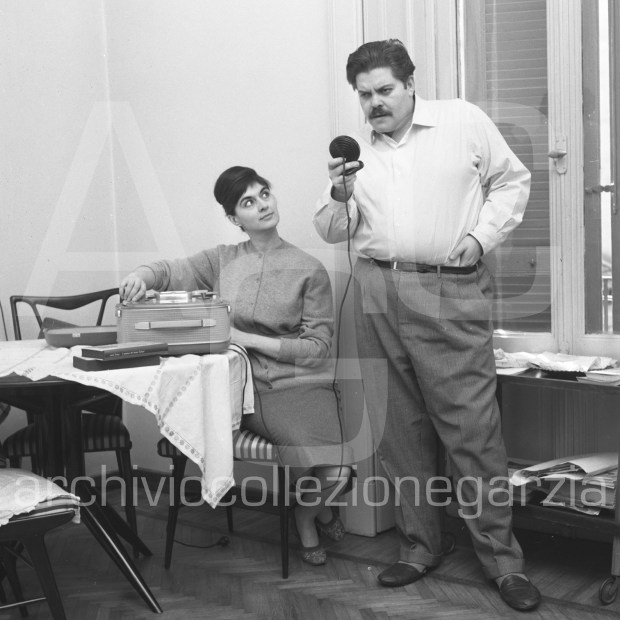


#TinoBuazzelli

Agostino “Tino” Buazzelli (Frascati, 13 luglio 1922 – Roma, 20 ottobre 1980) è stato un attore italiano di teatro, cinema e televisione, e pittore.

Considerato tra i migliori interpreti brechtiani del Novecento, è ricordato per l’interpretazione di Galileo Galilei nella Vita di Galileo diretto da Giorgio Strehler nella stagione 1962/1963 al Piccolo Teatro di Milano. L’incontro con Strehler risale al 1952, quando il regista lo chiamò per mettere in scena Elisabetta d’Inghilterra di Ferdinand Bruckner, Il revisore di Nikolai Gogol e Sei personaggi in cerca d’autore di Pirandello.

Buazzelli raggiunse l’apice della popolarità interpretando il personaggio dell’investigatore privato Nero Wolfe, creato da Rex Stout, in una serie di dieci telefilm trasmessi tra il 1969 e il 1971, diretti da Giuliana Berlinguer, interpretati anche da Paolo Ferrari nel ruolo di Archie Goodwin e Pupo De Luca nel ruolo del cuoco svizzero Fritz Brenner. Lo sceneggiato raggiunse 19 milioni di spettatori di media a puntata, superando persino il Commissario Maigret interpretato da Gino Cervi.


Agostino “Tino” Buazzelli (13 September 1922 – 20 October 1980) was an Italian stage, television and film actor. He appeared in 46 films between 1948 and 1978.

After a diploma of education, Buazzelli enrolled the Accademia d’Arte Drammatica in Rome, graduating in 1946. He made his debut the following year, in the stage company Maltagliati-Gassman.[1] He made his film debut in 1948, in Riccardo Freda’s Il cavaliere misterioso. Buazzelli’s major successes relates to theatre, notably several stage works played in Piccolo Teatro in Milan between fifties and sixties, and his interpretation of Brecht’s Life of Galileo (1963) referred as the peak of his career.[1] Buazzelli had also a significant television success as Nero Wolfe in a series of television films starred between 1969 and 1971.


tino-buazzelli-b-3916001-copia

https://youtu.be/Pqj25vWa6xA

#SophiaLoren

Sophia Loren, nome d’arte di Sofia Villani Scicolone (Roma, 20 settembre 1934), è un’attrice italiana.

Tra le più celebri attrici della storia del cinema, la Loren entra nel mondo della settima arte giovanissima e si impone ben presto, agli inizi degli anni cinquanta, come sex symbol grazie al corpo da maggiorata. Da Vittorio De Sica sarà diretta in film come La ciociara, che le valse l’Oscar alla migliore attrice, il primo dato ad un’attrice in un film non in lingua inglese e l’unica attrice insieme a Marion Cotillard a detenere questo record. Nel 1965, per il film Matrimonio all’italiana, riceverà una seconda candidatura all’Oscar, mentre nel 1991 le verrà assegnato un Oscar alla carriera.

Durante la sua lunga carriera, ha vinto 2 Oscar, 5 Golden Globe, un Leone d’oro, la Coppa Volpi a Venezia, un Prix d’interprétation féminine a Cannes, un Orso d’oro alla carriera a Berlino, un BAFTA, 9 David di Donatello (di cui quattro riconoscimenti speciali) e 3 Nastri d’argento. Nel 1999, l’American Film Institute (31 premi) ha inserito la Loren al ventunesimo posto tra le più grandi star della storia del cinema, fra le 25 attrici della classifica la Loren è l’unica attrice ancora in vita.


cannes-sofia-loren-busta-3935-ritoccata-010cannes 1959


Sophia Loren (/sˈfə ləˈrɛn/; Italian pronunciation: [soˈfiːa ˈlɔːren]; born Sofia Villani Scicolone [soˈfiːa vilˈlaːni ʃʃikoˈloːne], 20 September 1934) is an Italian film actress. Encouraged to enroll in acting lessons after entering a beauty pageant, Loren began her film career in 1950 at age 15. She appeared in several bit parts and minor roles in the early part of the decade, until her five-picture contract with Paramount in 1956 launched her international career. Notable film appearances around this time include The Pride and the Passion, Houseboat, and It Started in Naples.

Her talents as an actress were not recognized until her performance as Cesira in Vittorio De Sica’s Two Women; Loren’s performance earned her the Academy Award for Best Actress in 1962 and made her the first artist to win an Oscar for a foreign-language performance. She holds the record for having earned six David di Donatello Awards for Best Actress, the most ever received: Two Women; Yesterday, Today and Tomorrow; Marriage Italian Style (for which she was nominated for a second Oscar); Sunflower; The Voyage; and A Special Day. After starting her family in the early 1970s, Loren spent less time on her acting career and chose to make only occasional film appearances. In later years, she has appeared in American films such as Grumpier Old Men and Nine.

Aside from the Academy Award, she has won a Grammy Award, five special Golden Globes, a BAFTA Award, a Laurel Award, the Best Actress Award at the Cannes Film Festival, and the Honorary Academy Award in 1991. In 1995, she received the Cecil B. DeMille Award for lifetime achievements, one of many such awards. In 1999, Loren was acknowledged as one of the top 25 female American Screen Legends in the American Film Institute’s survey, AFI’s 100 Years…100 Stars.

#DarioFo #FrancaRame #JacopoFo

Dario Fo (Sangiano, 24 marzo 1926 – Milano, 13 ottobre 2016) è stato un drammaturgo, attore, regista, scrittore, autore, illustratore, pittore, scenografo e attivista italiano.

 Vincitore del premio Nobel per la letteratura nel 1997 (già candidato nel febbraio 1975[2]), i suoi lavori teatrali fanno uso degli stilemi comici propri della Commedia dell’arte italiana e sono rappresentati con successo in tutto il mondo. In quanto attore, regista, scrittore, scenografo, costumista e impresario della sua stessa compagnia, Fo è uomo di teatro a tutto tondo.

È famoso per i suoi testi teatrali di satira politica e sociale e per l’impegno politico di sinistra. Con la moglie Franca Rame fu tra gli esponenti del Soccorso Rosso Militante.

Franca Rame (Parabiago, 18 luglio 1929 – Milano, 29 maggio 2013) è stata un’attrice teatrale, drammaturga e politica italiana.

Jacopo Fo (Roma, 31 marzo 1955) è uno scrittore, attore, regista, fumettista, blogger e attivista italiano.


Dario Fo (Italian pronunciation: [ˈdaːrjo ˈfɔ]; 24 March 1926 – 13 October 2016) was an Italian actor-playwright, comedian, singer, theatre director, stage designer, songwriter, painter and political campaigner of the Italian left-wing, recipient of the 1997 Nobel Prize in Literature. “Arguably the most widely performed contemporary playwright in world theatre”, much of his dramatic work depends on improvisation and comprises the recovery of “illegitimate” forms of theatre, such as those performed by giullari (medieval strolling players) and, more famously, the ancient Italian style of commedia dell’arte.

His plays have been translated into 30 languages and performed across the world, including in Argentina, Chile, England, Scotland, the Netherlands, Poland, Romania, South Africa, South Korea, Spain, Sri Lanka,  Sweden, and Yugoslavia. His work of the 1960s, 1970s and 1980s is peppered with criticisms of assassinations, corruption, organised crime, racism, Roman Catholic theology and war. Throughout the 1990s and 2000s, he took to lampooning Forza Italia and its leader Silvio Berlusconi, while his targets of the 2010s have included the banks amid the European sovereign-debt crisis. Also in the 2010s, he became the main ideologue of the Five Star Movement, the anti-establishment party led by Beppe Grillo, often referred by its members as “the Master“.

Fo’s solo pièce célèbre, titled Mistero Buffo and performed across Europe, Canada and Latin America over a 30-year period, is recognised as one of the most controversial and popular spectacles in postwar European theatre and has been denounced by the Vatican as “the most blasphemous show in the history of television”. The title of the original English translation of Non Si Paga! Non Si Paga! (Can’t Pay? Won’t Pay!) has passed into the English language. “The play captures something universal in actions and reactions of the working class.”

His receipt of the 1997 Nobel Prize in Literature marked the “international acknowledgment of Fo as a major figure in twentieth-century world theatre”.  The Swedish Academy praised Fo as a writer “who emulates the jesters of the Middle Ages in scourging authority and upholding the dignity of the downtrodden”. He owned and operated a theatre company. Fo was an atheist.

Jacopo Fo (born 31 March 1955) is an Italian writer-actor and director. He is the son of playwrights Franca Rame and Dario Fo.

His 1992 book Lo Zen e l’arte di scopare (Zen and the Art of Fucking) sold more than 70,000 copies. It formed the basis of the 1994 monologue Sesso? Grazie, tanto per gradire! (Sex? Thanks, Don’t Mind If I Do!), which Jacopo Fo worked on with his father and mother, featuring educational pieces on topics such as AIDS, contraception, sex education and sexual repression. The government of Silvio Berlusconi, recently risen to power, banned Italians under the age of 18 from seeing it over fears, it said, that the play could “cause offence to the common decency which requires respect for spheres of decency, and provoke distress among adolescent spectators, with possible effects on their behaviour in relation to sex”, thus defeating the original purpose of the performance. Much free publicity ensued, with the censorship issue being debated in the national parliament, teachers calling for it to be performed, and audiences and both Italian and foreign intellectuals signing a petition calling for the ban to be overturned.

Jacopo Fo has in more recent times been prominent in the political campaign of Beppe Grillo

Franca Rame (18 July 1929 – 29 May 2013) was an Italian theatre actress, playwright and political activist. She was married to Nobel laureate playwright Dario Fo and is the mother of writer Jacopo Fo. Fo dedicated his Nobel Prize to her.


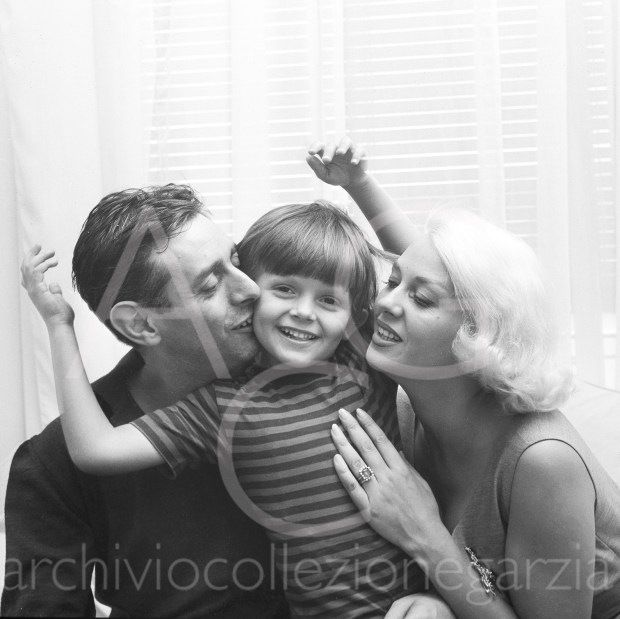
fo-rame-b-4166-w

milano agosto 1959


#OrsonWelles

George Orson Welles (Kenosha, 6 maggio 1915 – Los Angeles, 10 ottobre 1985) è stato un attore, regista, sceneggiatore, scrittore, drammaturgo e produttore cinematografico statunitense.

È considerato uno degli artisti più versatili e innovativi del Novecento in ambito teatrale, radiofonico e cinematografico. Conquistò il successo all’età di ventitré anni grazie allo spettacolo radiofonico La guerra dei mondi, trasmissione che, leggenda narra, scatenò il panico in buona parte degli Stati Uniti, facendo credere alla popolazione di essere sotto attacco da parte dei marziani. Questo insolito debutto gli diede la celebrità e gli fece ottenere un contratto per un film all’anno con la casa di produzione cinematografica RKO, da realizzare con assoluta libertà artistica. Nonostante questa vantaggiosa clausola, solo uno dei progetti previsti poté vedere la luce: Quarto potere (1941), il più grande successo cinematografico di Welles, considerato “il più bel film della storia del cinema” secondo un sondaggio della rivista britannica Sight & Sound che ha interpellato oltre 250 critici e registi cinematografici.

La carriera successiva di Welles fu ostacolata da una lunga serie di difficoltà e inconvenienti che non gli permise di continuare a lavorare a Hollywood e che lo costrinse a trasferirsi in Europa, dove continuò a cercare di realizzare le proprie opere finanziandosi soprattutto con apparizioni in film altrui. Fra i suoi molti progetti, Welles riuscì a realizzare e dirigere film come: Macbeth (1948), Otello (1952), L’infernale Quinlan (1958), Il processo (1962), F come falso (1975) ed altri.

La sua fama è aumentata dopo la sua morte, avvenuta nel 1985, ed è considerato uno dei maggiori registi cinematografici e teatrali del XX secolo. Palma d’oro a Cannes nel 1952 (all’epoca Gran Prix du Festival), ricevette, tra gli altri riconoscimenti, l’Oscar alla carriera nel 1971. Nel 2002 è stato votato dal British Film Institute come il più grande regista di tutti i tempi. L’American Film Institute ha inserito Welles al sedicesimo posto tra le più grandi star della storia del cinema.

George Orson Welles (/ˈwɛlz/; May 6, 1915 – October 10, 1985) was an American actor, director, writer, and producer who worked in theatre, radio, and film. He is remembered for his innovative work in all three: in theatre, most notably Caesar (1937), a Broadway adaptation of William Shakespeare’s Julius Caesar; in radio, the 1938 broadcast “The War of the Worlds”, one of the most famous in the history of radio; and in film, Citizen Kane (1941), consistently ranked as one of the all-time greatest films.

Welles directed a number of high-profile stage productions for the Federal Theatre Project in his early twenties, including an innovative adaptation of Macbeth with an entirely African American cast, and the political musical The Cradle Will Rock. In 1937 he and John Houseman founded the Mercury Theatre, an independent repertory theatre company that presented an acclaimed series of productions on Broadway through 1941. Welles found national and international fame as the director and narrator of a 1938 radio adaptation of H. G. Wells’ novel The War of the Worlds performed for his radio anthology series The Mercury Theatre on the Air. It reportedly caused widespread panic when listeners thought that an invasion by extraterrestrial beings was actually occurring. Although some contemporary sources claim these reports of panic were mostly false and overstated, they rocketed Welles to notoriety.

His first film was Citizen Kane (1941), which he co-wrote, produced, directed, and starred in as Charles Foster Kane. Welles was an outsider to the studio system and directed only 13 full-length films in his career. He struggled for creative control on his projects early on with the major film studios and later in life with a variety of independent financiers, and his films were either heavily edited or remained unreleased. His distinctive directorial style featured layered and nonlinear narrative forms, innovative uses of lighting such as chiaroscuro, unusual camera angles, sound techniques borrowed from radio, deep focus shots, and long takes. He has been praised as a major creative force and as “the ultimate auteur”.

Welles followed up Citizen Kane with critically acclaimed films including The Magnificent Ambersons in 1942 and Touch of Evil in 1958. Although these three are his most acclaimed films, critics have argued other works of his, such as The Lady from Shanghai (1947) and Chimes at Midnight (1966), are underappreciated.

In 2002, Welles was voted the greatest film director of all time in two British Film Institute polls among directors and critics, and a wide survey of critical consensus, best-of lists, and historical retrospectives calls him the most acclaimed director of all time. Well known for his baritone voice, Welles was a well-regarded actor in radio and film, a celebrated Shakespearean stage actor, and an accomplished magician noted for presenting troop variety shows in the war years.

cannes-b-3914-orson-welles


#CharlesAznavour

Charles Aznavour, nome d’arte di Chahnourh Varinag Aznavourian (armeno: Շահնուր Վաղինակ Ազնավուրեան; Parigi, 22 maggio 1924), è un cantautore, attore e diplomatico francese di origine armena.

Noto con il soprannome di Charles Aznavoice, è anche detto il “Frank Sinatra d’Europa”. Insignito della Legion d’Onore per il lustro dato alla Francia, è ambasciatore dell’Armenia in Svizzera dal 12 febbraio 2009.

Aznavour canta in sette lingue e ha venduto oltre 300 milioni di dischi nel mondo.

Charles Aznavour (en arménien Շառլ Ազնաւուր), né Shahnourh Varinag Aznavourian (Շահնուր Վաղինակ Ազնաւուրեան) le 22 mai 1924 à Paris, est un auteur-compositeur-interprète, acteur, écrivain et diplomate français. Il obtient en décembre 2008 la nationalité arménienne, lors de sa nomination au poste d’ambassadeur d’Arménie.

Pendant ses soixante-dix ans de carrière, Charles Aznavour a écrit plus de huit cent chansons. Sur disque, il en a enregistré plus de mille deux cents, chantées dans huit langues différentes. Au total, le chanteur totalise aujourd’hui plus de 180 millions de disques vendus à travers le monde

Il réside à Saint-Sulpice (Canton de Vaud), en Suisse, où il est l’ambassadeur de l’Arménie et le représentant permanent de ce pays auprès de l’ONU (auparavant, il était depuis 1995 le représentant permanent de l’Arménie auprès de l’Unesco).

Charles Aznavour (French pronunciation: [ʃaʁl aznavuʁ]; born Shahnour Varinag Aznavourian on 22 May 1924) is a French and Armenian singer, songwriter, actor, public activist and diplomat. Aznavour is known for his unique tenor voice: clear and ringing in its upper reaches, with gravelly and profound low notes. He has written over 800 songs and recorded over 1,200, sung in eight languages and sold more than 180 million records.

He is one of France’s most popular and enduring singers. He has been dubbed France’s Frank Sinatra, while music critic Stephen Holden has described Aznavour as “French pop deity.” He is also arguably the most famous Armenian of his time.In 1998, Aznavour was named Entertainer of the Century by CNN and users of Time Online from around the globe. He was recognized as the century’s outstanding performer, with nearly 18% of the total vote, edging out Elvis Presley and Bob Dylan.

He has sung for presidents, popes and royalty, as well as at humanitarian events. In response to the 1988 Armenian earthquake, he founded the charitable organization Aznavour for Armenia along with his long-time friend impresario Levon Sayan. In 2009, he was appointed ambassador of Armenia to Switzerland, as well as Armenia’s permanent delegate to the United Nations at Geneva. Aznavour is the longest standing “A list” star, still filling major venues all over the world. He started his most recent tour in 2014.

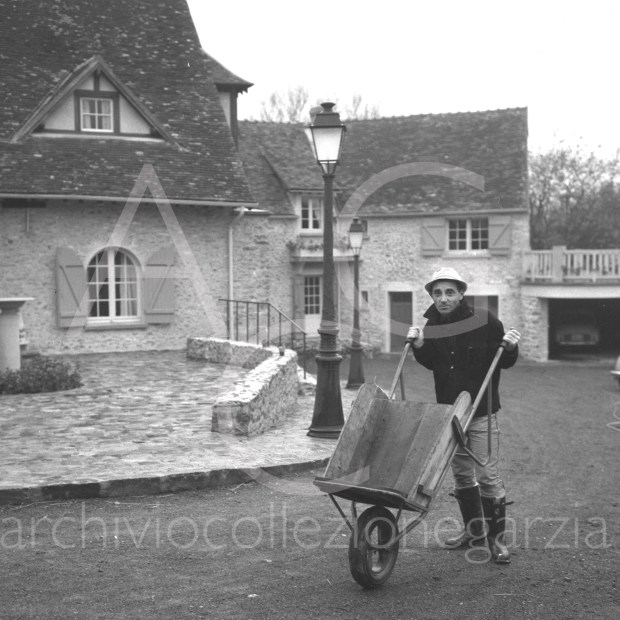
charl-aznavour-w

https://youtu.be/Vank6dS5w7k


#LeoLonganesi #PierpaoloPasolini

-Leopoldo Longanesi, detto Leo (Bagnacavallo, 30 agosto 1905 – Milano, 27 settembre 1957), è stato un giornalista, pittore, disegnatore, editore e aforista italiano.

Nella sua vasta produzione pubblicistica, il gusto per la tradizione si fuse con un atteggiamento intellettuale anticonformista. Il successo che arrise alle sue riviste e alle sue iniziative editoriali gli ritagliò un ruolo di opinion maker politico-culturale, che Longanesi ricoprì per tutto l’arco della sua carriera.

-Pier Paolo Pasolini (Bologna, 5 marzo 1922 – Roma, 2 novembre 1975) è stato un poeta, scrittore, cineasta, sceneggiatore, drammaturgo e giornalista italiano, considerato tra i maggiori artisti e intellettuali del XX secolo. Culturalmente versatile, si distinse in numerosi campi, lasciando contributi anche come pittore, romanziere, linguista, traduttore e saggista, non solo in lingua italiana, ma anche friulana.

Attento osservatore dei cambiamenti della società italiana dal secondo dopoguerra sino alla metà degli anni settanta, suscitò spesso forti polemiche e accesi dibattiti per la radicalità dei suoi giudizi, assai critici nei riguardi delle abitudini borghesi e della nascente società dei consumi, come anche nei confronti del Sessantotto e dei suoi protagonisti. Il suo rapporto con la propria omosessualità fu al centro del suo personaggio pubblico.

longanesi pasolini b. 3755 001

#PieroManzoni

-Piero Manzoni nasce il 13 luglio del 1933 a Soncino (Cremona). Cresce a Milano, trascorrendo le vacanze estive ad Albisola Marina, in Liguria, dove la famiglia frequenta Lucio Fontana, il fondatore dello Spazialismo.

Nel 1956 Manzoni debutta alla “IV Fiera mercato” del castello Sforzesco di Soncino. L’anno successivo partecipa alla mostra “Arte Nucleare”, presso la galleria San Fedele di Milano: dipinge sagome antropomorfe e quadri con impronte di oggetti. Realizza inoltre i primi Achromes (1957), grandi superfici bianche imbevute di colla e caolino (un’argilla bianca impiegata nella produzione della ceramica).

Nel 1958 espone insieme a Lucio Fontana e ad Enrico Baj. Inizia la collaborazione con Enrico Castellani e Agostino Bonalumi. Nel 1959 fonda la rivista “Azimuth” e la Galleria Azimut.
Lo stile di Manzoni diviene sempre più radicale. Supera la superficie del quadro e propone una serie di opere provocatorie, insofferenti nei confronti della tradizione:

Il 21 luglio del 1960, Piero Manzoni presenta alla Galleria Azimut di Milano una delle performance più famose: la Consumazione dell’arte dinamica del pubblico divorare l’arte. L’artista firma con l’impronta del pollice alcune uova sode che vengono consumate sul posto dal pubblico.

Nel 1961, alla Galleria La Tartaruga di Roma, Piero Manzoni firma per la prima volta degli esseri umani trasformandoli in Sculture viventi. Nello stesso anno pone in vendita le scatolette di Merda d’artista.
Nel 1962, Manzoni progetta con l’editore Jes Petersen la pubblicazione di un libro dalle pagine bianche: “Piero Manzoni. The Life and the Works”.

Il 6 febbraio 1963, Manzoni muore improvvisamente di infarto a Milano, nel suo studio.

da http://www.pieromanzoni.org ( fondazione Piero Manzoni)

-Piero Manzoni (July 13, 1933 – February 6, 1963) was an Italian artist best known for his ironic approach to avant-garde art. Often compared to the work of Yves Klein, his own work anticipated, and directly influenced, the work of a generation of younger Italian artists brought together by the critic Germano Celant in the first Arte Povera exhibition held in Genoa, 1967. Manzoni is most famous for a series of artworks that call into question the nature of the art object, directly prefiguring Conceptual Art. His work eschews normal artist’s materials, instead using everything from rabbit fur to human excrement in order to “tap mythological sources and to realize authentic and universal values”.

His work is widely seen as a critique of the mass production and consumerism that was changing Italian society (the Italian economic miracle) after World War II.[4] Italian artists such as Manzoni had to negotiate the new economic and material order of post-war Europe through inventive artistic practices which crossed geographic, artistic, and cultural borders.

fonte wikipedia

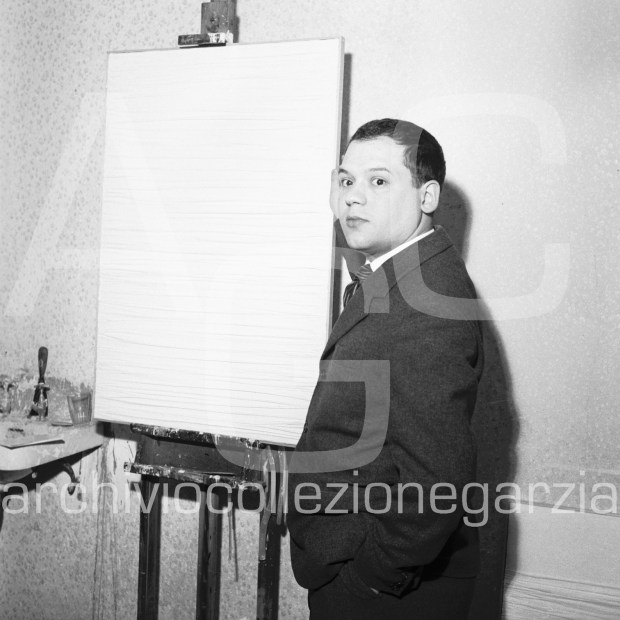
piero manzoni b.3875w

#LaurenceOlivier #CharlieChaplin

Laurence Kerr Olivier, barone Olivier (Dorking, 22 maggio 1907 – Ashurst, 11 luglio 1989) è stato un attore cinematografico, attore teatrale e regista britannico.

Tra i grandi attori del XX secolo, detiene il singolare primato di aver ricevuto prima l’Oscar alla carriera e poi come attore (per la sua interpretazione nell’Amleto, da lui stesso prodotto e diretto). Nel 1979 riceverà un secondo Oscar alla carriera.

L’American Film Institute ha inserito Olivier al quattordicesimo posto tra le più grandi star della storia del cinema.

Laurence Kerr Olivier, Baron Olivier, OM, Kt (/ˈlɒrəns kɜːr ɒˈlɪvi/; 22 May 1907 – 11 July 1989) was an English actor who, along with his contemporaries Ralph Richardson and John Gielgud, dominated the British stage of the mid-20th century. He also worked in films throughout his career, playing more than fifty cinema roles. Late in his career, he had considerable success in television roles.

Sir Charles Spencer Chaplin, noto come Charlie Chaplin (Londra, 16 aprile 1889 – Corsier-sur-Vevey, 25 dicembre 1977), è stato un attore, comico, regista, sceneggiatore, compositore e produttore cinematografico britannico, autore di oltre novanta film e tra i più importanti e influenti cineasti del XX secolo.

Sir Charles SpencerCharlieChaplin, KBE (16 April 1889 – 25 December 1977) was an English comic actor, filmmaker, and composer who rose to fame in the silent era. Chaplin became a worldwide icon through his screen persona “the Tramp” and is considered one of the most important figures in the history of the film industry. His career spanned more than 75 years, from childhood in the Victorian era until a year before his death in 1977, and encompassed both adulation and controversy.

ChaplinOliver Valer b4457 W


https://youtu.be/DE2R7s5SCSQ


#SalvatoreQuasimodo

Salvatore Quasimodo (Modica, 20 agosto 1901 – Napoli, 14 giugno 1968) è stato un poeta italiano, esponente di rilievo dell’ermetismo. Ha contribuito alla traduzione di vari componimenti dell’età classica, soprattutto liriche greche, ma anche di opere teatrali di Molière e William Shakespeare. È stato vincitore del premio Nobel per la letteratura nel 1959.

Salvatore Quasimodo (Italian: [salvaˈtoːre kwaˈziːmodo]; August 20, 1901 – June 14, 1968) was an Italian author and poet. In 1959 he won the Nobel Prize for Literature “for his lyrical poetry, which with classical fire expresses the tragic experience of life in our own times”. Along with Giuseppe Ungaretti and Eugenio Montale, he is one of the foremost Italian poets of the 20th century.

Salvatore Quasimodo (né le 20 août 1901 à Modica, dans la Province de Raguse, en Sicile – mort le 14 juin 1968 à Naples) est un écrivain et poète italien du XXe siècle.

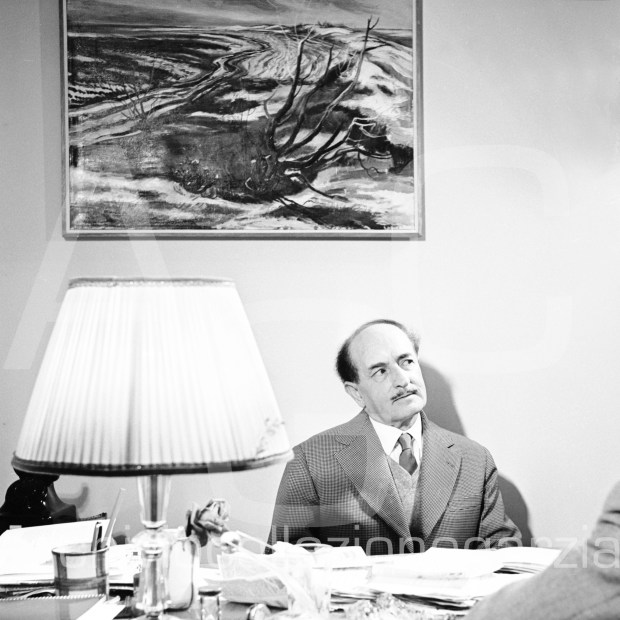
S.Quasimodo b.4326 w