registi – director

#MariaCalla #ΜαρίαΚάλλας

Maria Callas, nome d’arte di Anna Maria Cecilia Sophia Kalogeropoulou (greco: Άννα Μαρία Καικιλία Σοφία Καλογεροπούλου; New York, 2 dicembre 1923 – Parigi, 16 settembre 1977), è stata un soprano e mezzosoprano greco, in possesso della nazionalità statunitense e naturalizzata italiana fino al 1966, quando rinunciò ad entrambe per ottenere quella greca


Maria Callas, Commendatore OMRI (Greek: Μαρία Κάλλας; December 2, 1923 – September 16, 1977), was an American-born Greek soprano and one of the most renowned and influential opera singers of the 20th century. Critics praised her bel canto technique, wide-ranging voice and dramatic gifts. Her repertoire ranged from classical opera seria to the bel canto operas of Donizetti, Bellini and Rossini and further, to the works of Verdi and Puccini; and, in her early career, to the music dramas of Wagner. Her musical and dramatic talents led to her being hailed as La Divina.


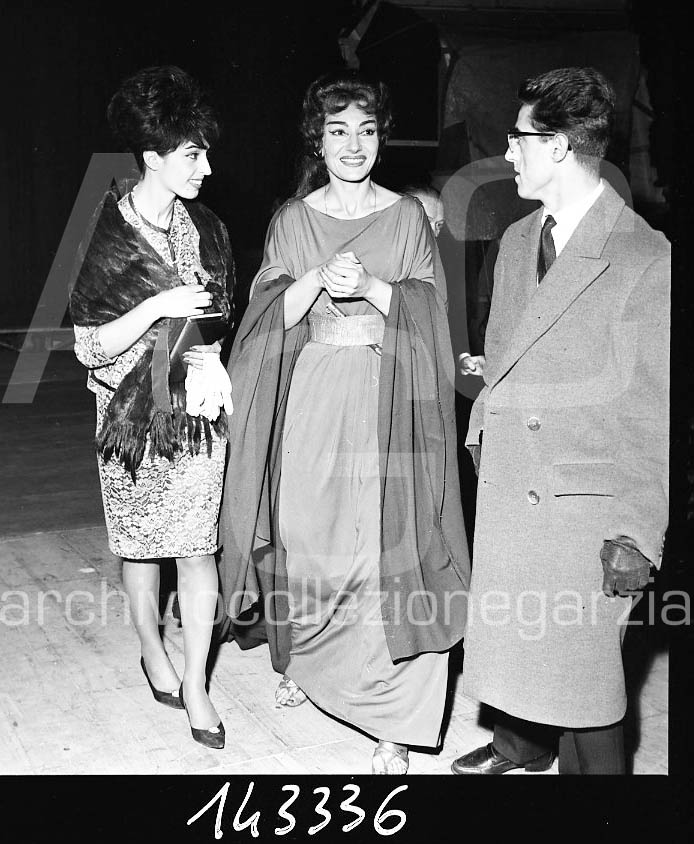
nella foto Maria Callas alla prima di Medea di Luigi Cherubini, ruoli di cui ha dato un’interpretazione magistrale, sia vocalmente che propriamente teatrale, restandone la massima interprete.


maria callas medea 1961002


#LouisArmstrong

Louis Daniel Armstrong noto anche con il soprannome di Satchmo o Pops (New Orleans, 4 agosto 1901 – New York, 6 luglio 1971) è stato un trombettista e cantante statunitense.

Armstrong è stato uno tra i più famosi musicisti jazz del XX secolo. Carismatico e innovativo, al suo talento e alla sua personalità si aggiunge la sua straordinaria popolarità nel jazz, che esce dai confini della sua regione d’origine per diventare un genere musicale amato in tutto il mondo.

Armstrong raggiunse la fama inizialmente come trombettista, ma fu anche uno dei più importanti cantanti jazz, soprattutto verso la fine della carriera.

Louis Armstrong(August 4, 1901 – July 6, 1971), nicknamed Satchmo or Pops, was an American jazz trumpeter, singer, and an influential figure in jazz music.

Coming to prominence in the 1920s as an “inventive” trumpet and cornet player, Armstrong was a foundational influence in jazz, shifting the focus of the music from collective improvisation to solo performance. With his instantly recognizable gravelly voice, Armstrong was also an influential singer, demonstrating great dexterity as an improviser, bending the lyrics and melody of a song for expressive purposes. He was also skilled at scat singing (vocalizing using sounds and syllables instead of actual lyrics).

Renowned for his charismatic stage presence and voice almost as much as for his trumpet-playing, Armstrong’s influence extends well beyond jazz music, and by the end of his career in the 1960s, he was widely regarded as a profound influence on popular music in general. Armstrong was one of the first truly popular African-American entertainers to “cross over”, whose skin color was secondary to his music in an America that was severely racially divided. He rarely publicly politicized his race, often to the dismay of fellow African-Americans, but took a well-publicized stand for desegregation during the Little Rock Crisis. His artistry and personality allowed him socially acceptable access to the upper echelons of American society that were highly restricted for a black man.

nella foto LouisArmstron a Gstaad (Svizzera)

louis armstrong005 W gstaad 8:1:1961

#LelioLuttazzi

Lelio Luttazzi (Trieste, 27 aprile 1923 – Trieste, 8 luglio 2010) è stato un attore, cantante, direttore d’orchestra, musicista, regista, scrittore, showman e conduttore televisivo italiano.


Lelio Luttazzi (27 April 1923–8 July 2010) was an Italian composer, musician, actor, singer, conductor, writer, and television and radio presenter.

Born in Trieste, Luttazzi began playing the piano at Radio Trieste and composing his first songs when he was student in law at the University of Trieste during the Second World War.After the war, he had from SIAE a gain of 350,000 lire, a considerable sum for the time, so he decided to become a full-time composer and in 1948 he moved to Milan where he began working with fellow Teddy Reno at the record company CGD. He was among the first composers to place jazz structures in the Italian songs.

A multifaceted artist, he worked in revues and cinema as actor and composer of soundtracks;[1] he was also a successful television and radio presenter, and probably the peak of his popularity was the radio program Hit parade, one of the longest radio programs broadcast in Italy.[1][2][3] In the early 1970s Luttazzi was involved together with Walter Chiari in a story of drug dealing; Luttazzi went to prison for a month before being acquitted with the formula “because the fact does not exist” but from then he basically semi-retired, leading a life reserved and returning rarely into the spotlight.

(wikipedia)

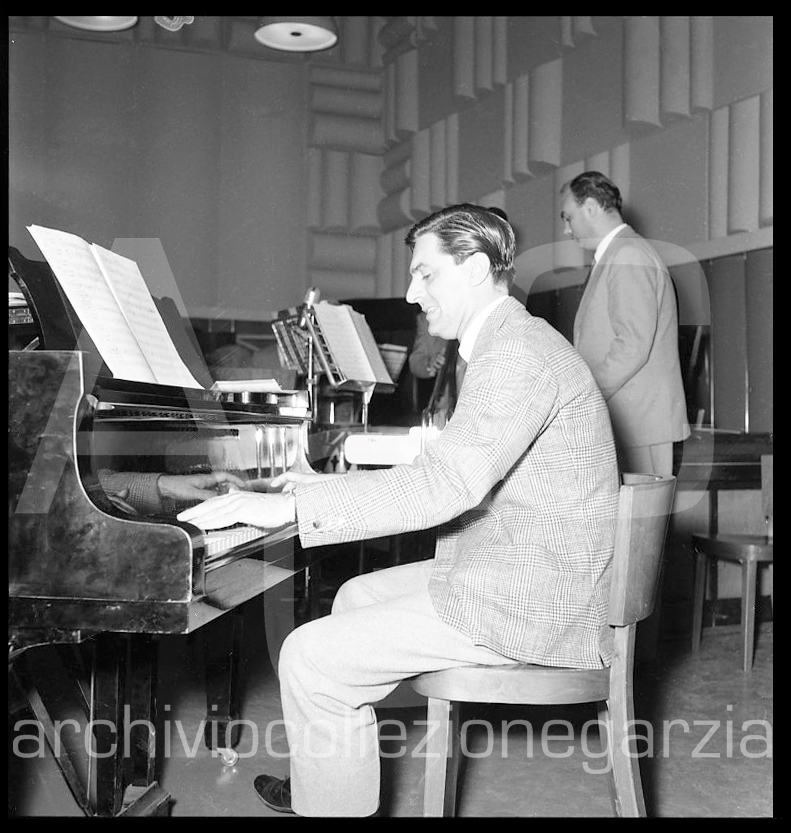
lelio luttazzi


http://www.fondazionelelioluttazzi.it

#EduardoDeFilippo

Eduardo De Filippo, noto semplicemente come Eduardo (Napoli, 24 maggio 1900 – Roma, 31 ottobre 1984), è stato un drammaturgo, attore teatrale, attore cinematografico, regista teatrale, regista cinematografico, sceneggiatore e poeta italiano. Fra i massimi esponenti della cultura italiana del Novecento, è stato autore di numerosi drammi teatrali da lui stesso messi in scena e interpretati e, in seguito, tradotti e rappresentati da altri anche all’estero. Per i suoi meriti artistici e i contributi alla cultura, fu nominato senatore a vita dal presidente della Repubblica Sandro Pertini. Fu anche candidato per il premio Nobel per la letteratura

Eduardo De Filippo (24 May 1900 – 31 October 1984) was an Italian actor, playwright, screenwriter, author and poet, best known for his Neapolitan works Filumena Marturano and Napoli Milionaria.

De Filippo was born in Naples to playwright Eduardo Scarpetta and theatre seamstress and costumier Luisa De Filippo. He began acting at the age of five and in 1932 formed a theater company with his brother Peppino and sister Titina, called compagnia del Teatro Umoristico I De Filippo. Peppino left the troupe in 1944 and Titina departed by the early 1950s. De Filippo starred in De Sica’s L’oro di Napoli with Totò and Sophia Loren in 1954. In 1973 a production of his Sabato, domenica e lunedi (1959, Saturday, Sunday and Monday), starring Laurence Olivier in the lead role, won the London drama critics’ award. His translation of Shakespeare’s The Tempest into Neapolitan was published in 1982.

In 1981, De Filippo was appointed life senator of the Italian Republic. He died four years later in Rome. His artistic legacy has been carried over by his son.


(fonte wikipedia)


de filippo eduardo comp003

#MarleneDietrich #VittorioDeSica

Marie Magdalene “Marlene” Dietrich (Berlino, 27 dicembre 1901 – Parigi, 6 maggio 1992) è stata un’attrice e cantante tedesca naturalizzata statunitense. Fra le più note icone del mondo cinematografico della prima metà del Novecento, la Dietrich fu un vero e proprio mito, lasciando un’impronta duratura attraverso la sua recitazione, le sue immagini e l’interpretazione delle canzoni (arricchite da una voce ammaliante e sensuale). La Dietrich fu una delle prime dive grazie a un mix di qualità, raramente ripetuto dopo di lei, che fu sufficiente a farla entrare nella leggenda dello show business quale modello di femme fatale per antonomasia.

Il suo mito nacque e si sviluppò in contrapposizione a quello della divina Greta Garbo, entrambe star di punta di due compagnie di produzione rivali.

Marie Magdalene “Marlene” Dietrich (27 December 1901 – 6 May 1992) was a German actress and singer.

Dietrich remained popular throughout her long career by continually re-inventing herself, professionally and characteristically. In the Berlin of the 1920s, she acted on the stage and in silent films. Her performance as Lola-Lola in The Blue Angel (1930), directed by Josef von Sternberg, brought her international fame and garnered her a contract with Paramount Pictures in the US. Hollywood films such as Shanghai Express (1932) and Desire (1936) capitalised on her glamour and exotic looks, cementing her stardom and making her one of the highest-paid actresses of the era. Dietrich became a U.S. citizen in 1939,[3] and throughout World War II she was a high-profile frontline entertainer. Although she still made occasional films in the post-war years, Dietrich spent most of the 1950s to the 1970s touring the world as a successful show performer.

In 1999, the American Film Institute named Dietrich the ninth-greatest female star of all time.


Vittorio Domenico Stanislao Gaetano Sorano De Sica (Sora, 7 luglio 1901 – Neuilly-sur-Seine, 13 novembre 1974) è stato un attore, regista e sceneggiatore italiano.

Una delle figure preminenti del cinema italiano e mondiale, è stato inoltre attore di teatro e documentarista. È considerato uno dei padri del Neorealismo e, allo stesso tempo, uno dei più grandi registi ed interpreti della Commedia all’italiana.

Vittorio De Sica (7 July 1901 – 13 November 1974) was an Italian director and actor, a leading figure in the neorealist movement.

Four of the films he directed won Academy Awards: Sciuscià and Bicycle Thieves were awarded honorary Oscars, while Ieri, oggi, domani and Il giardino dei Finzi Contini won the Best Foreign Language Film Oscar. Indeed, the great critical success of Sciuscià (the first foreign film to be so recognized by the Academy of Motion Picture Arts and Sciences) and Bicycle Thieves helped establish the permanent Best Foreign Film Oscar. These two films generally are considered part of the canon of classic cinema.[1] Bicycle Thieves was cited by Turner Classic Movies as one of the 15 most influential films in cinema history.[2]

De Sica was also nominated for the 1957 Oscar for Best Supporting Actor for playing Major Rinaldi in American director Charles Vidor’s 1957 adaptation of Ernest Hemingway’s A Farewell to Arms, a movie that was panned by critics and proved a box office flop. De Sica’s acting was considered the highlight of the film.

Fonte wikipedia)

de sica e marlene dietrich W

#HaroldLloyd

Harold Clayton Lloyd (Burchard, 20 aprile 1893 – Beverly Hills, 8 marzo 1971) è stato un attore, regista e produttore cinematografico statunitense, stella di prima grandezza nel firmamento Hollywoodiano all’epoca del cinema muto.

All’apice della sua carriera, intorno alla metà degli anni venti, nei panni caratteristici di Harold, occhialuto giovanotto, ambizioso e arrivista, sempre teso alla conquista del successo: sia esso un affare o una donna, esuberante ed ottimista (in perfetta sintonia con lo spirito dell’America dei ruggenti anni venti), pieno di risorse e dalle funamboliche prestazioni nel superare gli ostacoli come nel togliersi dai guai, seppe a lungo rivaleggiare, alla pari, con le altre stelle della silent era: Charlie Chaplin, Buster Keaton, Harry Langdon, contendendosi i favori del pubblico e il titolo di attore più pagato del momento (nel 1921 arrivò a guadagnare circa 2.000 $ alla settimana cioè quasi 3 milioni di dollari attuali).

Oltre duecento i film interpretati, tra muti e sonori, nell’arco di tempo che va dal 1913 al 1947, considerato il re degli scavezzacollo per le ardite interpretazioni che lo vedevano spesso in equilibrio precario in cima a qualche cornicione: il fotogramma che lo ritrae appeso alla lancetta dell’orologio di un grattacielo, sospeso sopra la strada trafficata in Preferisco l’ascensore, (Safety Last), (1923) è celeberrima icona del cinema muto.

(fonte wikipedia)

Harold Clayton Lloyd, Sr. (April 20, 1893 – March 8, 1971) was an American actor, comedian, film director, film producer, screenwriter, and stunt performer who is most famous for his silent comedy films.[2]

Harold Lloyd ranks alongside Charlie Chaplin and Buster Keaton as one of the most popular and influential film comedians of the silent film era. Lloyd made nearly 200 comedy films, both silent and “talkies”, between 1914 and 1947. He is best known for his bespectacled “Glasses” character,[3][4] a resourceful, success-seeking go-getter who was perfectly in tune with 1920s era United States.

His films frequently contained “thrill sequences” of extended chase scenes and daredevil physical feats, for which he is best remembered today. Lloyd hanging from the hands of a clock high above the street in Safety Last! (1923) is one of the most enduring images in all of cinema.[5] Lloyd did many of these dangerous stunts himself, despite having injured himself in August 1919 while doing publicity pictures for the Roach studio. An accident with a bomb mistaken as a prop resulted in the loss of the thumb and index finger of his right hand[6] (the injury was disguised on future films with the use of a special prosthetic glove, though the glove often did not go unnoticed).

Although Lloyd’s individual films were not as commercially successful as Chaplin’s on average, he was far more prolific (releasing twelve feature films in the 1920s while Chaplin released just four), and made more money overall ($15.7 million to Chaplin’s $10.5 million).
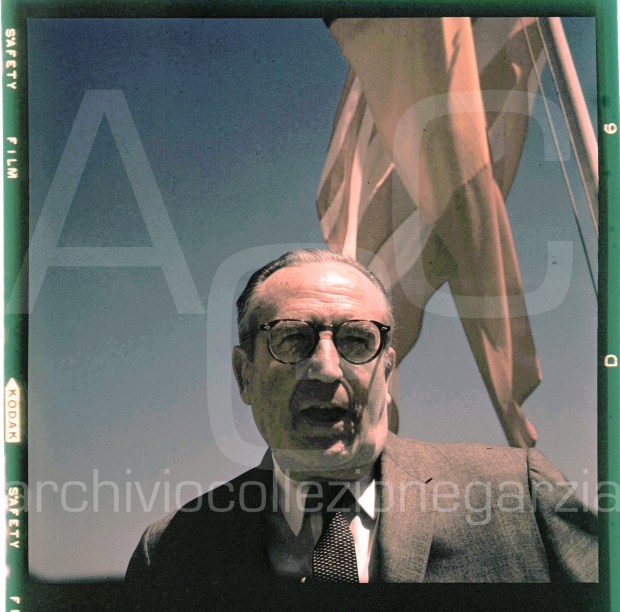
harold lloyd007 copia

#MarioSoldati

Mario Soldati (Torino, 17 novembre 1906 – Tellaro, 19 giugno 1999) è stato uno scrittore, giornalista, regista cinematografico, sceneggiatore e autore televisivo italiano.

nella foto con i figli Wolfango, Michele e #GiovanniSoldati,

mario soldati002

fonte wikipedia


#JeanVilar

Jean Vilar (Sète, 25 marzo 1912 – Sète, 28 maggio 1971) è stato un regista e attore francese.

Allievo e collaboratore di Charles Dullin, Jean Vilar si esibì dapprima come attore, dedicandosi alla regia a partire dal 1943, ottenendo un’affermazione definitiva come regista nel 1944, a capo della Compagnie des Sept.

Nel 1947, all’inaugurazione di quello che sarebbe divenuto il Festival di Avignone, Vilar ne fu il principale animatore; questa esperienza ebbe un peso determinante non solo sulla sua popolarità, ma soprattutto sull’evoluzione della sua personalità artistica.

Nell’intoccabile scenario naturale, egli concepì spettacoli, la cui suggestione era basata soprattutto sul testo e sull’interpretazione. Nacquero così alcune delle più famose creazioni di Vilar, che aveva trovato in Gérard Philipe il nuovo grande interprete della scena francese.

Allorché nel 1951 si dovette proporre un direttore al nuovo teatro di Stato, il Théâtre National Populaire, la scelta cadde proprio su Vilar. La realizzazione del programma che il nuovo istituto si prefisse per dar vita ad un’organizzazione teatrale a carattere veramente popolare, fu di enorme complessità. La penetrazione nei più diversi settori del pubblico fu ottenuta scegliendo testi, quasi tutti classici, realizzati con semplicità e chiarezza interpretative.


Jean Vilar est un comédien de théâtre et de cinéma, un metteur en scène et un directeur de théâtre français, né le 25 mars 1912 et mort le 28 mai 1971 à Sète. Créateur du Festival d’Avignon en 1947 qu’il dirige jusqu’à sa mort en 1971, et directeur du Théâtre National Populaire (TNP) de 1951 à 1963.

fonte wikipedia

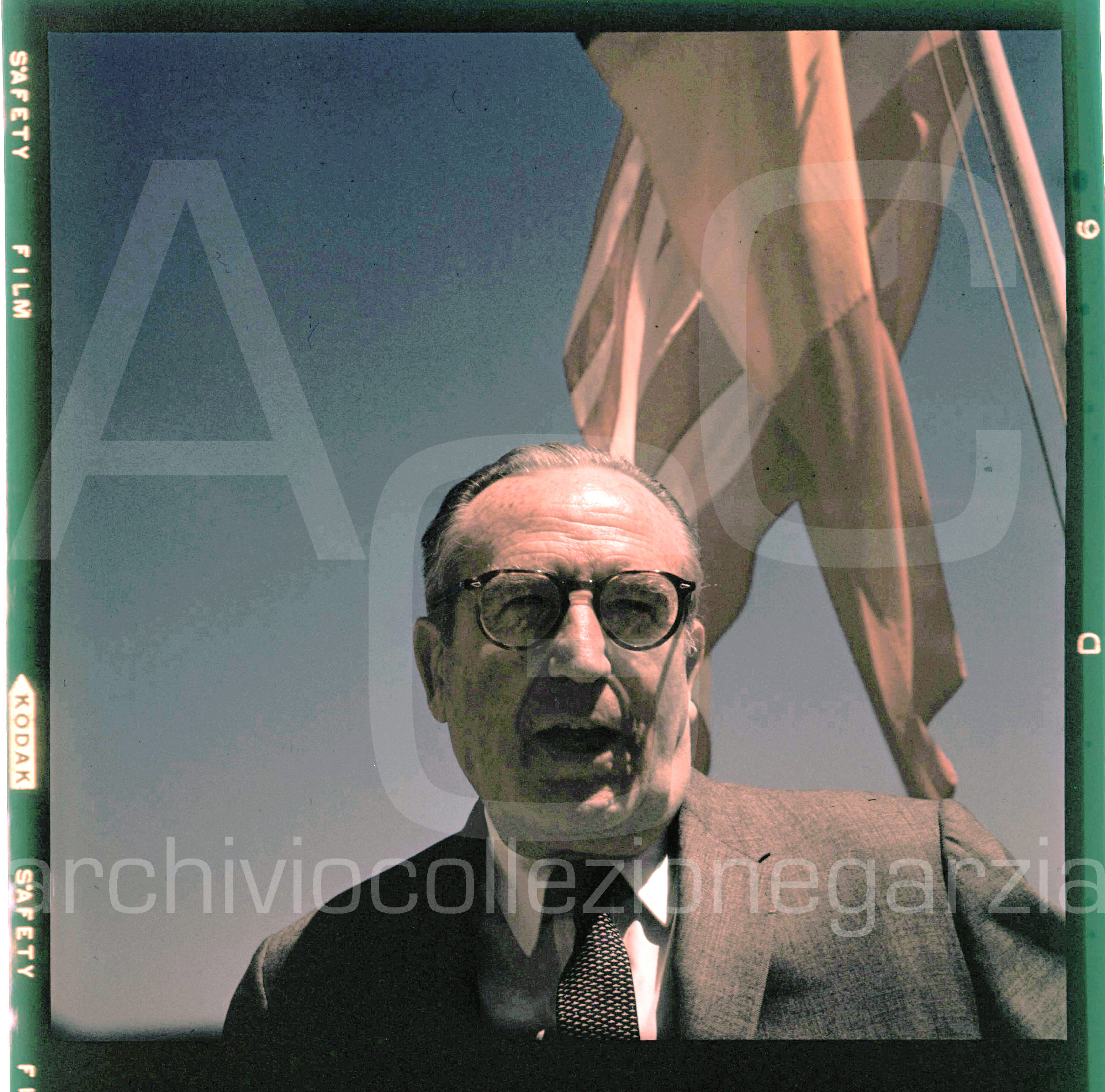
jean villard006

#CharlesChaplin

Sir Charles Spencer Chaplin, noto come Charlie Chaplin (Londra, 16 aprile 1889 – Corsier-sur-Vevey, 25 dicembre 1977), è stato un attore, regista, sceneggiatore, comico, compositore e produttore britannico, autore di oltre novanta film e tra i più importanti e influenti cineasti del XX secolo.

Charlie Chaplin ebbe undici figli in tutto

Norman Spencer,  Charlie Chaplin junior ,  Sydney Earle Chaplin,  Géraldine Chaplin, Michael John Chaplin, Joséphine Hannah Chaplin, Victoria Chaplin, Eugene Antony Chaplin, Jane Cecil Chaplin,  Annette-Emilie Chaplin, James Christopher Chaplin.


chaplin e figli 016

#MauroBolognini #CatherineSpaak

Mauro Bolognini (Pistoia, 28 giugno 1922 – Roma, 14 maggio 2001) è stato un regista italiano.

Studia architettura e consegue la laurea a Firenze, prima di passare al Centro Sperimentale di Cinematografia di Roma, dove frequenta i corsi di scenografia. Diplomatosi, si orienta verso la regia e affina il mestiere facendo l’aiuto di Luigi Zampa e poi, in Francia, di Yves Allégret e Jean Delannoy. Iniziò l’attività registica segnalandosi tra il 1955 e il 1958 con bozzetti di un tardo neorealismo: Gli innamorati (1955), Giovani mariti (1957).

L’incontro con Pasolini sceneggiatore gli aprì la strada a maggiori ambizioni con film come La notte brava (1959), Il bell’Antonio (1960), La giornata balorda (1960), anche se l’impegno letterario si stemperò poi troppo spesso in gusto calligrafico con Senilità (1962), Agostino (1962), Bubù (1971), Per le antiche scale (1975), L’eredità Ferramonti (1976). All’atmosfera in costume e al clima pittorico toscano del suo film La viaccia (1961) si riallacciò nel 1970 con Metello, dove la struttura storico-sociale del romanzo di Pratolini gli consentì un’evocazione equilibrata e solida: la sua migliore.


Catherine Spaak (Boulogne-Billancourt, 3 aprile 1945) è un’attrice, cantante, ballerina e conduttrice televisiva francese naturalizzata italiana.

Catherine Spaak proviene da una famiglia belga che annovera fra i suoi membri anche artisti e uomini politici: la madre è l’attrice Claudie Clèves, il padre Charles è uno sceneggiatore cinematografico, la sorella Agnès è anch’essa attrice[1] e poi fotografa[2], mentre lo zio Paul-Henri ha ricoperto per più mandati la carica di primo ministro del Belgio.

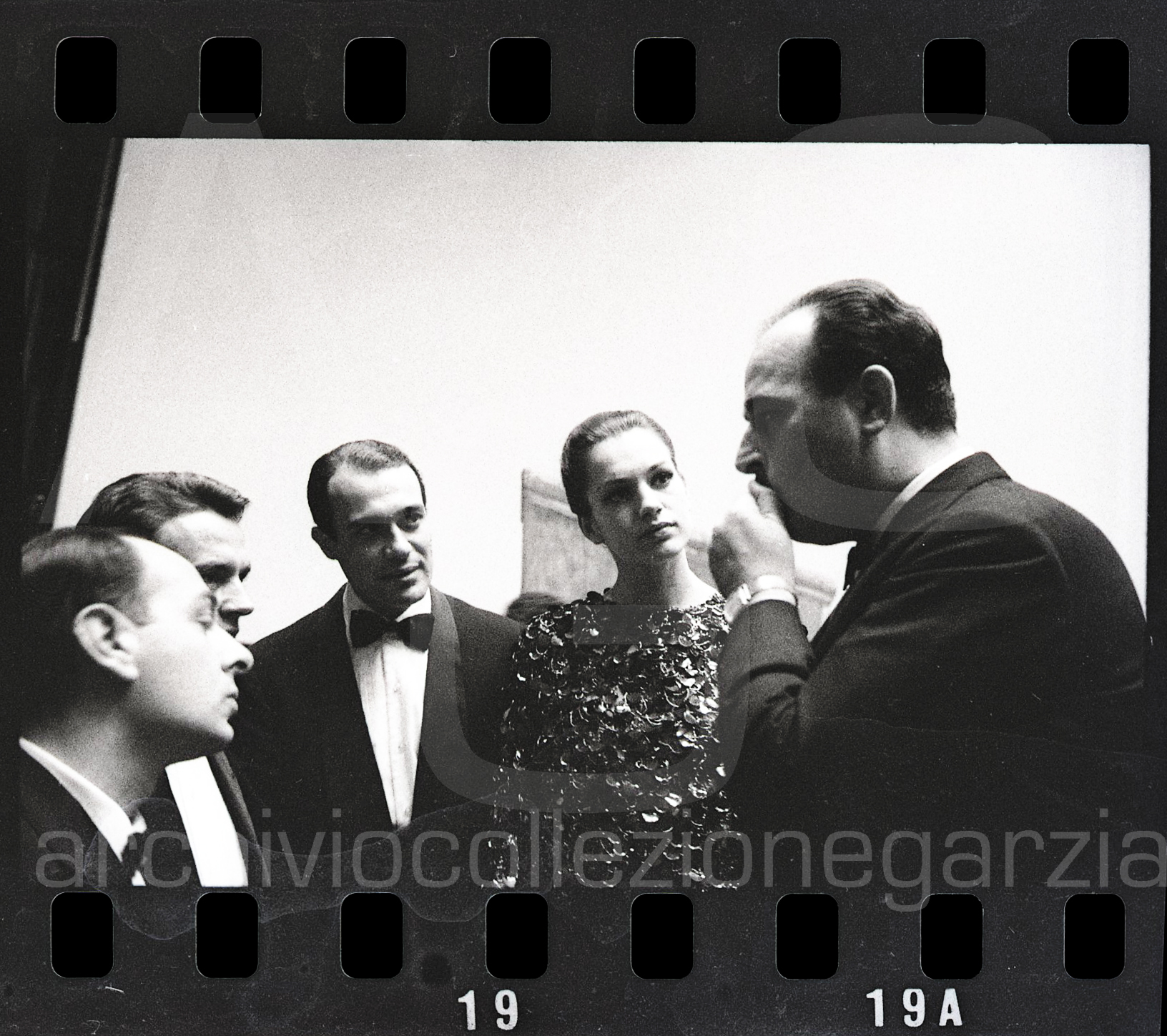
nel 1966 Mauro Bolognini la dirige nel film Madamigella di Maupin  liberamente ispirato[1] al romanzo omonimo di Théophile Gautier.

bolognini spaak-006