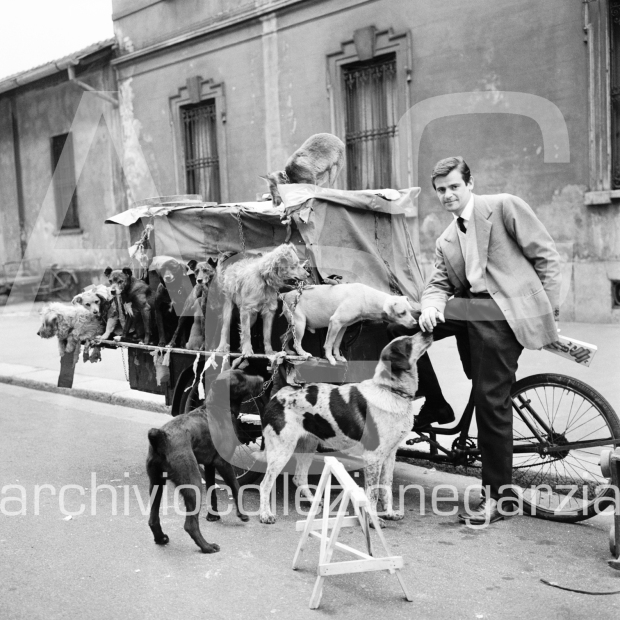
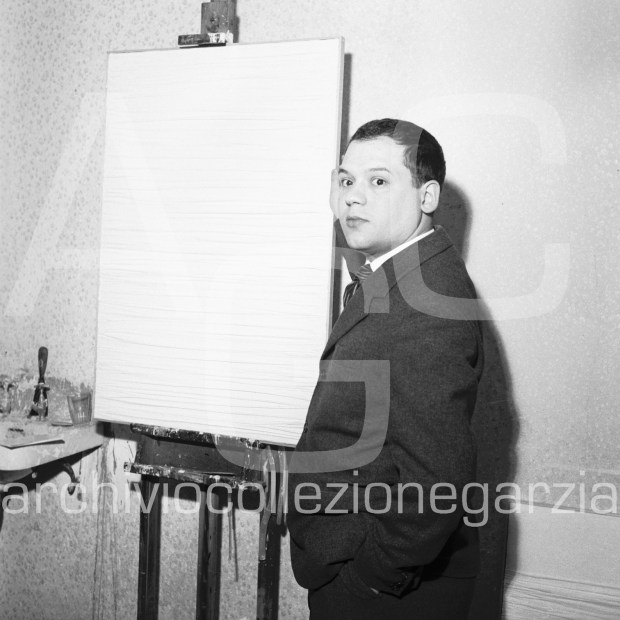
foto

#VittorioDeSica #Addioallearmi #AFarewelltoArms

Vittorio Domenico Stanislao Gaetano Sorano De Sica (Sora, 7 luglio 1901 – Neuilly-sur-Seine, 13 novembre 1974) è stato un attore, regista e sceneggiatore italiano.

Tra i cineasti più influenti della storia del cinema, è stato inoltre attore di teatro e documentarista. È considerato uno dei padri del neorealismo e, allo stesso tempo, uno dei maggiori registi ed interpreti della commedia all’italiana.


nel 1958 – Nomination come Miglior attore non protagonista nel ruolo del maggiore Alessandro Rinaldi per Addio Alle Armi 

Addio alle armi (A Farewell to Arms) è un romanzo dello scrittore statunitense Ernest Hemingway, pubblicato nel 1929.

Il romanzo, parzialmente basato su esperienze personali dello scrittore (che negli ultimi mesi della prima guerra mondiale aveva prestato servizio come conducente di ambulanze nella Croce Rossa Americana, era stato ferito e aveva avuto un rapporto affettivo con una infermiera americana, Agnes von Kurowsky), racconta una storia di amore e di guerra che si svolge in Italia prima, durante e dopo la battaglia di Caporetto. Si tratta di uno dei romanzi più significativi, oltre che di successo, dell’intero Novecento.

La pubblicazione del libro fu vietata in Italia fino al 1945 perché il contenuto fu ritenuto lesivo dell’onore delle Forze Armate dalla dittatura fascista: vi viene descritta la disfatta dell’esercito italiano a Caporetto del 1917 e la diserzione del protagonista. La traduzione in italiano era stata già scritta clandestinamente nel 1943 da Fernanda Pivano, che per questo motivo venne arrestata a Torino.

Addio alle armi (A Farewell to Arms) è un film del 1957, diretto da Charles Vidor e, non accreditato, da John Huston. La regia della seconda unità fu affidata ad Andrew Marton, neppure lui accreditato nei titoli del film. È il secondo film tratto dall’omonimo romanzo di Ernest Hemingway, dopo quello di Frank Borzage del 1932.


Vittorio De Sica (Italian pronunciation: [vitˈtɔːrjo de ˈsiːka]; 7 July 1901 – 13 November 1974) was an Italian director and actor, a leading figure in the neorealist movement.

Four of the films he directed won Academy Awards: Sciuscià and Bicycle Thieves were awarded honorary Oscars, while Ieri, oggi, domani and Il giardino dei Finzi Contini won the Best Foreign Language Film Oscar. Indeed, the great critical success of Sciuscià (the first foreign film to be so recognized by the Academy of Motion Picture Arts and Sciences) and Bicycle Thieves helped establish the permanent Best Foreign Film Oscar. These two films generally are considered part of the canon of classic cinema.[1] Bicycle Thieves was cited by Turner Classic Movies as one of the 15 most influential films in cinema history.[2]

De Sica was also nominated for the 1957 Oscar for Best Supporting Actor for playing Major Rinaldi in American director Charles Vidor’s 1957 adaptation of Ernest Hemingway’s A Farewell to Arms, a movie that was panned by critics and proved a box office flop. De Sica’s acting was considered the highlight of the film.

de-sica-addio-alle-armi-b-1599004

https://youtu.be/ufzWP0iieY8


A © is a novel by Ernest Hemingway set during the Italian campaign of World War I. The book, published in 1929, is a first-person account of American Frederic Henry, serving as a Lieutenant (“Tenente”) in the ambulance corps of the Italian Army. The title is taken from a poem by 16th-century English dramatist George Peele.

A Farewell to Arms is about a love affair between the expatriate American Henry and Catherine Barkley against the backdrop of the First World War, cynical soldiers, fighting and the displacement of populations. The publication of A Farewell to Arms cemented Hemingway’s stature as a modern American writer,became his first best-seller, and is described by biographer Michael Reynolds as “the premier American war novel from that debacle World War I.”

The novel has been adapted for the stage, initially in 1930 and subsequently, for film in 1932 and 1957, and as a television miniseries in 1966.



#OrsonWelles

George Orson Welles (Kenosha, 6 maggio 1915 – Los Angeles, 10 ottobre 1985) è stato un attore, regista, sceneggiatore, scrittore, drammaturgo e produttore cinematografico statunitense.

È considerato uno degli artisti più versatili e innovativi del Novecento in ambito teatrale, radiofonico e cinematografico. Conquistò il successo all’età di ventitré anni grazie allo spettacolo radiofonico La guerra dei mondi, trasmissione che, leggenda narra, scatenò il panico in buona parte degli Stati Uniti, facendo credere alla popolazione di essere sotto attacco da parte dei marziani. Questo insolito debutto gli diede la celebrità e gli fece ottenere un contratto per un film all’anno con la casa di produzione cinematografica RKO, da realizzare con assoluta libertà artistica. Nonostante questa vantaggiosa clausola, solo uno dei progetti previsti poté vedere la luce: Quarto potere (1941), il più grande successo cinematografico di Welles, considerato “il più bel film della storia del cinema” secondo un sondaggio della rivista britannica Sight & Sound che ha interpellato oltre 250 critici e registi cinematografici.

La carriera successiva di Welles fu ostacolata da una lunga serie di difficoltà e inconvenienti che non gli permise di continuare a lavorare a Hollywood e che lo costrinse a trasferirsi in Europa, dove continuò a cercare di realizzare le proprie opere finanziandosi soprattutto con apparizioni in film altrui. Fra i suoi molti progetti, Welles riuscì a realizzare e dirigere film come: Macbeth (1948), Otello (1952), L’infernale Quinlan (1958), Il processo (1962), F come falso (1975) ed altri.

La sua fama è aumentata dopo la sua morte, avvenuta nel 1985, ed è considerato uno dei maggiori registi cinematografici e teatrali del XX secolo. Palma d’oro a Cannes nel 1952 (all’epoca Gran Prix du Festival), ricevette, tra gli altri riconoscimenti, l’Oscar alla carriera nel 1971. Nel 2002 è stato votato dal British Film Institute come il più grande regista di tutti i tempi. L’American Film Institute ha inserito Welles al sedicesimo posto tra le più grandi star della storia del cinema.

George Orson Welles (/ˈwɛlz/; May 6, 1915 – October 10, 1985) was an American actor, director, writer, and producer who worked in theatre, radio, and film. He is remembered for his innovative work in all three: in theatre, most notably Caesar (1937), a Broadway adaptation of William Shakespeare’s Julius Caesar; in radio, the 1938 broadcast “The War of the Worlds”, one of the most famous in the history of radio; and in film, Citizen Kane (1941), consistently ranked as one of the all-time greatest films.

Welles directed a number of high-profile stage productions for the Federal Theatre Project in his early twenties, including an innovative adaptation of Macbeth with an entirely African American cast, and the political musical The Cradle Will Rock. In 1937 he and John Houseman founded the Mercury Theatre, an independent repertory theatre company that presented an acclaimed series of productions on Broadway through 1941. Welles found national and international fame as the director and narrator of a 1938 radio adaptation of H. G. Wells’ novel The War of the Worlds performed for his radio anthology series The Mercury Theatre on the Air. It reportedly caused widespread panic when listeners thought that an invasion by extraterrestrial beings was actually occurring. Although some contemporary sources claim these reports of panic were mostly false and overstated, they rocketed Welles to notoriety.

His first film was Citizen Kane (1941), which he co-wrote, produced, directed, and starred in as Charles Foster Kane. Welles was an outsider to the studio system and directed only 13 full-length films in his career. He struggled for creative control on his projects early on with the major film studios and later in life with a variety of independent financiers, and his films were either heavily edited or remained unreleased. His distinctive directorial style featured layered and nonlinear narrative forms, innovative uses of lighting such as chiaroscuro, unusual camera angles, sound techniques borrowed from radio, deep focus shots, and long takes. He has been praised as a major creative force and as “the ultimate auteur”.

Welles followed up Citizen Kane with critically acclaimed films including The Magnificent Ambersons in 1942 and Touch of Evil in 1958. Although these three are his most acclaimed films, critics have argued other works of his, such as The Lady from Shanghai (1947) and Chimes at Midnight (1966), are underappreciated.

In 2002, Welles was voted the greatest film director of all time in two British Film Institute polls among directors and critics, and a wide survey of critical consensus, best-of lists, and historical retrospectives calls him the most acclaimed director of all time. Well known for his baritone voice, Welles was a well-regarded actor in radio and film, a celebrated Shakespearean stage actor, and an accomplished magician noted for presenting troop variety shows in the war years.

cannes-b-3914-orson-welles


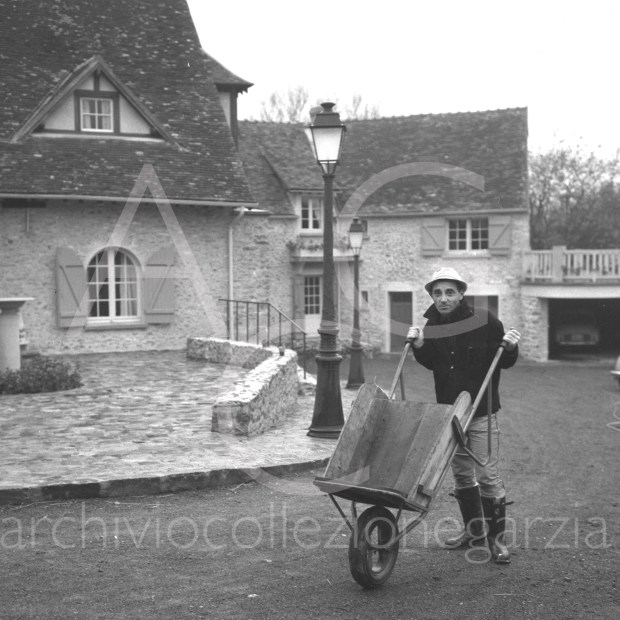
#CharlesAznavour

Charles Aznavour, nome d’arte di Chahnourh Varinag Aznavourian (armeno: Շահնուր Վաղինակ Ազնավուրեան; Parigi, 22 maggio 1924), è un cantautore, attore e diplomatico francese di origine armena.

Noto con il soprannome di Charles Aznavoice, è anche detto il “Frank Sinatra d’Europa”. Insignito della Legion d’Onore per il lustro dato alla Francia, è ambasciatore dell’Armenia in Svizzera dal 12 febbraio 2009.

Aznavour canta in sette lingue e ha venduto oltre 300 milioni di dischi nel mondo.

Charles Aznavour (en arménien Շառլ Ազնաւուր), né Shahnourh Varinag Aznavourian (Շահնուր Վաղինակ Ազնաւուրեան) le 22 mai 1924 à Paris, est un auteur-compositeur-interprète, acteur, écrivain et diplomate français. Il obtient en décembre 2008 la nationalité arménienne, lors de sa nomination au poste d’ambassadeur d’Arménie.

Pendant ses soixante-dix ans de carrière, Charles Aznavour a écrit plus de huit cent chansons. Sur disque, il en a enregistré plus de mille deux cents, chantées dans huit langues différentes. Au total, le chanteur totalise aujourd’hui plus de 180 millions de disques vendus à travers le monde

Il réside à Saint-Sulpice (Canton de Vaud), en Suisse, où il est l’ambassadeur de l’Arménie et le représentant permanent de ce pays auprès de l’ONU (auparavant, il était depuis 1995 le représentant permanent de l’Arménie auprès de l’Unesco).

Charles Aznavour (French pronunciation: [ʃaʁl aznavuʁ]; born Shahnour Varinag Aznavourian on 22 May 1924) is a French and Armenian singer, songwriter, actor, public activist and diplomat. Aznavour is known for his unique tenor voice: clear and ringing in its upper reaches, with gravelly and profound low notes. He has written over 800 songs and recorded over 1,200, sung in eight languages and sold more than 180 million records.

He is one of France’s most popular and enduring singers. He has been dubbed France’s Frank Sinatra, while music critic Stephen Holden has described Aznavour as “French pop deity.” He is also arguably the most famous Armenian of his time.In 1998, Aznavour was named Entertainer of the Century by CNN and users of Time Online from around the globe. He was recognized as the century’s outstanding performer, with nearly 18% of the total vote, edging out Elvis Presley and Bob Dylan.

He has sung for presidents, popes and royalty, as well as at humanitarian events. In response to the 1988 Armenian earthquake, he founded the charitable organization Aznavour for Armenia along with his long-time friend impresario Levon Sayan. In 2009, he was appointed ambassador of Armenia to Switzerland, as well as Armenia’s permanent delegate to the United Nations at Geneva. Aznavour is the longest standing “A list” star, still filling major venues all over the world. He started his most recent tour in 2014.

charl-aznavour-w

https://youtu.be/Vank6dS5w7k


#CountBasie

CountBasie, nato William Allen Basie (Red Bank, 21 agosto 1904 – Hollywood, 26 aprile 1984), è stato un compositore, pianista, direttore d’orchestra e bandleader statunitense di musica jazz.

William James Basie (August 21, 1904 – April 26, 1984) professionally better known as Count Basie, was an American jazz pianist, organist, bandleader, and composer. His mother taught him to play the piano and he started performing in his teens. Dropping out of school, he learned to operate lights for vaudeville and to improvise accompaniment for silent films at a local movie theater in his home town of Red Bank, New Jersey. By 16 years old, he increasingly played jazz piano at parties, resorts and other venues. In 1924, he went to Harlem, where his performing career expanded; he toured with groups to the major jazz cities of Chicago, St. Louis and Kansas City. In 1929 he joined Bennie Moten’s band in Kansas City, and played with them until Moten’s death in 1935.

In 1935, Basie formed his own jazz orchestra, the Count Basie Orchestra, and in 1936 took them to Chicago for a long engagement and their first recording. He led the group for almost 50 years, creating innovations like the use of two “split” tenor saxophones, emphasizing the rhythm section, riffing with a big band, using arrangers to broaden their sound, and others. Many musicians came to prominence under his direction, including the tenor saxophonists Lester Young and Herschel Evans, the guitarist Freddie Green, trumpeters Buck Clayton and Harry “Sweets” Edison and singers Jimmy Rushing and Joe Williams. Basie’s theme songs were “One O’Clock Jump”, developed in 1935 in the early days of his band, and later “April in Paris”.

William Basie, dit Count Basie, né le 21 août 1904 et mort le 26 avril 1984, est un pianiste, organiste et chef d’orchestre de jazz. Son orchestre s’inscrit dans la tradition de Kansas City, ville-berceau du middle jazz orchestral. Il était surnommé la machine à swing.

Son big band représente, avec celui de Duke Ellington, la quintessence du jazz classique dont il a porté la bonne parole pendant 50 ans dans le monde entier. Il a abordé tous les registres, du blues aux succès de Broadway en passant par les grands standards, toujours avec la même ferveur sincère.

Le Count Basie Orchestra aura été un tremplin pour nombre de musiciens majeurs de l’époque comme Lester Young, Herschel Evans, Buck Clayton, Harry ‘Sweets’ Edison, Dicky Wells, Buddy Tate.

count-basie-w


#PabloPicasso #LuciaBosè

Pablo Ruiz y Picasso semplicemente noto come Pablo Picasso (Málaga, 25 ottobre 1881Mougins, 8 aprile 1973) è stato un pittore, scultore e litografo spagnolo di fama mondiale, considerato uno dei maestri della pittura del XX secolo.

Fu anche un apprezzato ceramista e prolifico disegnatore; usava dire agli amici di considerarsi «anche un poeta». Picasso è figlio di María Picasso e di José Ruiz Blasco Lopez dè Onate, anch’egli pittore ed insegnante. Pur nella duplicità dell’assegnazione dei cognomi nei paesi latini, Picasso preferì sempre utilizzare il cognome della madre piuttosto che quello paterno

Pablo Ruiz y Picasso, also known as Pablo Picasso (/pɪˈkɑːs, ˈkæs/;Spanish: [ˈpaβlo piˈkaso]; 25 October 1881 – 8 April 1973), was a Spanish painter, sculptor, printmaker, ceramicist, stage designer, poet and playwright who spent most of his adult life in France. Regarded as one of the greatest and most influential artists of the 20th century, he is known for co-founding the Cubist movement, the invention of constructed sculpture,[3][4] the co-invention of collage, and for the wide variety of styles that he helped develop and explore. Among his most famous works are the proto-Cubist Les Demoiselles d’Avignon (1907), and Guernica (1937), a portrayal of the Bombing of Guernica by the German and Italian airforces at the behest of the Spanish nationalist government during the Spanish Civil War.

Lucia Bosè (Milano, 28 gennaio 1931) è un’attrice italiana, madre di Miguel, Lucia e Paola ed ex-moglie di Luis Miguel Dominguín.

Insieme a Silvana Pampanini e Gina Lollobrigida è stata la prima maggiorata del cinema italiano.

Lucia Bosè (born 28 January 1931), is an Italian actress, who was at the height of her fame during the period of Italian Neorealism, the 1940s and 1950s. She is the mother of famous Spanish singer Miguel Bosé.

picasso bosè

#LeoLonganesi #PierpaoloPasolini

-Leopoldo Longanesi, detto Leo (Bagnacavallo, 30 agosto 1905 – Milano, 27 settembre 1957), è stato un giornalista, pittore, disegnatore, editore e aforista italiano.

Nella sua vasta produzione pubblicistica, il gusto per la tradizione si fuse con un atteggiamento intellettuale anticonformista. Il successo che arrise alle sue riviste e alle sue iniziative editoriali gli ritagliò un ruolo di opinion maker politico-culturale, che Longanesi ricoprì per tutto l’arco della sua carriera.

-Pier Paolo Pasolini (Bologna, 5 marzo 1922 – Roma, 2 novembre 1975) è stato un poeta, scrittore, cineasta, sceneggiatore, drammaturgo e giornalista italiano, considerato tra i maggiori artisti e intellettuali del XX secolo. Culturalmente versatile, si distinse in numerosi campi, lasciando contributi anche come pittore, romanziere, linguista, traduttore e saggista, non solo in lingua italiana, ma anche friulana.

Attento osservatore dei cambiamenti della società italiana dal secondo dopoguerra sino alla metà degli anni settanta, suscitò spesso forti polemiche e accesi dibattiti per la radicalità dei suoi giudizi, assai critici nei riguardi delle abitudini borghesi e della nascente società dei consumi, come anche nei confronti del Sessantotto e dei suoi protagonisti. Il suo rapporto con la propria omosessualità fu al centro del suo personaggio pubblico.

longanesi pasolini b. 3755 001

#MinaMazzini

“Se non avessi la mia voce vorrei avere quella di una
giovane ragazza italiana di nome Mina”

Sarah Vaughan. 1968.


Mina è la più grande voce italiana di sempre. Ma non solo. Per gli italiani Mina è un’icona al pari di altri grandi “marchi”che parlano di qualità eccelsa nel mondo, quali Ferrari o Fellini. Nell’immaginario collettivo per gli italiani Mina è un patrimonio del quale andare orgogliosi.

Mina ha incarnato il modello del talento e della diva dello spettacolo sulle scene, in televisone e nei suoi dischi. Ha fatto la storia della televisione italiana negli anni ’60 e ’70 per poi decidere di non apparirvi più. Ha interpretato le canzoni di successo che hanno accompagnato la vita quotidiana degli italiani per 40 anni. Mina pubblica un lavoro discografico inedito ogni anno.

Oggi è forse l’unico caso al mondo di un artista che non si concede ai media (infatti non rilascia interviste e non fa né recitals né apparizioni pubbliche da più di 20 anni) rimanendo ugualmente al primo posto in classifica ogni volta che pubblica un nuovo disco.

Oltre a intensificare la sua attività discografica, negli ultimi anni Mina ha scritto su importanti testate, incarico in cui si è rivelata padrona di un pensiero importante: protagonista di seguitissimi editoriali dove il suo talento come artista e la sua acutezza e credibilità l’hanno portata ad essere autorevole come editorialista tanto quanto come cantante.
Con l’ironia che il suo “talento totale” le ha costantemente assicurato, Mina, già da molti anni prima che si parlasse di “look”, ha sempre giocato con la sua immagine, stravolgendola nelle copertine dei suoi dischi, che sono anche state oggetto di mostre nei musei italiani. Mina ha sempre precorso i tempi e amato confrontarsi con le nuove tecnologie. Nel 2001 ha aperto le porte del suo studio di registrazione attraverso internet, dando in streaming un filmato dove registrava live.
Le richieste di poter vedere Mina in questo documento filmato al server dell’operatore Wind telecomunicazioni s.p.a. sono state addirittura 50 milioni, facendo collassare l’intero sistema…

Mina è un’artista eclettica e versatile che ha interpretato musica di tutti i generi spaziando tra i diversi stili con assoluta proprietà di linguaggio.


“If I didn’t have my own voice, I’d like to have the voice of a young Italian girl named Mina”

Sarah Vaughan. 1968.


Mina is the greatest Italian singer of all times, but not only. For Italians, Mina is an icon equally as important as the biggest and best known names about which they boast as proof that Italy has the highest quality everything in the world, like Ferrari or Fellini. In the Italian collective imagination, Mina is a national treasure to be proud of and jealously guarded.

During the ‘60s and the ‘70s Mina embodied the very essence of the ultra-talented superstar on stage, in TV and in her records. She made television history and then suddenly, inexplicably decided to retire. She sang Italy’s greatest hits, which for over 40 years have been the leitmotiv of the everyday life of the Italian people. Nowadays Mina releases one record a year. She is perhaps the only artist in the world that does not offer herself up to the media – as a matter of fact, she does not grant interviews, has not appeared in concert or made any other public appearance for more than 20 years. Yet, all her new albums reach number one in the national hit parade.

In addition to her recordings, in recent years Mina has published as freelance journalist in important newspapers and magazines, revealing a penchant for deep, thought-provoking insight. Her successful columns have earned her a new, wide-flung reputation as a talented editorialist, demonstrating intelligence and adding wide journalistic credibility to her fame as singer.

Thanks to her capacity for “self-irony” that her unrivalled talent has always assured her, Mina has always laughed about, played and gambled with her imagine, varying it in a thousand ways in the media and even on her record sleeves, many of which have been placed on exhibit in Italian museums of art. Always ahead of her times, Mina remains on the cutting edge even in new technologies. In 2001 she opened the doors of her recording studios to the WWW by streaming an extended version of the videotaped session of her new album. The night the video went on-line, the server was overwhelmed with over 50,000 connection requests and the entire system crashed.

Mina is an eclectic, versatile artist completely at ease with a repertoire spanning all musical genres, all of which she has sung with masterful panache.

da bio ufficiale

mina parr b.5165 W


#BrigitteBardot

Brigitte Anne Marie Bardot, anche conosciuta come B.B. (“Bri-Bri” da bambina) (Parigi, 28 settembre 1934), è un’attrice, ex modella, cantante, ballerina e attivista francese. Dopo gli esordi come danzatrice classica, diviene prima modella, posando per svariate copertine di riviste di moda, quindi attrice e infine, dal 1962, cantante. Negli anni del successo si consacrò come un’icona sexy. Dal 1962, inoltre, è un’attivista per i diritti degli animali, attività che l’ha assorbita completamente a partire dal suo abbandono del cinema avvenuto nel 1972.

Brigitte Bardot, née Brigitte Anne-Marie Bardot le 28 septembre 1934 à Paris, est une actrice de cinéma, ancien mannequin et chanteuse française, militante de la cause animale, fondatrice et présidente de la fondation qui porte son nom. Figure féminine des années 1950 et 1960, elle est une star mondiale, l’égérie et la muse des plus grands artistes de l’époque. Emblème de l’émancipation des femmes et de la liberté sexuelle, elle passe des rôles de femme enfant à ceux de femme fatale. Elle tourne avec les plus grands réalisateurs, incarnant des personnages à l’élégante légèreté et à la sensualité photogénique. Elle devient rapidement un sex-symbol et acquiert une renommée internationale. Avec à son actif 48 films et plus de 80 chansons en près de vingt et un ans de carrière, Brigitte Bardot, tout aussi connue sous les initiales de « BB », est une des artistes françaises les plus célèbres au monde. Elle met un terme à sa carrière d’actrice en 1973 et se consacre dès lors à la défense des animaux.

Brigitte Anne-Marie Bardot (French: [bʁiʒit baʁˈdo]; born 28 September 1934) is a French actress, singer and fashion model, who later became an animal rights activist. She was one of the best known sex symbols of the 1950s and 1960s and was widely referred to by her initials, B.B.

Bardot was an aspiring ballerina in early life. She started her acting career in 1952 and after appearing in 16 routine comedy films, with limited international release, became world-famous in 1957, with the controversial film And God Created Woman. Bardot caught the attention of French intellectuals. She was the subject of Simone de Beauvoir’s 1959 essay, The Lolita Syndrome, which described Bardot as a “locomotive of women’s history” and built upon existentialist themes to declare her the first and most liberated woman of post-war France.  She later starred in Jean-Luc Godard’s 1963 film Le Mépris. For her role in Louis Malle’s 1965 film Viva Maria! Bardot was nominated for a BAFTA Award for Best Foreign Actress. From 1969 to 1978, Bardot was the official face of Marianne (who had previously been anonymous) to represent the liberty of France.

Bardot retired from the entertainment industry in 1973. During her career in show business, she starred in 47 films, performed in several musical shows and recorded over 60 songs. She was awarded the Legion of Honour in 1985 but refused to receive it. After her retirement, she established herself as an animal rights activist. During the 2000s, she generated controversy by criticizing immigration and Islam in France and has been fined five times for inciting racial hatred


b.b. saint tropez b.5537001

#SergioEndrigo

Sergio Endrigo (Pola, 15 giugno 1933 – Roma, 7 settembre 2005) è stato un cantautore italiano.

Ha vinto il Festival di Sanremo 1968 con Canzone per te, è arrivato secondo nel 1969 con Lontano dagli occhi e terzo nel 1970 con L’arca di Noè; nel corso della sua carriera ha collaborato con scrittori e poeti come Gianni Rodari, Pier Paolo Pasolini, Vinicius de Moraes e Giuseppe Ungaretti e con musicisti come Toquinho e Luis Bacalov.

Sergio Endrigo (15 June 1933 – 7 September 2005) was an Italian singer-songwriter.

Born in Pola, Istria, he has been often compared—for style and nature—to authors of the so-called “Genoa school” like Gino Paoli, Fabrizio De André, Luigi Tenco, and Bruno Lauzi.

He won the Sanremo Music Festival in 1968 with the song “Canzone per te”, sung with Roberto Carlos. The same year he represented Italy at the Eurovision Song Contest 1968 with the song “Marianne.”

Sergio Endrigo (Pula, 15 juin 1933 – Rome, 7 septembre 2005) est un auteur-compositeur-interprète italien. Il a remporté le Festival de Sanremo en 1968 et participé au concours Eurovision de la chanson de la même année

Sergio Endrigo est né à Pula en Istrie. Son style et ses compositions est souvent estimé similaire comparé à ceux des auteurs de l’« école de Gênes » comme Gino Paoli, Fabrizio De André, Luigi Tenco, Giorgio Gaber et Bruno Lauzi.

Sergio Endrigo remporte le Festival de Sanremo en 1968 avec la chanson Canzone per te, chanté avec Roberto Carlos. La même année il représente l’Italie à l’Eurovision Song Contest 1968 avec la chanson Marianne.


sergio endrigo b.5540 W

#PieroManzoni

-Piero Manzoni nasce il 13 luglio del 1933 a Soncino (Cremona). Cresce a Milano, trascorrendo le vacanze estive ad Albisola Marina, in Liguria, dove la famiglia frequenta Lucio Fontana, il fondatore dello Spazialismo.

Nel 1956 Manzoni debutta alla “IV Fiera mercato” del castello Sforzesco di Soncino. L’anno successivo partecipa alla mostra “Arte Nucleare”, presso la galleria San Fedele di Milano: dipinge sagome antropomorfe e quadri con impronte di oggetti. Realizza inoltre i primi Achromes (1957), grandi superfici bianche imbevute di colla e caolino (un’argilla bianca impiegata nella produzione della ceramica).

Nel 1958 espone insieme a Lucio Fontana e ad Enrico Baj. Inizia la collaborazione con Enrico Castellani e Agostino Bonalumi. Nel 1959 fonda la rivista “Azimuth” e la Galleria Azimut.
Lo stile di Manzoni diviene sempre più radicale. Supera la superficie del quadro e propone una serie di opere provocatorie, insofferenti nei confronti della tradizione:

Il 21 luglio del 1960, Piero Manzoni presenta alla Galleria Azimut di Milano una delle performance più famose: la Consumazione dell’arte dinamica del pubblico divorare l’arte. L’artista firma con l’impronta del pollice alcune uova sode che vengono consumate sul posto dal pubblico.

Nel 1961, alla Galleria La Tartaruga di Roma, Piero Manzoni firma per la prima volta degli esseri umani trasformandoli in Sculture viventi. Nello stesso anno pone in vendita le scatolette di Merda d’artista.
Nel 1962, Manzoni progetta con l’editore Jes Petersen la pubblicazione di un libro dalle pagine bianche: “Piero Manzoni. The Life and the Works”.

Il 6 febbraio 1963, Manzoni muore improvvisamente di infarto a Milano, nel suo studio.

da http://www.pieromanzoni.org ( fondazione Piero Manzoni)

-Piero Manzoni (July 13, 1933 – February 6, 1963) was an Italian artist best known for his ironic approach to avant-garde art. Often compared to the work of Yves Klein, his own work anticipated, and directly influenced, the work of a generation of younger Italian artists brought together by the critic Germano Celant in the first Arte Povera exhibition held in Genoa, 1967. Manzoni is most famous for a series of artworks that call into question the nature of the art object, directly prefiguring Conceptual Art. His work eschews normal artist’s materials, instead using everything from rabbit fur to human excrement in order to “tap mythological sources and to realize authentic and universal values”.

His work is widely seen as a critique of the mass production and consumerism that was changing Italian society (the Italian economic miracle) after World War II.[4] Italian artists such as Manzoni had to negotiate the new economic and material order of post-war Europe through inventive artistic practices which crossed geographic, artistic, and cultural borders.

fonte wikipedia

piero manzoni b.3875w