Sir Alfred Joseph Hitchcock (Londra, 13 agosto 1899 – Los Angeles, 29 aprile 1980) è stato un regista e produttore cinematografico britannico naturalizzato statunitense[1]. È considerato una delle personalità più importanti della storia del cinema.
Lo spartiacque nella carriera di Hitchcock è rappresentato dal suo trasferimento da Londra a Hollywood, avvenuto nel 1940. In base a questa data, gli studiosi suddividono la sua produzione in due grandi periodi:
il periodo inglese, che va dal 1925 al 1940, durante il quale ha diretto ventitré film, di cui nove muti;
il periodo americano, che va dal 1940 al 1976, durante il quale ha diretto trenta film, fra i quali si annoverano i più conosciuti.
L’ultimo film è Complotto di famiglia diretto nel 1976.
Il regista è conosciuto anche, grazie ai suoi capolavori thriller, come “maestro del brivido”.
Nel 2012 è uscito nelle sale cinematografiche Hitchcock, con protagonisti Anthony Hopkins, Helen Mirren, Scarlett Johansson e Jessica Biel, film biografico incentrato sul rapporto tra il regista e sua moglie Alma Reville durante la lavorazione del film Psyco.
Sir Alfred Joseph Hitchcock KBE (13 August 1899 – 29 April 1980) was an English film director and producer, at times referred to as “The Master of Suspense”. He pioneered many elements of the suspense and psychological thriller genres. He had a successful career in British cinema with both silent films and early talkies and became renowned as England’s best director. Hitchcock moved to Hollywood in 1939, and became a US citizen in 1955.
With a career spanning more than half a century, Hitchcock fashioned for himself a recognisable directorial style. His stylistic trademarks include the use of camera movement that mimics a person’s gaze, forcing viewers to engage in a form of voyeurism. In addition, he framed shots to maximise anxiety, fear, or empathy, and used innovative forms of film editing. His work often features fugitives on the run alongside “icy blonde” female characters.
Hitchcock became a highly visible public figure through interviews, movie trailers, cameo appearances in his own films, and the ten years in which he hosted the television program Alfred Hitchcock Presents. In 1978, film critic John Russell Taylor described Hitchcock as “the most universally recognizable person in the world”, and “a straightforward middle-class Englishman who just happened to be an artistic genius”.
Hitchcock directed more than fifty feature films in a career spanning six decades and is often regarded as the greatest British filmmaker. He came first in a 2007 poll of film critics in Britain’s Daily Telegraph, which said: “Unquestionably the greatest filmmaker to emerge from these islands, Hitchcock did more than any director to shape modern cinema, which would be utterly different without him. His flair was for narrative, cruelly withholding crucial information (from his characters and from viewers) and engaging the emotions of the audience like no one else.”
Prior to 1980, there had long been talk of Hitchcock being knighted for his contribution to film. Critic Roger Ebert wrote: “Other British directors like Sir Carol Reed and Sir Charlie Chaplin were knighted years ago, while Hitchcock, universally considered by film students to be one of the greatest filmmakers of all time, was passed over”. Hitchcock later received his knighthood from Queen Elizabeth II in the 1980 New Year Honours.In 2002, the magazine MovieMaker named Hitchcock the most influential filmmaker of all time.
Marie Magdalene “Marlene” Dietrich/maɐ̯’le:nə ‘di:tʀɪç/ (Berlino, 27 dicembre 1901 – Parigi, 6 maggio 1992) è stata un’attrice e cantante tedesca naturalizzata statunitense.
Fra le più note icone del mondo cinematografico della prima metà del Novecento, la Dietrich fu un vero e proprio mito, lasciando un’impronta duratura attraverso la sua recitazione, le sue immagini e l’interpretazione delle canzoni (arricchite da una voce ammaliante e sensuale). La Dietrich fu una delle prime dive grazie ad un insieme di qualità, raramente ripetuto dopo di lei, che fu sufficiente a farla entrare nella leggenda dello show business quale modello di femme fatale per antonomasia. Il suo mito nacque e si sviluppò in contrapposizione a quello della divina Greta Garbo, entrambe star di punta di due compagnie di produzione rivali.
L’American Film Institute ha inserito la Dietrich al nono posto tra le più grandi star della storia del cinema.
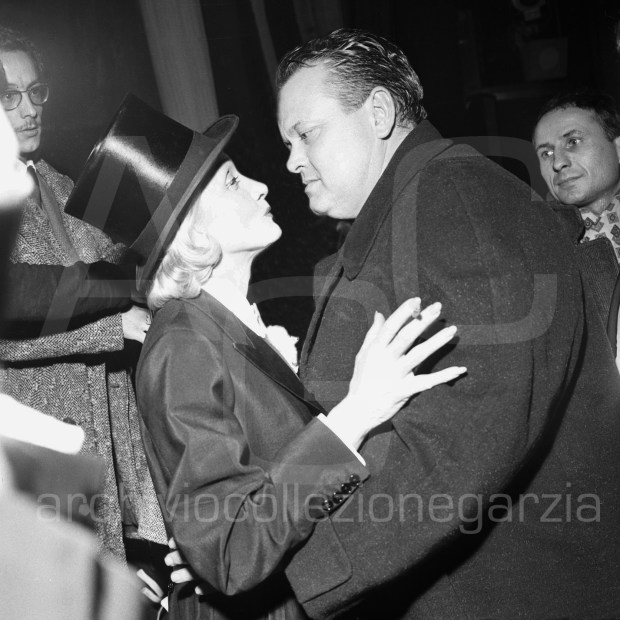
-George Orson Welles (Kenosha, 6 maggio 1915 – Los Angeles, 10 ottobre 1985) è stato un attore, regista, sceneggiatore, scrittore, drammaturgo e produttore cinematografico statunitense.
È considerato uno degli artisti più versatili e innovativi del Novecento in ambito teatrale, radiofonico e cinematografico. Conquistò il successo all’età di ventitré anni grazie allo spettacolo radiofonico La guerra dei mondi, trasmissione che, leggenda narra, scatenò il panico in buona parte degli Stati Uniti, facendo credere alla popolazione di essere sotto attacco da parte dei marziani. Questo insolito debutto gli diede la celebrità e gli fece ottenere un contratto per un film all’anno con la casa di produzione cinematografica RKO, da realizzare con assoluta libertà artistica. Nonostante questa vantaggiosa clausola, solo uno dei progetti previsti poté vedere la luce: Quarto potere (1941), il più grande successo cinematografico di Welles, considerato “il più bel film della storia del cinema” secondo un sondaggio della rivista britannica Sight & Sound che ha interpellato oltre 250 critici e registi cinematografici.
La carriera successiva di Welles fu ostacolata da una lunga serie di difficoltà e inconvenienti che non gli permise di continuare a lavorare a Hollywood e che lo costrinse a trasferirsi in Europa, dove continuò a cercare di realizzare le proprie opere finanziandosi soprattutto con apparizioni in film altrui. Fra i suoi molti progetti, Welles riuscì a realizzare e dirigere film come: Macbeth (1948), Otello (1952), L’infernale Quinlan (1958), Il processo (1962), F come falso (1975) ed altri.
La sua fama è aumentata dopo la sua morte, avvenuta nel 1985, ed è considerato uno dei maggiori registi cinematografici e teatrali del XX secolo[]. Palma d’oro a Cannes nel 1952 (all’epoca Gran Prix du Festival), ricevette, tra gli altri riconoscimenti, l’Oscar alla carriera nel 1971. Nel 2002 è stato votato dal British Film Institute come il più grande regista di tutti i tempi. L’American Film Institute ha inserito Welles al sedicesimo posto tra le più grandi star della storia del cinema.
theatre de l’Etoile 1959
Marie Magdalene “Marlene” Dietrich (/mɑːrˈleɪnəˈdiːtrɪk/, German pronunciation: [maɐ̯ˈleːnə ˈdiːtʁɪç]; 27 December 1901 – 6 May 1992)was a German actress and singer who held both German and American citizenship.Throughout her unusually long career, which spanned from the 1910s to the 1980s, she maintained popularity by continually reinventing herself.
In the 1920s in Berlin, Dietrich acted on the stage and in silent films. Her performance as Lola-Lola in The Blue Angel (1930) brought her international fame and resulted in a contract with Paramount Pictures. Dietrich starred in Hollywood films such as Morocco (1930), Shanghai Express (1932), and Desire (1936). She successfully traded on her glamorous persona and “exotic” looks, and became one of the highest-paid actresses of the era. Throughout World War II, she was a high-profile entertainer in the United States. Although she still made occasional films after the war, Dietrich spent most of the 1950s to the 1970s touring the world as a marquee live-show performer.
Dietrich was noted for her humanitarian efforts during the war, housing German and French exiles, providing financial support and even advocating their US citizenship. For her work on improving morale on the front lines during the war, she received several honors from the United States, France, Belgium, and Israel. In 1999, the American Film Institute named Dietrich the ninth-greatest female star of classic Hollywood cinema.
George Orson Welles (/ˈwɛlz/; May 6, 1915 – October 10, 1985) was an American actor, director, writer, and producer who worked in theatre, radio, and film. He is remembered for his innovative work in all three: in theatre, most notably Caesar (1937), a Broadway adaptation of William Shakespeare’s Julius Caesar; in radio, the legendary 1938 broadcast “The War of the Worlds”; and in film, Citizen Kane (1941), consistently ranked as one of the all-time greatest films.
Welles directed a number of high-profile stage productions for the Federal Theatre Project in his early twenties, including an adaptation of Macbeth with an entirely African American cast, and the political musical The Cradle Will Rock. In 1937 he and John Houseman founded the Mercury Theatre, an independent repertory theatre company that presented a series of productions on Broadway through 1941. Welles found national and international fame as the director and narrator of a 1938 radio adaptation of H. G. Wells’ novel The War of the Worlds performed for his radio anthology series The Mercury Theatre on the Air. It reportedly caused widespread panic when listeners thought that an invasion by extraterrestrial beings was actually occurring. Although some contemporary sources claim these reports of panic were mostly false and overstated, they rocketed Welles to notoriety.
His first film was Citizen Kane (1941), which he co-wrote, produced, directed, and starred in as Charles Foster Kane. Welles was an outsider to the studio system and directed only 13 full-length films in his career. He struggled for creative control on his projects early on with the major film studios and later in life with a variety of independent financiers, and his films were either heavily edited or remained unreleased. His distinctive directorial style featured layered and nonlinear narrative forms, uses of lighting such as chiaroscuro, unusual camera angles, sound techniques borrowed from radio, deep focus shots, and long takes. He has been praised as “the ultimate auteur”.
Welles followed up Citizen Kane with critically acclaimed films including The Magnificent Ambersons in 1942 and Touch of Evil in 1958. Although these three are his most acclaimed films, critics have argued other works of his, such as The Lady from Shanghai (1947) and Chimes at Midnight (1966),are underappreciated.
In 2002, Welles was voted the greatest film director of all time in two British Film Institute polls among directors and critics,and a survey of critical consensus, best-of lists, and historical retrospectives calls him the second most acclaimed director of all time (behind Alfred Hitchcock). Known for his baritone voice, Welles was an actor in radio and film, a Shakespearean stage actor, and a magician noted for presenting troop variety shows in the war years.
Totò, pseudonimo di Antonio Griffo Focas Flavio Angelo Ducas Comneno Porfiro-genito Gagliardi de Curtis di Bisanzio,(brevemente Antonio de Curtis) (Napoli, 15 febbraio 1898 – Roma, 15 aprile 1967), è stato un artista italiano. Attore simbolo dello spettacolo comico in Italia, soprannominato «il principe della risata», è considerato, anche in virtù di alcuni ruoli drammatici, uno dei maggiori interpreti nella storia del teatro e del cinema italiani. Si distinse anche al di fuori della recitazione, lasciando contributi come drammaturgo, poeta, paroliere, cantante.
Nato Antonio Vincenzo Stefano Clementeda Anna Clemente (Palermo, 2 gennaio 1881 – Napoli, 23 ottobre 1947) e dal marchese Giuseppe De Curtis (Napoli, 12 agosto 1873 – Roma, 29 settembre 1944), fu adottato nel 1933 dal marchese Francesco Maria Gagliardi Focas.
Maschera nel solco della tradizione della commedia dell’arte, accostato a comici come Buster Keaton e Charlie Chaplin,ma anche ai fratelli Marx e a Ettore Petrolini. In quasi cinquant’anni di carriera spaziò dal teatro (con oltre 50 titoli) al cinema (con 97 pellicole) e alla televisione (con 9 telefilm e vari sketch pubblicitari), lavorando con molti tra i più noti protagonisti dello spettacolo italiano e arrivando a sovrastare con numerosi suoi film i record d’incassi. Adoperò una propria unicità interpretativa, che risaltava sia in copioni puramente brillanti sia in parti più impegnate, sulle quali si orientò soprattutto verso l’ultima fase della sua vita, che concluse in condizioni di quasi cecità a causa di una grave forma di corioretinite, probabilmente aggravata dalla lunga esposizione ai fari di scena. Spesso stroncato dalla maggior parte dei critici cinematografici, fu ampiamente rivalutato dopo la morte, tanto da risultare ancor oggi il comico italiano più popolare di sempre.
Franca Faldini, sua compagna, diventata giornalista e scrittrice dopo la morte dell’attore, scrisse nel 1977 il libro Totò: l’uomo e la maschera, realizzato insieme a Goffredo Fofi, in cui raccontò sia il profilo artistico sia la vita dell’attore fuori dal set, con l’intento principale di smentire alcune false affermazioni riportate da scrittori e giornalisti riguardo alla sua personalità.
–
Prince Antonio Griffo Focas Flavio Angelo Ducas Comneno Porfirogenito Gagliardi De Curtis di Bisanzio (15 February 1898 – 15 April 1967), best known by his stage name Totò (Italian pronunciation: [toˈtɔ]) born simply as Antonio De Curtis, and nicknamed il Principe della risata (“the Prince of laughter”), was an Italian comedian, film and theatre actor, writer, singer and songwriter.
While he first gained his popularity as a comic actor, his dramatic roles, poetry, and songs are all deemed to be outstanding;[citation needed] his style and a number of his recurring jokes and gestures have become universally known memes in Italy.[citation needed] Writer and philosopher Umberto Eco has thus commented on the importance of Totò in Italian culture: Mario Monicelli, who directed some of the most appreciated of Totò’s movies, thus described his artistic value:
With Totò, we got it all wrong. He was a genius, not just a grandiose actor. And we constrained him, reduced him, forced him into a common human being, and thus clipped his wings.
— Mario Monicelli, Cinquant’anni di cinema. As a comic actor, Totò was classified as an heir of the Commedia dell’Arte tradition, and was compared to such figures as Buster Keaton and Charlie Chaplin.
nella foto: Perugia, 21 novembre 1956 durante la prima dello spettacolo “A prescindere”.
Romy Schneider, pseudonimo di Rosemarie Magdalena Albach-Retty (Vienna, 23 settembre 1938 – Parigi, 29 maggio 1982), è stata un’attrice tedesca naturalizzata francese.
La vera svolta nella carriera di Romy Schneider avvenne con il film L’amante pura (1958). Durante la lavorazione conobbe Alain Delon e con lui ebbe una lunga relazione sentimentale, trasferendosi a Parigi. Da questo momento recitò in film di produzione prevalentemente francese e italiana, come La piscina (1968) di Jacques Deray, La Califfa (1970) di Alberto Bevilacqua, Ludwig (1973) di Luchino Visconti, dove fu una ben diversa Elisabetta di Baviera, e La morte in diretta (1979) di Bertrand Tavernier, distinguendosi per la luminosa bellezza e il temperamento drammatico.
Romy Schneider (23 September 1938 – 29 May 1982) was a film actress born in Vienna who held German and French citizenship. She started her career in the German Heimatfilm genre in the early 1950s when she was 15. From 1955 to 1957, she played the central character of Empress Elisabeth of Austria in the Austrian Sissi trilogy. Schneider moved to France where she made successful and critically acclaimed films with some of the most notable film directors of that era.
Gary Cooper, nato Frank James Cooper (Helena, 7 maggio 1901 – Beverly Hills, 13 maggio 1961), è stato un attore statunitense.
È stato candidato 5 volte all’Oscar, vincendolo in due occasioni, nel 1942 e nel 1953, ai quali se ne aggiunse uno alla carriera nel 1961. Eroe per eccellenza del western e del melodramma hollywoodiano, l’American Film Institute ha inserito Cooper all’undicesimo posto tra le più grandi star della storia del cinema.
Per il suo contributo all’industria cinematografica, Gary Cooper è ricordato con una stella presso la Hollywood Walk of Fame, all’altezza del 6243 di Hollywood Boulevard (Los Angeles). Nel 1966 fu riconosciuto come uno dei migliori cowboy e un omaggio alla sua memoria è presente al National Cowboy & Western Heritage Museum (Museo dei ricordi dei Cowboy e del West) a Oklahoma City, nello Stato dell’Oklahoma.
Gary Cooper a Cap d’Antiques luglio 1959 @ archiviocollezionegarzia
Gary Cooper (born Frank James Cooper; May 7, 1901 – May 13, 1961) was an American film actor known for his natural, authentic, and understated acting style and screen performances. His career spanned thirty-five years, from 1925 to 1960, and included leading roles in eighty-four feature films. He was a major movie star from the end of the silent film era through the end of the golden age of Classical Hollywood. His screen persona appealed strongly to both men and women, and his range of performances included roles in most major movie genres. Cooper’s ability to project his own personality onto the characters he played contributed to his appearing natural and authentic on screen. The screen persona he sustained throughout his career represented the ideal American hero.
Cooper began his career as a film extra and stunt rider and soon landed acting roles. After establishing himself as a Western hero in his early silent films, Cooper became a movie star in 1929 with his first sound picture, The Virginian. In the early 1930s, he expanded his heroic image to include more cautious characters in adventure films and dramas such as A Farewell to Arms (1932) and The Lives of a Bengal Lancer (1935). During the height of his career, Cooper portrayed a new type of hero—a champion of the common man—in films such as Mr. Deeds Goes to Town (1936), Meet John Doe (1941), Sergeant York (1941), The Pride of the Yankees (1942), and For Whom the Bell Tolls (1943).
In the postwar years, he portrayed more mature characters at odds with the world in films such as The Fountainhead (1949) and High Noon (1952). In his final films, Cooper played non-violent characters searching for redemption in films such as Friendly Persuasion (1956) and Man of the West (1958).
He married New York debutante Veronica Balfe in 1933, and the couple had one daughter. Their marriage was interrupted by a three-year separation precipitated by Cooper’s love affair with Patricia Neal. Cooper received the Academy Award for Best Actor for his roles in Sergeant York and High Noon. He also received an Academy Honorary Award for his career achievements in 1961. He was one of the top ten film personalities for twenty-three consecutive years, and was one of the top money-making stars for eighteen years. The American Film Institute (AFI) ranked Cooper eleventh on its list of the twenty five greatest male stars of classic Hollywood cinema.
Agostino “Tino” Buazzelli (Frascati, 13 luglio 1922 – Roma, 20 ottobre 1980) è stato un attore italiano di teatro, cinema e televisione, e pittore.
Considerato tra i migliori interpreti brechtiani del Novecento, è ricordato per l’interpretazione di Galileo Galilei nella Vita di Galileo diretto da Giorgio Strehler nella stagione 1962/1963 al Piccolo Teatro di Milano. L’incontro con Strehler risale al 1952, quando il regista lo chiamò per mettere in scena Elisabetta d’Inghilterra di Ferdinand Bruckner, Il revisore di Nikolai Gogol e Sei personaggi in cerca d’autore di Pirandello.
Buazzelli raggiunse l’apice della popolarità interpretando il personaggio dell’investigatore privato Nero Wolfe, creato da Rex Stout, in una serie di dieci telefilm trasmessi tra il 1969 e il 1971, diretti da Giuliana Berlinguer, interpretati anche da Paolo Ferrari nel ruolo di Archie Goodwin e Pupo De Luca nel ruolo del cuoco svizzero Fritz Brenner. Lo sceneggiato raggiunse 19 milioni di spettatori di media a puntata, superando persino il Commissario Maigret interpretato da Gino Cervi.
Agostino “Tino” Buazzelli (13 September 1922 – 20 October 1980) was an Italian stage, television and film actor. He appeared in 46 films between 1948 and 1978.
After a diploma of education, Buazzelli enrolled the Accademia d’Arte Drammatica in Rome, graduating in 1946. He made his debut the following year, in the stage company Maltagliati-Gassman.[1] He made his film debut in 1948, in Riccardo Freda’s Il cavaliere misterioso. Buazzelli’s major successes relates to theatre, notably several stage works played in Piccolo Teatro in Milan between fifties and sixties, and his interpretation of Brecht’s Life of Galileo (1963) referred as the peak of his career.[1] Buazzelli had also a significant television success as Nero Wolfe in a series of television films starred between 1969 and 1971.
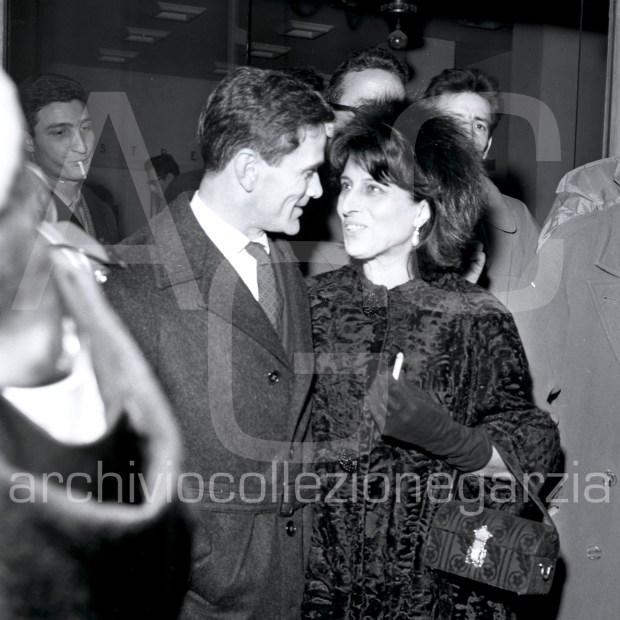
Pier Paolo Pasolini (Bologna, 5 marzo 1922 – Roma, 2 novembre 1975) è stato un poeta, scrittore, regista, sceneggiatore, drammaturgo e giornalista italiano, considerato tra i maggiori artisti e intellettuali del XX secolo. Culturalmente versatile, si distinse in numerosi campi, lasciando contributi anche come pittore, romanziere, linguista, traduttore e saggista, non solo in lingua italiana, ma anche friulana.
Attento osservatore dei cambiamenti della società italiana dal secondo dopoguerra sino alla metà degli anni settanta, suscitò spesso forti polemiche e accesi dibattiti per la radicalità dei suoi giudizi, assai critici nei riguardi delle abitudini borghesi e della nascente società dei consumi, come anche nei confronti del Sessantotto e dei suoi protagonisti. Il suo rapporto con la propria omosessualità fu al centro del suo personaggio pubblico.
Anna Magnani (Roma, 7 marzo 1908 – Roma, 26 settembre 1973) è stata un’attrice italiana.
Considerata una delle maggiori interpreti femminili della storia.Attrice simbolo del cinema italiano, è altresì particolarmente conosciuta per essere stata, insieme ad Alberto Sordi e Aldo Fabrizi, una delle figure preminenti della romanità cinematografica del XX secolo.Celebri le sue interpretazioni, soprattutto in film come Roma città aperta, Bellissima, Mamma Roma e La rosa tatuata. Quest’ultimo le valse un Oscar alla miglior attrice protagonista.
Prima del film “accattone” in Francia 10/12/61
Pier Paolo Pasolini (Italian: [ˈpjɛr ˈpaːolo pazoˈliːni]; 5 March 1922 – 2 November 1975) was an Italian film director, poet, writer and intellectual. Pasolini also distinguished himself as an actor, journalist, philosopher, novelist, playwright, filmmaker, painter and political figure.
He remains a controversial personality in Italy to this day due to his blunt style and the focus of some of his works on taboo sexual matters, but he is an established major figure in European literature and cinematic arts. His murder prompted an outcry in some circles of Italy, with its circumstances continuing to be a matter of heated debate.
Anna Magnani (Italian pronunciation: [ˈanna maɲˈɲaːni]; 7 March 1908 – 26 September 1973) was an Italian stage and film actress.She won the Academy Award for Best Actress, along with four other international awards, for her portrayal of a Sicilian widow in The Rose Tattoo.
Born in Rome, she worked her way through Rome’s Academy of Dramatic Art by singing at night clubs. During her career, her only child was stricken by polio when he was 18 months old and remained crippled.
She was referred to as “La Lupa,” the “perennial toast of Rome” and a “living she-wolf symbol” of the cinema. Time magazine described her personality as “fiery”, and drama critic Harold Clurman said her acting was “volcanic”. In the realm of Italian cinema she was “passionate, fearless, and exciting,” an actress that film historian Barry Monush calls “the volcanic earth mother of all Italian cinema.”[3] Director Roberto Rossellini called her “the greatest acting genius since Eleonora Duse”. Playwright Tennessee Williams became an admirer of her acting and wrote The Rose Tattoo specifically for her to star in, a role for which she received an Oscar in 1955.
After meeting director Goffredo Alessandrini she received her first screen role in La cieca di Sorrento (The Blind Woman of Sorrento) (1934) and later achieved international fame in Rossellini’s Rome, Open City (1945), considered the first significant movie to launch the Italian neorealism movement in cinema.As an actress she became recognized for her dynamic and forceful portrayals of “earthy lower-class women” in such films as L’Amore (1948), Bellissima (1951), The Rose Tattoo (1955), The Fugitive Kind (1959) and Mamma Roma (1962). As early as 1950 Life magazine had already stated that Magnani was “one of the most impressive actresses since Garbo”.
Sophia Loren, nome d’arte di Sofia Villani Scicolone (Roma, 20 settembre 1934), è un’attrice italiana.
Tra le più celebri attrici della storia del cinema, la Loren entra nel mondo della settima arte giovanissima e si impone ben presto, agli inizi degli anni cinquanta, come sex symbol grazie al corpo da maggiorata. Da Vittorio De Sica sarà diretta in film come La ciociara, che le valse l’Oscar alla migliore attrice, il primo dato ad un’attrice in un film non in lingua inglese e l’unica attrice insieme a Marion Cotillard a detenere questo record. Nel 1965, per il film Matrimonio all’italiana, riceverà una seconda candidatura all’Oscar, mentre nel 1991 le verrà assegnato un Oscar alla carriera.
Durante la sua lunga carriera, ha vinto 2 Oscar, 5 Golden Globe, un Leone d’oro, la Coppa Volpi a Venezia, un Prix d’interprétation féminine a Cannes, un Orso d’oro alla carriera a Berlino, un BAFTA, 9 David di Donatello (di cui quattro riconoscimenti speciali) e 3 Nastri d’argento. Nel 1999, l’American Film Institute (31 premi) ha inserito la Loren al ventunesimo posto tra le più grandi star della storia del cinema, fra le 25 attrici della classifica la Loren è l’unica attrice ancora in vita.
cannes 1959
Sophia Loren (/soʊˈfiːələˈrɛn/; Italian pronunciation: [soˈfiːa ˈlɔːren]; born Sofia Villani Scicolone[soˈfiːa vilˈlaːni ʃʃikoˈloːne], 20 September 1934) is an Italian film actress. Encouraged to enroll in acting lessons after entering a beauty pageant, Loren began her film career in 1950 at age 15. She appeared in several bit parts and minor roles in the early part of the decade, until her five-picture contract with Paramount in 1956 launched her international career. Notable film appearances around this time include The Pride and the Passion, Houseboat, and It Started in Naples.
Her talents as an actress were not recognized until her performance as Cesira in Vittorio De Sica’s Two Women; Loren’s performance earned her the Academy Award for Best Actress in 1962 and made her the first artist to win an Oscar for a foreign-language performance. She holds the record for having earned six David di Donatello Awards for Best Actress, the most ever received: Two Women; Yesterday, Today and Tomorrow; Marriage Italian Style (for which she was nominated for a second Oscar); Sunflower; The Voyage; and A Special Day. After starting her family in the early 1970s, Loren spent less time on her acting career and chose to make only occasional film appearances. In later years, she has appeared in American films such as Grumpier Old Men and Nine.
Aside from the Academy Award, she has won a Grammy Award, five special Golden Globes, a BAFTA Award, a Laurel Award, the Best Actress Award at the Cannes Film Festival, and the Honorary Academy Award in 1991. In 1995, she received the Cecil B. DeMille Award for lifetime achievements, one of many such awards. In 1999, Loren was acknowledged as one of the top 25 female American Screen Legends in the American Film Institute’s survey, AFI’s 100 Years…100 Stars.
Dario Fo (Sangiano, 24 marzo 1926 – Milano, 13 ottobre 2016) è stato un drammaturgo, attore, regista, scrittore, autore, illustratore, pittore, scenografo e attivista italiano.
Vincitore del premio Nobel per la letteratura nel 1997 (già candidato nel febbraio 1975[2]), i suoi lavori teatrali fanno uso degli stilemi comici propri della Commedia dell’arte italiana e sono rappresentati con successo in tutto il mondo. In quanto attore, regista, scrittore, scenografo, costumista e impresario della sua stessa compagnia, Fo è uomo di teatro a tutto tondo.
È famoso per i suoi testi teatrali di satira politica e sociale e per l’impegno politico di sinistra. Con la moglie Franca Rame fu tra gli esponenti del Soccorso Rosso Militante.
Franca Rame (Parabiago, 18 luglio 1929 – Milano, 29 maggio 2013) è stata un’attrice teatrale, drammaturga e politica italiana.
Jacopo Fo (Roma, 31 marzo 1955) è uno scrittore, attore, regista, fumettista, blogger e attivista italiano.
Dario Fo (Italian pronunciation: [ˈdaːrjo ˈfɔ]; 24 March 1926 – 13 October 2016) was an Italian actor-playwright, comedian, singer, theatre director, stage designer, songwriter, painter and political campaigner of the Italian left-wing, recipient of the 1997 Nobel Prize in Literature. “Arguably the most widely performed contemporary playwright in world theatre”, much of his dramatic work depends on improvisation and comprises the recovery of “illegitimate” forms of theatre, such as those performed by giullari (medieval strolling players) and, more famously, the ancient Italian style of commedia dell’arte.
His plays have been translated into 30 languages and performed across the world, including in Argentina, Chile, England, Scotland, the Netherlands, Poland, Romania, South Africa, South Korea, Spain, Sri Lanka, Sweden, and Yugoslavia. His work of the 1960s, 1970s and 1980s is peppered with criticisms of assassinations, corruption, organised crime, racism, Roman Catholic theology and war. Throughout the 1990s and 2000s, he took to lampooning Forza Italia and its leader Silvio Berlusconi, while his targets of the 2010s have included the banks amid the European sovereign-debt crisis. Also in the 2010s, he became the main ideologue of the Five Star Movement, the anti-establishment party led by Beppe Grillo, often referred by its members as “the Master“.
Fo’s solo pièce célèbre, titled Mistero Buffo and performed across Europe, Canada and Latin America over a 30-year period, is recognised as one of the most controversial and popular spectacles in postwar European theatre and has been denounced by the Vatican as “the most blasphemous show in the history of television”. The title of the original English translation of Non Si Paga! Non Si Paga! (Can’t Pay? Won’t Pay!) has passed into the English language. “The play captures something universal in actions and reactions of the working class.”
His receipt of the 1997 Nobel Prize in Literature marked the “international acknowledgment of Fo as a major figure in twentieth-century world theatre”. The Swedish Academy praised Fo as a writer “who emulates the jesters of the Middle Ages in scourging authority and upholding the dignity of the downtrodden”. He owned and operated a theatre company. Fo was an atheist.
Jacopo Fo (born 31 March 1955) is an Italian writer-actor and director. He is the son of playwrights Franca Rame and Dario Fo.
His 1992 book Lo Zen e l’arte di scopare (Zen and the Art of Fucking) sold more than 70,000 copies. It formed the basis of the 1994 monologue Sesso? Grazie, tanto per gradire! (Sex? Thanks, Don’t Mind If I Do!), which Jacopo Fo worked on with his father and mother, featuring educational pieces on topics such as AIDS, contraception, sex education and sexual repression. The government of Silvio Berlusconi, recently risen to power, banned Italians under the age of 18 from seeing it over fears, it said, that the play could “cause offence to the common decency which requires respect for spheres of decency, and provoke distress among adolescent spectators, with possible effects on their behaviour in relation to sex”, thus defeating the original purpose of the performance. Much free publicity ensued, with the censorship issue being debated in the national parliament, teachers calling for it to be performed, and audiences and both Italian and foreign intellectuals signing a petition calling for the ban to be overturned.
Jacopo Fo has in more recent times been prominent in the political campaign of Beppe Grillo
Franca Rame (18 July 1929 – 29 May 2013) was an Italian theatre actress, playwright and political activist. She was married to Nobel laureate playwright Dario Fo and is the mother of writer Jacopo Fo. Fo dedicated his Nobel Prize to her.
Domenico Modugno (Polignano a Mare, 9 gennaio 1928 – Lampedusa, 6 agosto 1994) è stato un cantautore, chitarrista, attore, regista e uomo politico italiano.
Considerato uno dei padri della canzone italiana e uno tra i più prolifici artisti in generale, avendo scritto e inciso circa 230 canzoni, interpretato 38 film per il cinema e 7 per la televisione, nonché recitato in 13 spettacoli teatrali, condotto alcuni programmi televisivi, e vinto quattro Festival di Sanremo: universalmente nota è la prima di tali quattro vittorie, quella del 1958 (primo cantautore in gara nella storia della manifestazione) con Nel blu dipinto di blu, ma ribattezzata quasi subito dal pubblico Volare, destinata a diventare una delle canzoni italiane più conosciute, se non la più conosciuta al mondo, tanto da vendere 800 000 copie in Italia e oltre 22 milioni nel mondo. Modugno è anche uno dei due cantanti italiani (l’altro è Renato Carosone), ad aver venduto dischi negli Stati Uniti senza inciderli in inglese. Nei suoi ultimi anni fu anche deputato e dirigente del Partito Radicale. È tra gli artisti italiani che hanno venduto il maggior numero di dischi con oltre 70 milioni di copie.
Domenico Modugno (Italian pronunciation: [doˈmeːniko moˈduɲɲo]; 9 January 1928 – 6 August 1994) was an Italian singer, songwriter, actor, guitarist, and later in life, a member of the Italian Parliament. He is known for his 1958 international hit song “Nel blu dipinto di blu”. He is considered the first Italian cantautore.
for contacts and prints: archiviocollezionegarzia@gmail.com



 Gary Cooper a Cap d’Antiques luglio 1959 @ archiviocollezionegarzia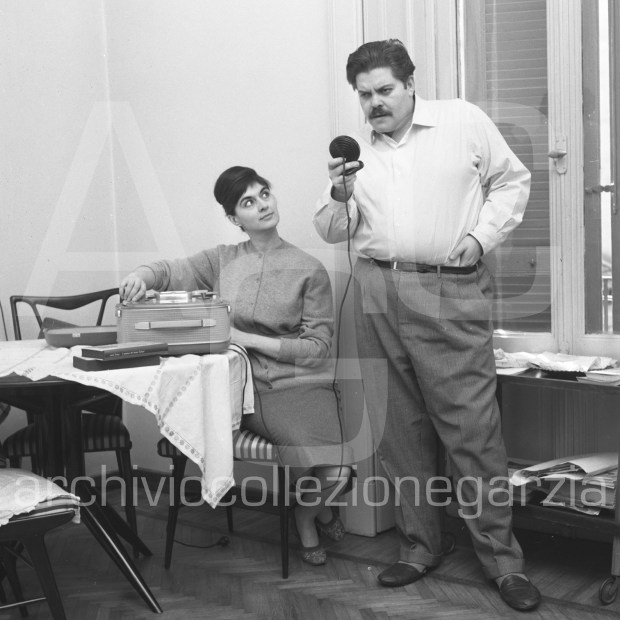
 cannes 1959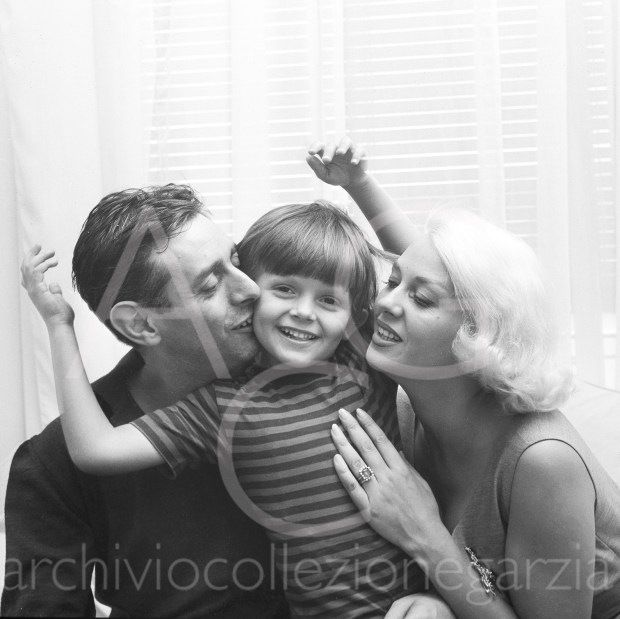

 archiviocollezionegarzia.com