Chesney Henry Baker Jr., detto Chet (Yale, 23 dicembre1929 – Amsterdam, 13 maggio1988), è stato un trombettista e cantantestatunitense di musica jazz, noto per il suo stile lirico e intimista e per essere stato tra i principali esponenti del genere conosciuto come cool jazz.
Durante una tournée in Europa, il suo amico e pianista Dick Twardzik muore per overdose in un hotel di Parigi. Oppresso dai sensi di colpa, Baker inizia a drogarsi in maniera sempre più pesante. Il fisico ne è rimasto minato e sul palco è stato sempre più un disastro. Nessuno lo vuole ingaggiare e nessuno vuole suonare con lui. Per questo, con la sua seconda moglie, la giovane pachistana Halema, (che gli ha dato un figlio, Chesney) decide di andare a vivere in Europa. Per parecchio tempo il trombettista vive in Italia, osannato come un dio. A Milano prima e poi a Lucca, città in cui sconta un anno di reclusione per avere rubato e falsificato ricette mediche per acquistare narcotici. Uscito dal carcere Chet sembra un uomo rinato, ma presto ricade nel vizio e viene espulso dal Paese. La stessa cosa è accaduta in Germania, in Inghilterra e in Francia, posti nei quali rimaneva pulito solo quando era in prigione.
Dario Fo (Sangiano, 24 marzo 1926) è un drammaturgo, attore, regista, scrittore, autore, illustratore, pittore, scenografo e attivista italiano.
Vincitore del premio Nobel per la letteratura nel 1997 (già candidato nel 1975). I suoi lavori teatrali fanno uso degli stilemi comici propri della Commedia dell’arte italiana e sono rappresentati con successo in tutto il mondo. In quanto attore, regista, scrittore, scenografo, costumista e impresario della sua stessa compagnia, Fo è uomo di teatro a tutto tondo.
È famoso per i suoi testi teatrali di satira politica e sociale e per l’impegno politico di sinistra. Con la moglie Franca Rame fu tra gli esponenti del Soccorso Rosso Militante.
Dario Fo (Italian pronunciation: [ˈdaːrjo ˈfɔ]; born 24 March 1926) is an Italian actor-playwright, comedian, singer, theatre director, stage designer, songwriter, painter and political campaigner, and recipient of the 1997 Nobel Prize in Literature. “Arguably the most widely performed contemporary playwright in world theatre”, much of his dramatic work depends on improvisation and comprises the recovery of “illegitimate” forms of theatre, such as those performed by giullari (medieval strolling players) and, more famously, the ancient Italian style of commedia dell’arte.
His plays have been translated into 30 languages and performed across the world, including in Argentina, Chile, England, the Netherlands, Poland, Romania, South Africa, South Korea, Spain, Sri Lanka, Sweden, and Yugoslavia. His work of the 1960s, 1970s and 1980s is peppered with criticisms of assassinations, corruption, organised crime, racism, Roman Catholic theology and war. Throughout the 1990s and 2000s, he took to lampooning Forza Italia and its leader Silvio Berlusconi, while his targets of the 2010s have included the banks amid the European sovereign-debt crisis. Also in the 2010s, he became the main ideologue of the Five Star Movement, the anti-establishment party led by Beppe Grillo, often referred by its members as “the Master“.
Fo’s solo pièce célèbre, titled Mistero Buffo and performed across Europe, Canada and Latin America over a 30-year period, is recognised as one of the most controversial and popular spectacles in postwar European theatre and has been denounced by the Vatican as “the most blasphemous show in the history of television”. The title of the original English translation of Non Si Paga! Non Si Paga! (Can’t Pay? Won’t Pay!) has passed into the English language.
His receipt of the 1997 Nobel Prize in Literature marked the “international acknowledgment of Fo as a major figure in twentieth-century world theatre”. The Swedish Academy praised Fo as a writer “who emulates the jesters of the Middle Ages in scourging authority and upholding the dignity of the downtrodden”. He currently owns and operates a theatre company. Fo is an atheist.
Franca Rame (Parabiago, 18 luglio 1929 – Milano, 29 maggio 2013) è stata un’attrice teatrale, drammaturga e politica italiana.
Franca Rame (18 July 1929 – 29 May 2013) was an Italian theatre actress, playwright and political activist. She was married to Nobel laureate playwright Dario Fo and is the mother of writer Jacopo Fo. Fo dedicated his Nobel Prize to her.
Sir Charles Spencer Chaplin, noto come Charlie Chaplin (Londra, 16 aprile 1889 – Corsier-sur-Vevey, 25 dicembre 1977), è stato un attore, regista, sceneggiatore, comico, compositore e produttore cinematografico britannico, autore di oltre novanta film e tra i più importanti e influenti cineasti del XX secolo.
Il personaggio attorno al quale costruì larga parte delle sue sceneggiature, e che gli diede fama universale, fu quello del “vagabondo” (The Tramp in inglese; Charlot in italiano, francese e spagnolo): un omino dalle raffinate maniere e la dignità di un gentiluomo, vestito di una stretta giacchetta, pantaloni e scarpe più grandi della sua misura, una bombetta e un bastone da passeggio in bambù; tipici del personaggio erano anche i baffetti e l’andatura ondeggiante. L’emotività sentimentale e il malinconico disincanto di fronte alla spietatezza e alle ingiustizie della società moderna, fecero di Charlot l’emblema dell’alienazione umana – in particolare delle classi sociali più emarginate – nell’era del progresso economico e industriale.
Chaplin fu una delle personalità più creative e influenti del cinema muto. La sua vita lavorativa nel campo dello spettacolo ha attraversato oltre 75 anni. Fu influenzato dal comico francese Max Linder, a cui dedicò uno dei suoi film. Star mondiale del cinema, fu oggetto di adulazione e di critiche serrate, anche a causa delle sue idee politiche. Nei primi anni cinquanta, durante le persecuzioni del cosiddetto Maccartismo, le sue idee di forte stampo progressista lo avversarono alla maggior parte della stampa; fu inviso anche al governo federale statunitense.
Mentre si trovava a Londra, gli fu negato il permesso di rientro negli USA: visse il resto della sua esistenza in Svizzera, “riabilitato” dall’opinione pubblica americana solo all’inizio degli anni settanta, quando tornò nella sua patria di adozione per ritirare l’Oscar alla carriera. Tra gli attori più famosi dalla nascita dell’industria hollywoodiana, L’American Film Institute lo ha inserito al decimo posto tra le più grandi star della storia del cinema.
Charles Chaplin era ateo.
Sir Charles Spencer “Charlie” Chaplin, KBE (16 April 1889 – 25 December 1977) was an English comic actor, filmmaker, and composer who rose to fame in the silent era. Chaplin became a worldwide icon through his screen persona “the Tramp” and is considered one of the most important figures in the history of the film industry.[1] His career spanned more than 75 years, from childhood in the Victorian era until a year before his death in 1977, and encompassed both adulation and controversy.
Chaplin’s childhood in London was one of poverty and hardship. As his father was absent and his mother struggled financially, he was sent to a workhouse twice before the age of nine. When he was 14, his mother was committed to a mental asylum. Chaplin began performing at an early age, touring music halls and later working as a stage actor and comedian. At 19 he was signed to the prestigious Fred Karno company, which took him to America. Chaplin was scouted for the film industry, and began appearing in 1914 for Keystone Studios. He soon developed the Tramp persona and formed a large fan base. Chaplin directed his own films from an early stage, and continued to hone his craft as he moved to the Essanay, Mutual, and First National corporations. By 1918, he was one of the best known figures in the world.
In 1919, Chaplin co-founded the distribution company United Artists, which gave him complete control over his films. His first feature-length was The Kid (1921), followed by A Woman of Paris (1923), The Gold Rush (1925), and The Circus (1928). He refused to move to sound films in the 1930s, instead producing City Lights (1931) and Modern Times (1936) without dialogue. Chaplin became increasingly political, and his next film, The Great Dictator (1940), satirised Adolf Hitler. The 1940s were a decade marked with controversy for Chaplin, and his popularity declined rapidly. He was accused of communist sympathies, while his involvement in a paternity suit and marriages to much younger women caused scandal. An FBI investigation was opened, and Chaplin was forced to leave the United States and settle in Switzerland. He abandoned the Tramp in his later films, which include Monsieur Verdoux (1947), Limelight (1952), A King in New York (1957), and A Countess from Hong Kong (1967).
Chaplin wrote, directed, produced, edited, starred in, and composed the music for most of his films. He was a perfectionist, and his financial independence enabled him to spend years on the development and production of a picture. His films are characterised by slapstick combined with pathos, typified in the Tramp’s struggles against adversity. Many contain social and political themes, as well as autobiographical elements. In 1972, as part of a renewed appreciation for his work, Chaplin received an Honorary Academy Award for “the incalculable effect he has had in making motion pictures the art form of this century”. He continues to be held in high regard, with The Gold Rush, City Lights, Modern Times, and The Great Dictator often ranked on industry lists of the greatest films of all time.
Mita Medici, nome d’arte di Patrizia Vistarini (Roma, 22 agosto 1950), è una cantante e attrice italiana, attiva fin dalla seconda metà degli anni sessanta del Novecento. È stata anche interprete di fotoromanzi.
Nel 1968 il complesso musicale Le Orme pubblica una canzone a lei dedicata dal titolo Mita Mita, lato B del secondo singolo della band Senti l’estate che torna.
Figlia dell’attore Franco Silva e sorella dell’autrice di testi, sceneggiatrice e scrittrice Carla Vistarini, nel 1965, a quindici anni, vince il concorso Miss Teenager Italiana al Piper Club di Roma con il nome d’arte di Patrizia Perini, che presto cambia in Mita Medici; questa vittoria le consente di debuttare nel film L’estate (1966), al quale seguono, tra gli altri, Non stuzzicate la zanzara, “Pronto… c’è una certa Giuliana per te” (1967), Colpo di sole, “Come ti chiami amore” (1968) e Plagio (1969).
Diventa nota come “Ragazza del Piper”, e la band veneta Le Orme le dedica la canzone Mita, Mita, contenuta nell’album Ad gloriam; si avvicina quindi al canto, e firma un contratto con la Fonit-Cetra, che la fa partecipare alla Caravella dei successi con il brano Nella vita c’è un momento, cover di Early in the morning dei Vanity Fare tradotta da Sergio Bardotti e pubblicata su 45 giri con sul retro Questo amore finito così (scritta da tre componenti dei New Trolls, Giorgio D’Adamo, Vittorio De Scalzi e Nico Di Palo).
-Luisita “Isa” Barzizza (Sanremo, 22 novembre 1929) è un’attrice italiana, considerata una delle più importanti interpreti della rivista, del cinema e della televisione italiani.
Figlia del direttore d’orchestra Pippo Barzizza e della di lui consorte Tatina Salesi, studiò al Liceo Classico Vincenzo Gioberti di Torino e iniziò parallelamente a partecipare a rappresentazioni teatrali di prosa in ruoli secondari, vicino ad attori come Ruggero Ruggeri, Elsa Merlini ed Eduardo De Filippo.
All’inizio Pippo Barzizza era contrario all’attività teatrale della figlia. Fu Erminio Macario che la lanciò nel mondo del teatro, dopo che la Barzizza ebbe terminato gli studi liceali. Il grande attore chiese personalmente al padre di Isa di farla debuttare in una sua rivista. Il padre accettò a patto che Isa fosse sempre seguita da una governante e così fu. Isa Barzizza debuttò con Le educande di San Babila del 1947, seguita poi da Follie di Amleto del 1947-48.
-Isa Barzizza (22 November 1929) is an Italian stage, film and television actress. She has appeared in 46 films since 1947. Born in Sanremo, Barzizza is the daughter of the conductor and composer Pippo Barzizza. She started working in amateur dramatics at very young age, and she made her professional debut while still being a high school student, notably working with the stage companies led by Ruggero Ruggeri, Elsa Merlini and by the brothers Eduardo, Peppino and Titina De Filippo.
Franco Citti (Roma, 23 aprile 1935 – Roma, 14 gennaio 2016) è stato un attore e regista italiano.
Viene scoperto da Pier Paolo Pasolini per il quale impersona il protagonista del suo film Accattone. L’anno seguente è Tommaso in Una vita violenta di Paolo Heusch e Brunello Rondi. Nel 1967 è Edipo nel film Edipo Re. L’anno dopo è un trafficante d’armi in Somalia nel film di denuncia Seduto alla sua destra di Valerio Zurlini. Tornerà nuovamente a essere diretto da Pasolini. È un cannibale in Porcile (1969), Ser Ciappelletto ne Il Decameron (1971), Satana ne I racconti di Canterbury (1973) e un demone ne Il fiore delle Mille e una notte (1974). Nel 1970 è il protagonista del film Ostia, esordio alla regia del fratello Sergio. Interpreterà per lui altri film, scritti dal fratello assieme all’amico Vincenzo Cerami, come Storie scellerate (1973), Casotto (1977) e Il minestrone (1981). Nel 1972 e nel 1990 interpreta il ruolo di Calò ne Il padrino e Il padrino – Parte III entrambi diretti da Francis Ford Coppola.
Anna Magnani (Roma, 7 marzo 1908 – Roma, 26 settembre 1973) è stata un’attrice italiana.
Considerata una delle maggiori interpreti femminili della storia.[1][2][3][4] Attrice simbolo del cinema italiano, è altresì particolarmente conosciuta per essere stata, insieme ad Alberto Sordi e Aldo Fabrizi, una delle figure preminenti della romanità cinematografica del XX secolo.[5] Celebri le sue interpretazioni, soprattutto in film come Roma città aperta, Bellissima, Mamma Roma e La rosa tatuata. Quest’ultimo le valse un Oscar alla miglior attrice protagonista.
Silvana Pampanini (Roma, 25 settembre 1925 – Roma, 6 gennaio 2016) è stata un’attrice cinematografica italiana che ha goduto di una grande notorietà negli anni cinquanta.
Di famiglia veneta trapiantata a Roma da tre generazioni, si diplomò all’istituto magistrale e al conservatorio musicale di Santa Cecilia. Era ancora una studentessa quando si iscrisse al concorso di Miss Italia rilanciato a Stresa nel settembre del 1946 dopo la pausa bellica: nonostante la vittoria ufficiale di Rossana Martini le vivaci proteste del pubblico determinarono l’assegnazione del premio “ex aequo” anche a Silvana.
Questo concorso di bellezza la lanciò nel mondo del cinema: la Pampanini iniziò la carriera come interprete di pellicole musicali e acquisì una popolarità crescente tramite i settimanali illustrati e i cinegiornali. Suo padre, inizialmente contrario alla carriera della figlia come attrice, lasciò il proprio lavoro e divenne il suo abile agente.
Nella prima metà degli anni cinquanta, poco prima che Sophia Loren e Gina Lollobrigida raggiungessero una grande notorietà, per una breve stagione la Pampanini fu il simbolo più rappresentativo della bellezza italiana a livello mondiale, assieme a Lucia Bosè e Silvana Mangano. Grazie alla sua solida preparazione musicale nel decennio 1947/1957 fu ingaggiata anche per registrare, su dischi in vinile a 78 e 45 giri, numerose canzoni che non sono mai state ripubblicate su supporti più moderni.
Born in Rome, Pampanini became one of the most popular movie actresses in her country and was considered a sex symbol in the 1950s. In 1955 she visited New York, Denver and Hollywood but rejected job offers because she could not speak English properly and had some problems with the tax office.
She was also appreciated in France, where they nicknamed her Ninì Pampan, Spain, where she appeared in Tirma, South America, especially in Mexico, where she starred in Sed de Amor with Pedro Armendáriz, and Egypt. She worked with other internationally important actors and directors such as Buster Keaton, Vittorio Gassman, Marcello Mastroianni, Alberto Sordi, Totò, Jean Gabin, Henri Vidal, Abel Gance, Vittorio De Sica.
Anna Magnani (Roma, 7 marzo 1908 – Roma, 26 settembre 1973) è stata un’attrice italiana.
Considerata una delle maggiori interpreti femminili della storia.Attrice simbolo del cinema italiano, è altresì particolarmente conosciuta per essere stata, insieme ad Alberto Sordi e Aldo Fabrizi, una delle figure preminenti della romanità cinematografica del XX secolo. Celebri le sue interpretazioni, soprattutto in film come Roma città aperta, Bellissima, Mamma Roma e La rosa tatuata. Quest’ultimo le valse un Oscar alla miglior attrice protagonista.
Anna Magnani (Italian pronunciation: [ˈanna maɲˈɲaːni]; 7 March 1908 – 26 September 1973) was an Italian stage and film actress. She won the Academy Award for Best Actress, along with four other international awards, for her portrayal of a Sicilian widow in The Rose Tattoo.
Born in Rome,she worked her way through Rome’s Academy of Dramatic Art by singing at night clubs. During her career, her only child was stricken by polio when he was 18 months old and remained crippled.
She was referred to as “La Lupa,” the “perennial toast of Rome” and a “living she-wolf symbol” of the cinema. Time magazine described her personality as “fiery”, and drama critic Harold Clurman said her acting was “volcanic”. In the realm of Italian cinema she was “passionate, fearless, and exciting,” an actress that film historian Barry Monush calls “the volcanic earth mother of all Italian cinema.”Director Roberto Rossellini called her “the greatest acting genius since Eleonora Duse”. Playwright Tennessee Williams became an admirer of her acting and wrote The Rose Tattoo specifically for her to star in, a role for which she received an Oscar in 1955.
After meeting director Goffredo Alessandrini she received her first screen role in La cieca di Sorrento (The Blind Woman of Sorrento) (1934) and later achieved international fame in Rossellini’s Rome, Open City (1945), considered the first significant movie to launch the Italian neorealism movement in cinema. As an actress she became recognized for her dynamic and forceful portrayals of “earthy lower-class women” in such films as L’Amore (1948), Bellissima (1951), The Rose Tattoo (1955), The Fugitive Kind (1959) and Mamma Roma (1962). As early as 1950 Life magazine had already stated that Magnani was “one of the most impressive actresses since Garbo”.
Anna Magnani a Parigi acquista dei regali per il natale del 1960 in compagnia del bassotto “Madame” che aveva lavorato con lei nel film “Siamo donne” del 1953
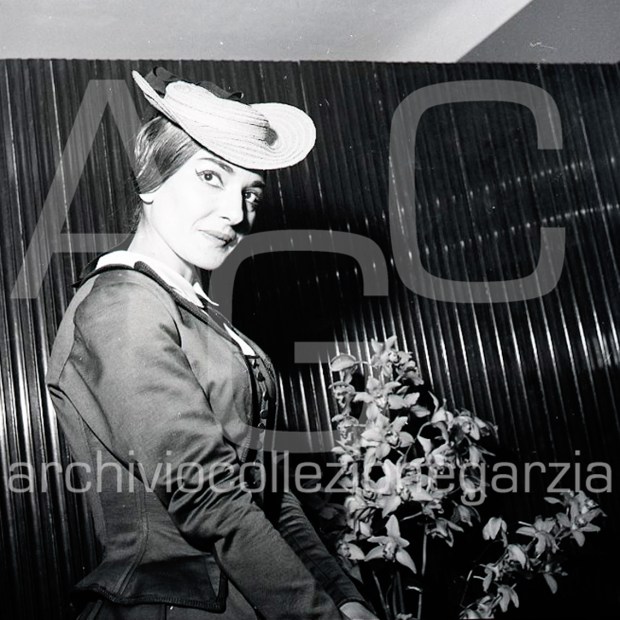
Maria Callas, nome d’arte di Anna Maria Cecilia Sophia Kalogeropoulou (greco: Άννα Μαρία Καικιλία Σοφία Καλογεροπούλου; New York, 2 dicembre 1923 – Parigi, 16 settembre 1977), è stata un soprano greco, in possesso della nazionalità statunitense e naturalizzata italiana fino al 1966, quando rinunciò ad entrambe per ottenere quella greca[1]. Nata a New York da genitori greci, Maria Callas studiò ad Atene dal 1939 al 1945, intraprendendo la carriera internazionale dai tardi anni quaranta agli anni sessanta.
Η Μαρία Κάλλας(Μαρία Άννα Σοφία Καικιλία Καλογεροπούλου) (Νέα Υόρκη, 2 Δεκεμβρίου 1923 – Παρίσι 16 Σεπτεμβρίου 1977) υπήρξε κορυφαία υψίφωνος και η πλέον γνωστή παγκοσμίως ντίβα της όπερας.
Maria Callas, Commendatore OMRI (Greek: Μαρία Κάλλας; December 2, 1923 – September 16, 1977), was an American-born Greek soprano and one of the most renowned and influential opera singers of the 20th century. Critics praised her bel canto technique, wide-ranging voice and dramatic interpretations. Her repertoire ranged from classical opera seria to the bel canto operas of Donizetti, Bellini and Rossini and further, to the works of Verdi and Puccini; and, in her early career, to the music dramas of Wagner. Her musical and dramatic talents led to her being hailed as La Divina.
Born in New York City and raised by an overbearing mother, she received her musical education in Greece and established her career in Italy. Forced to deal with the exigencies of wartime poverty and with myopia that left her nearly blind onstage, she endured struggles and scandal over the course of her career. She turned herself from a heavy woman into a svelte and glamorous one after a mid-career weight loss, which might have contributed to her vocal decline and the premature end of her career. The press exulted in publicizing Callas’s allegedly temperamental behavior, her supposed rivalry with Renata Tebaldi and her love affair with Greek shipping tycoon Aristotle Onassis. Although her dramatic life and personal tragedy have often overshadowed Callas the artist in the popular press, her artistic achievements were such that Leonard Bernstein called her “the Bible of opera” and her influence so enduring that, in 2006, Opera News wrote of her: “Nearly thirty years after her death, she’s still the definition of the diva as artist—and still one of classical music’s best-selling vocalists.












 archiviocollezionegarzia.com