#AmintoreFanfani

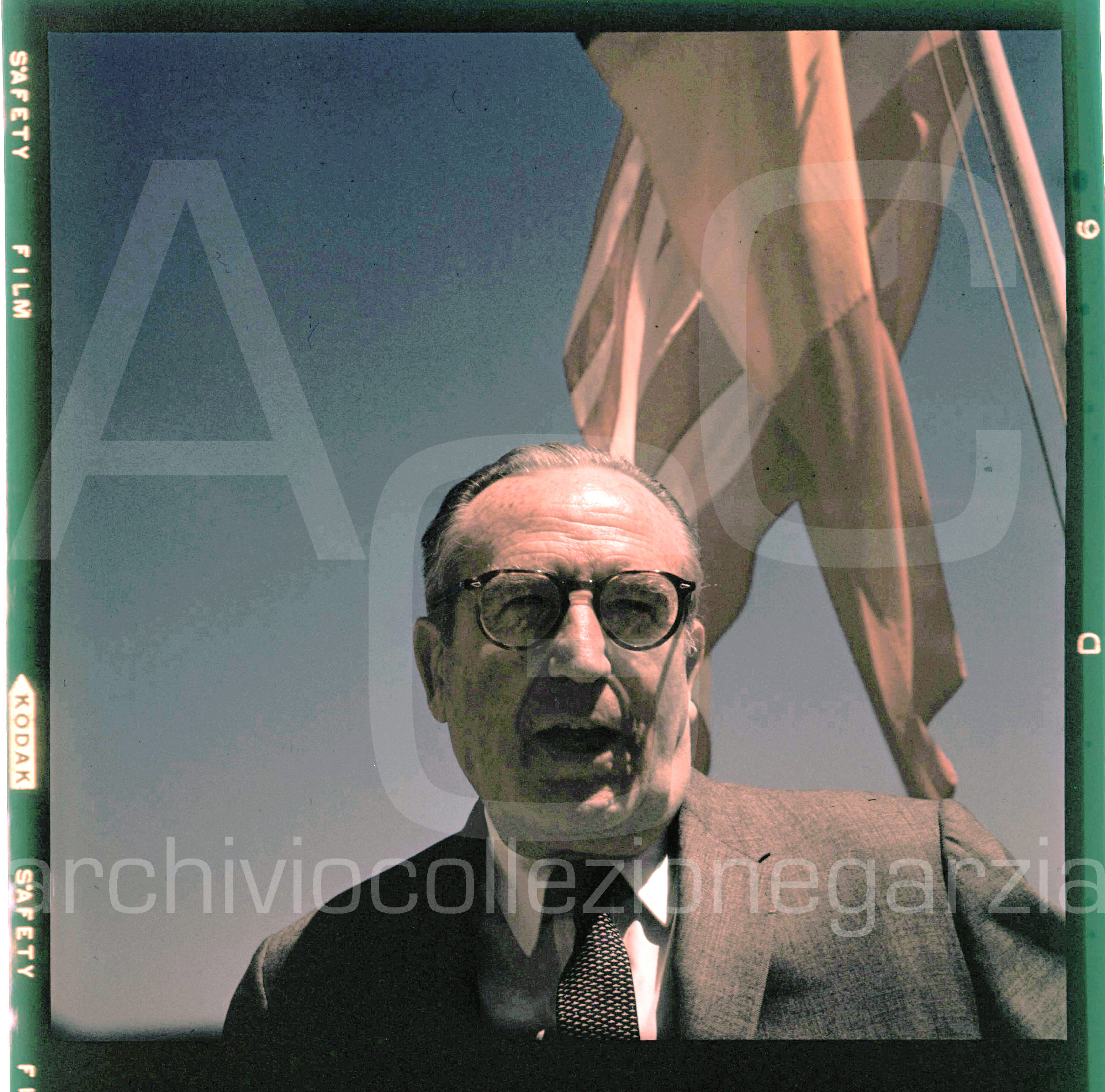
Amintore Fanfani (Pieve Santo Stefano, 6 febbraio 1908 – Roma, 20 novembre 1999) è stato un politico, economista e storico italiano. Ha ricoperto per cinque volte la carica di Presidente del Consiglio dei ministri fra il 1954 e il 1987 quando, all’età di 79 anni e 6 mesi, divenne il più anziano premier della Repubblica Italiana.

Amintore Fanfani 6 February 1908 – 20 November 1999) was an Italian politician and former Prime Minister of Italy. He was one of the best-known Italian politicians after the Second World War, and a historical figure of the left-wing section[1] (pro-socialist) of the Christian Democracy (Italian: Democrazia Cristiana – DC).

Fanfani and Giovanni Giolitti still hold the record as the only statesmen to have served as prime minister of Italy in five non-consecutive periods of office. Fanfani was one of the dominant figures of the Italian Christian Democrats for over three decades.

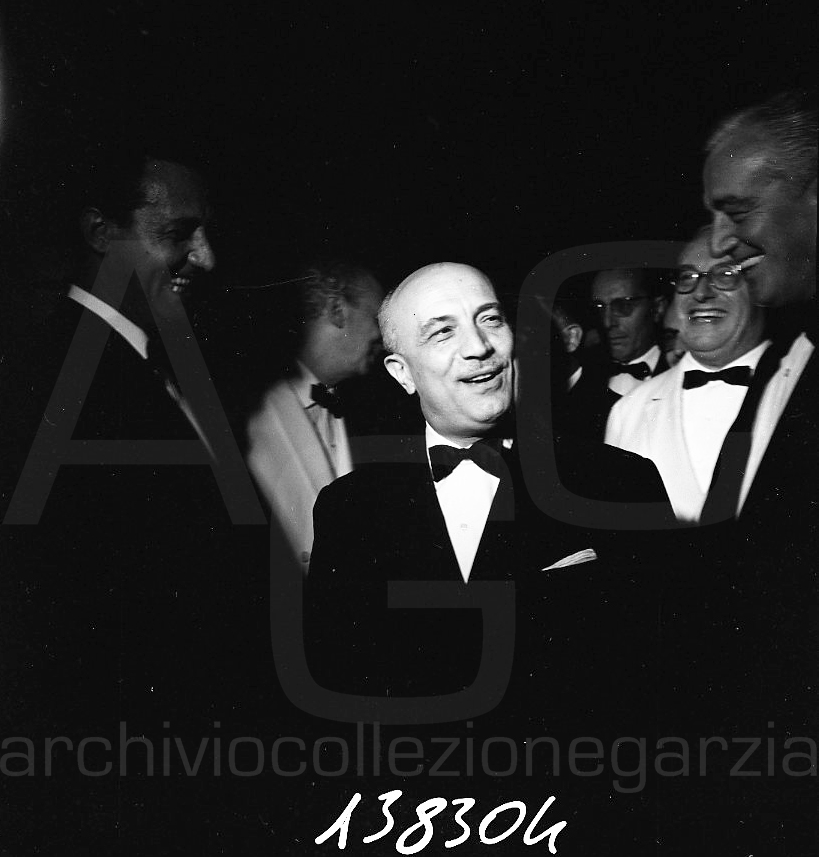
nella foto a venezia. alla sua sinistra si intravede l’attore #AlbertoSordi e a destra #VittorioDesica

fanfani venezia005

#EnzoCerusico

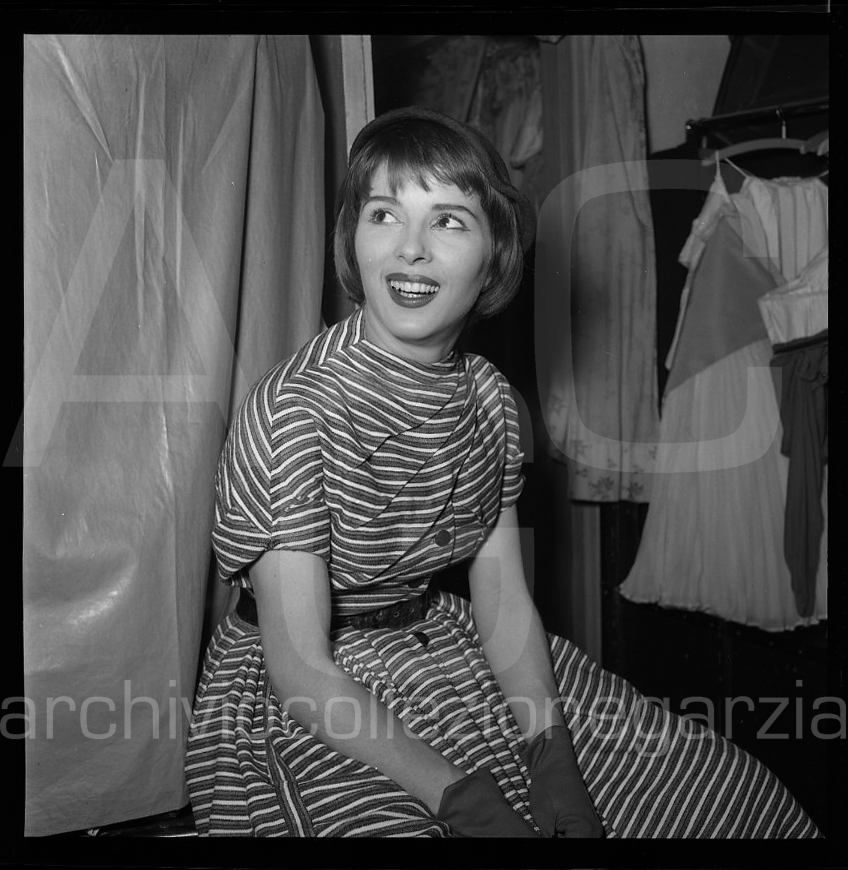
Enzo Cerusico (Roma, 22 ottobre 1937 – Roma, 26 novembre 1991) è stato un attore italiano.

è stato uno degli attori italiani più apprezzati negli anni settanta e ottanta. Figlio d’arte (il padre Fernando era uno stimato direttore di produzione e organizzatore nell’industria cinematografica), esordisce a soli 8 anni interpretando una particina a fianco di Vittorio de Sica nel film Cuore (1948) diretto da Duilio Coletti. A questa seguiranno altre interpretazioni di ragazzini in film di genere degli anni cinquanta, la più notevole delle quali rimane il Tamburino sardo nel film Altri tempi – Zibaldone n. 1 (1952) diretto da Alessandro Blasetti.

Enzo Cerusico (22 October 1937 – 1 July 1991) was an Italian film actor. He appeared in 55 films between 1951 and 1984.

Cerusico’s first role on American television was in an episode of I Spy being filmed in Rome in 1966. Producer Sheldon Leonard held a casting call for an English-speaking actor to play the kid brother of the female Italian guest star. Cerusico spoke no English but with a friend’s help he memorized one line — “I studied English in the school since four years” — and managed to bluff his way into an interview with Leonard.

Leonard realized Cerusico wasn’t fluent in English but he thought the young man possessed “Jean Paul Belmondo’s jaunty virility and the swaggering charm of Maurice Chevalier.” Leonard chose Cerusico for the I Spy guest role and Cerusico learned his lines phonetically and delivered them by rote.

Cerusico later played the title character in My Friend Tony, an hour-long crime drama that aired on NBC in 1969.

(wikipedia)

enzo cerusico002

#EduardoDeFilippo

Eduardo De Filippo, noto semplicemente come Eduardo (Napoli, 24 maggio 1900 – Roma, 31 ottobre 1984), è stato un drammaturgo, attore teatrale, attore cinematografico, regista teatrale, regista cinematografico, sceneggiatore e poeta italiano. Fra i massimi esponenti della cultura italiana del Novecento, è stato autore di numerosi drammi teatrali da lui stesso messi in scena e interpretati e, in seguito, tradotti e rappresentati da altri anche all’estero. Per i suoi meriti artistici e i contributi alla cultura, fu nominato senatore a vita dal presidente della Repubblica Sandro Pertini. Fu anche candidato per il premio Nobel per la letteratura

Eduardo De Filippo (24 May 1900 – 31 October 1984) was an Italian actor, playwright, screenwriter, author and poet, best known for his Neapolitan works Filumena Marturano and Napoli Milionaria.

De Filippo was born in Naples to playwright Eduardo Scarpetta and theatre seamstress and costumier Luisa De Filippo. He began acting at the age of five and in 1932 formed a theater company with his brother Peppino and sister Titina, called compagnia del Teatro Umoristico I De Filippo. Peppino left the troupe in 1944 and Titina departed by the early 1950s. De Filippo starred in De Sica’s L’oro di Napoli with Totò and Sophia Loren in 1954. In 1973 a production of his Sabato, domenica e lunedi (1959, Saturday, Sunday and Monday), starring Laurence Olivier in the lead role, won the London drama critics’ award. His translation of Shakespeare’s The Tempest into Neapolitan was published in 1982.

In 1981, De Filippo was appointed life senator of the Italian Republic. He died four years later in Rome. His artistic legacy has been carried over by his son.


(fonte wikipedia)


de filippo eduardo comp003

#MarleneDietrich #VittorioDeSica

Marie Magdalene “Marlene” Dietrich (Berlino, 27 dicembre 1901 – Parigi, 6 maggio 1992) è stata un’attrice e cantante tedesca naturalizzata statunitense. Fra le più note icone del mondo cinematografico della prima metà del Novecento, la Dietrich fu un vero e proprio mito, lasciando un’impronta duratura attraverso la sua recitazione, le sue immagini e l’interpretazione delle canzoni (arricchite da una voce ammaliante e sensuale). La Dietrich fu una delle prime dive grazie a un mix di qualità, raramente ripetuto dopo di lei, che fu sufficiente a farla entrare nella leggenda dello show business quale modello di femme fatale per antonomasia.

Il suo mito nacque e si sviluppò in contrapposizione a quello della divina Greta Garbo, entrambe star di punta di due compagnie di produzione rivali.

Marie Magdalene “Marlene” Dietrich (27 December 1901 – 6 May 1992) was a German actress and singer.

Dietrich remained popular throughout her long career by continually re-inventing herself, professionally and characteristically. In the Berlin of the 1920s, she acted on the stage and in silent films. Her performance as Lola-Lola in The Blue Angel (1930), directed by Josef von Sternberg, brought her international fame and garnered her a contract with Paramount Pictures in the US. Hollywood films such as Shanghai Express (1932) and Desire (1936) capitalised on her glamour and exotic looks, cementing her stardom and making her one of the highest-paid actresses of the era. Dietrich became a U.S. citizen in 1939,[3] and throughout World War II she was a high-profile frontline entertainer. Although she still made occasional films in the post-war years, Dietrich spent most of the 1950s to the 1970s touring the world as a successful show performer.

In 1999, the American Film Institute named Dietrich the ninth-greatest female star of all time.


Vittorio Domenico Stanislao Gaetano Sorano De Sica (Sora, 7 luglio 1901 – Neuilly-sur-Seine, 13 novembre 1974) è stato un attore, regista e sceneggiatore italiano.

Una delle figure preminenti del cinema italiano e mondiale, è stato inoltre attore di teatro e documentarista. È considerato uno dei padri del Neorealismo e, allo stesso tempo, uno dei più grandi registi ed interpreti della Commedia all’italiana.

Vittorio De Sica (7 July 1901 – 13 November 1974) was an Italian director and actor, a leading figure in the neorealist movement.

Four of the films he directed won Academy Awards: Sciuscià and Bicycle Thieves were awarded honorary Oscars, while Ieri, oggi, domani and Il giardino dei Finzi Contini won the Best Foreign Language Film Oscar. Indeed, the great critical success of Sciuscià (the first foreign film to be so recognized by the Academy of Motion Picture Arts and Sciences) and Bicycle Thieves helped establish the permanent Best Foreign Film Oscar. These two films generally are considered part of the canon of classic cinema.[1] Bicycle Thieves was cited by Turner Classic Movies as one of the 15 most influential films in cinema history.[2]

De Sica was also nominated for the 1957 Oscar for Best Supporting Actor for playing Major Rinaldi in American director Charles Vidor’s 1957 adaptation of Ernest Hemingway’s A Farewell to Arms, a movie that was panned by critics and proved a box office flop. De Sica’s acting was considered the highlight of the film.

Fonte wikipedia)

de sica e marlene dietrich W

#DeliaScala

Delia Scala, pseudonimo di Odette Bedogni (Bracciano, 25 settembre 1929 – Livorno, 15 gennaio 2004), è stata un’attrice, showgirl e ballerina italiana, il cui nome è legato alla stagione pionieristica della televisione da intrattenimento. Proveniente dalla danza classica, diede una nuova statura artistica alla figura della soubrette. A differenza infatti delle primedonne che l’avevano preceduta, talvolta semplici indossatrici di un vistoso guardaroba, era un’artista poliedrica in grado di ballare, cantare e recitare a ottimi livelli.[1]


Delia Scala (25 September 1929 – 15 January 2004) was an Italian ballerina and actress.Born Odette Bedogni in Bracciano, Lazio, Italy, as a young girl the family moved to Milan where she studied ballet at “La Scala” Ballet School for seven years. She performed in numerous ballets until World War II, after which she began appearing in motion pictures using the stage name, Delia Scala. In 1956, she began a career in television, an industry that at the time in Italy was still in its infancy. She starred in several variety shows during the 1950s and 1960s, and became one of her country’s most beloved TV showgirls.

(fonte wikipedia)
delia scala002 copia

#SophiaLoren

Sophia Loren, nome d’arte di Sofia Villani Scicolone (Roma, 20 settembre 1934), è un’attrice e cantante italiana.

È riconosciuta universalmente come una delle più celebri attrici della storia del cinema mondiale. Nel 1999, l’American Film Institute la posiziona al 21º posto nella lista delle 25 più grandi star femminili di tutti i tempi. Entra a far parte della settima arte giovanissima e si impone ben presto, agli inizi degli anni cinquanta, come sex symbol grazie al corpo da maggiorata. Da Vittorio De Sica sarà diretta in film come La ciociara, che le valse l’Oscar alla migliore attrice, Ieri, oggi, domani, e Matrimonio all’italiana, per il quale riceverà una seconda nomination all’Oscar.

Durante la sua lunga carriera, ha vinto due Oscar, un Golden Globe, un Leone d’oro, la Coppa Volpi, una Palma d’oro a Cannes, un BAFTA, sei David di Donatello e due Nastri d’argento.

(fonte wikipedia)

Sophia Loren (Italian pronunciation: [soˈfiːa ˈlɔːren]; born Sofia Villani Scicolone [soˈfiːa vilˈlaːni ʃikoˈloːne]; 20 September 1934) is an international film star and Italy’s most renowned and honored actress. She began her career at age 14 after entering a beauty pageant in 1949. Encouraged to enroll in acting lessons, Loren appeared in several bit parts and minor roles until the late 1950s when Loren’s five-picture contract with Paramount launched her international career. Notable film appearances around this time including; Houseboat, That Kind of Woman and It Started in Naples.

It was not until her deglamorized performance as Cesira in Vittorio De Sica’s Two Women that her talents as an actress were recognised. Loren’s performance earned her the Academy Award for Best Actress in 1962 and made her the first artist to win an Oscar for a foreign-language performance.

She holds the record for having earned six David di Donatello Awards for Best Actress, the most ever received: Two Women; Yesterday, Today and Tomorrow; Marriage Italian-Style (for which she was nominated for a second Oscar); Sunflower; The Voyage and A Special Day. After starting her family in the early 1970s, Loren spent less time on her acting career and chose to make only occasional film appearances. In later years, she has appeared in American films such as Grumpier Old Men and Nine.

As well as an Academy Award, Loren earned a Grammy Award, five special Golden Globes, a BAFTA Award, a Laurel Award as well as the Honorary Academy Award in 1991. In 1995, she received the Cecil B. DeMille Award for lifetime achievements, one of many such awards.

sofia loren002

#HaroldLloyd

Harold Clayton Lloyd (Burchard, 20 aprile 1893 – Beverly Hills, 8 marzo 1971) è stato un attore, regista e produttore cinematografico statunitense, stella di prima grandezza nel firmamento Hollywoodiano all’epoca del cinema muto.

All’apice della sua carriera, intorno alla metà degli anni venti, nei panni caratteristici di Harold, occhialuto giovanotto, ambizioso e arrivista, sempre teso alla conquista del successo: sia esso un affare o una donna, esuberante ed ottimista (in perfetta sintonia con lo spirito dell’America dei ruggenti anni venti), pieno di risorse e dalle funamboliche prestazioni nel superare gli ostacoli come nel togliersi dai guai, seppe a lungo rivaleggiare, alla pari, con le altre stelle della silent era: Charlie Chaplin, Buster Keaton, Harry Langdon, contendendosi i favori del pubblico e il titolo di attore più pagato del momento (nel 1921 arrivò a guadagnare circa 2.000 $ alla settimana cioè quasi 3 milioni di dollari attuali).

Oltre duecento i film interpretati, tra muti e sonori, nell’arco di tempo che va dal 1913 al 1947, considerato il re degli scavezzacollo per le ardite interpretazioni che lo vedevano spesso in equilibrio precario in cima a qualche cornicione: il fotogramma che lo ritrae appeso alla lancetta dell’orologio di un grattacielo, sospeso sopra la strada trafficata in Preferisco l’ascensore, (Safety Last), (1923) è celeberrima icona del cinema muto.

(fonte wikipedia)

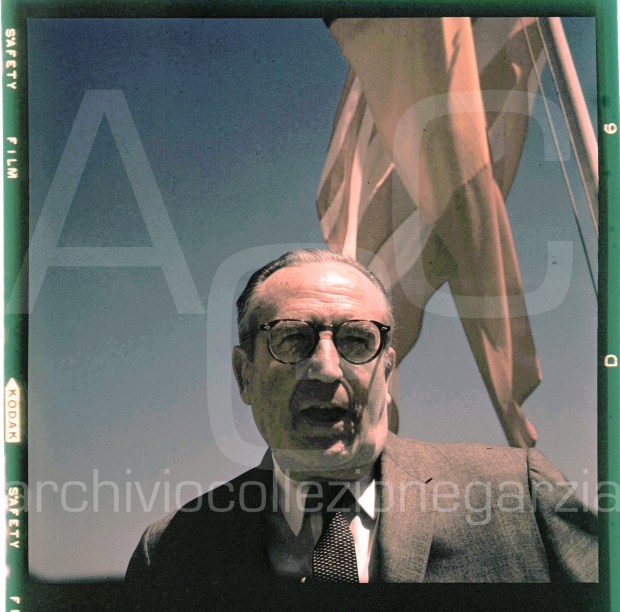
Harold Clayton Lloyd, Sr. (April 20, 1893 – March 8, 1971) was an American actor, comedian, film director, film producer, screenwriter, and stunt performer who is most famous for his silent comedy films.[2]

Harold Lloyd ranks alongside Charlie Chaplin and Buster Keaton as one of the most popular and influential film comedians of the silent film era. Lloyd made nearly 200 comedy films, both silent and “talkies”, between 1914 and 1947. He is best known for his bespectacled “Glasses” character,[3][4] a resourceful, success-seeking go-getter who was perfectly in tune with 1920s era United States.

His films frequently contained “thrill sequences” of extended chase scenes and daredevil physical feats, for which he is best remembered today. Lloyd hanging from the hands of a clock high above the street in Safety Last! (1923) is one of the most enduring images in all of cinema.[5] Lloyd did many of these dangerous stunts himself, despite having injured himself in August 1919 while doing publicity pictures for the Roach studio. An accident with a bomb mistaken as a prop resulted in the loss of the thumb and index finger of his right hand[6] (the injury was disguised on future films with the use of a special prosthetic glove, though the glove often did not go unnoticed).

Although Lloyd’s individual films were not as commercially successful as Chaplin’s on average, he was far more prolific (releasing twelve feature films in the 1920s while Chaplin released just four), and made more money overall ($15.7 million to Chaplin’s $10.5 million).
harold lloyd007 copia

#MarioSoldati

Mario Soldati (Torino, 17 novembre 1906 – Tellaro, 19 giugno 1999) è stato uno scrittore, giornalista, regista cinematografico, sceneggiatore e autore televisivo italiano.

nella foto con i figli Wolfango, Michele e #GiovanniSoldati,

mario soldati002

fonte wikipedia


#RenataTebaldi

Renata Tebaldi (Pesaro, 1º febbraio 1922 – Città di San Marino, 19 dicembre 2004) è stata un soprano italiano.

 Ricordata come una delle cantanti liriche più amate di tutti i tempi, venne acclamata in particolare come interprete di Verdi e Puccini. La sua carriera durò oltre trent’anni.
fonte wikipedia
renata tebaldi 013

#JeanVilar

Jean Vilar (Sète, 25 marzo 1912 – Sète, 28 maggio 1971) è stato un regista e attore francese.

Allievo e collaboratore di Charles Dullin, Jean Vilar si esibì dapprima come attore, dedicandosi alla regia a partire dal 1943, ottenendo un’affermazione definitiva come regista nel 1944, a capo della Compagnie des Sept.

Nel 1947, all’inaugurazione di quello che sarebbe divenuto il Festival di Avignone, Vilar ne fu il principale animatore; questa esperienza ebbe un peso determinante non solo sulla sua popolarità, ma soprattutto sull’evoluzione della sua personalità artistica.

Nell’intoccabile scenario naturale, egli concepì spettacoli, la cui suggestione era basata soprattutto sul testo e sull’interpretazione. Nacquero così alcune delle più famose creazioni di Vilar, che aveva trovato in Gérard Philipe il nuovo grande interprete della scena francese.

Allorché nel 1951 si dovette proporre un direttore al nuovo teatro di Stato, il Théâtre National Populaire, la scelta cadde proprio su Vilar. La realizzazione del programma che il nuovo istituto si prefisse per dar vita ad un’organizzazione teatrale a carattere veramente popolare, fu di enorme complessità. La penetrazione nei più diversi settori del pubblico fu ottenuta scegliendo testi, quasi tutti classici, realizzati con semplicità e chiarezza interpretative.


Jean Vilar est un comédien de théâtre et de cinéma, un metteur en scène et un directeur de théâtre français, né le 25 mars 1912 et mort le 28 mai 1971 à Sète. Créateur du Festival d’Avignon en 1947 qu’il dirige jusqu’à sa mort en 1971, et directeur du Théâtre National Populaire (TNP) de 1951 à 1963.

fonte wikipedia

jean villard006