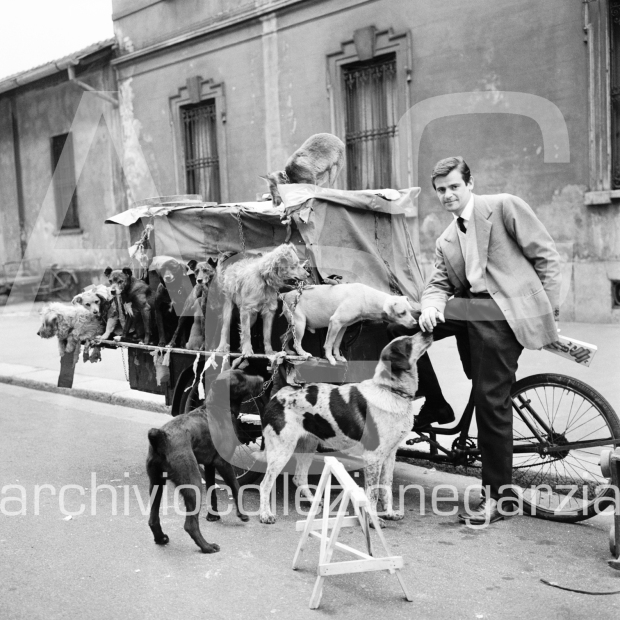
attori italiani – Italian actors

#PierPaoloPasolini #AnnaMagnani

Pier Paolo Pasolini (Bologna, 5 marzo 1922 – Roma, 2 novembre 1975) è stato un poeta, scrittore, regista, sceneggiatore, drammaturgo e giornalista italiano, considerato tra i maggiori artisti e intellettuali del XX secolo. Culturalmente versatile, si distinse in numerosi campi, lasciando contributi anche come pittore, romanziere, linguista, traduttore e saggista, non solo in lingua italiana, ma anche friulana.

 Attento osservatore dei cambiamenti della società italiana dal secondo dopoguerra sino alla metà degli anni settanta, suscitò spesso forti polemiche e accesi dibattiti per la radicalità dei suoi giudizi, assai critici nei riguardi delle abitudini borghesi e della nascente società dei consumi, come anche nei confronti del Sessantotto e dei suoi protagonisti. Il suo rapporto con la propria omosessualità fu al centro del suo personaggio pubblico.

Anna Magnani (Roma, 7 marzo 1908 – Roma, 26 settembre 1973) è stata un’attrice italiana.

Considerata una delle maggiori interpreti femminili della storia.Attrice simbolo del cinema italiano, è altresì particolarmente conosciuta per essere stata, insieme ad Alberto Sordi e Aldo Fabrizi, una delle figure preminenti della romanità cinematografica del XX secolo.Celebri le sue interpretazioni, soprattutto in film come Roma città aperta, Bellissima, Mamma Roma e La rosa tatuata. Quest’ultimo le valse un Oscar alla miglior attrice protagonista.
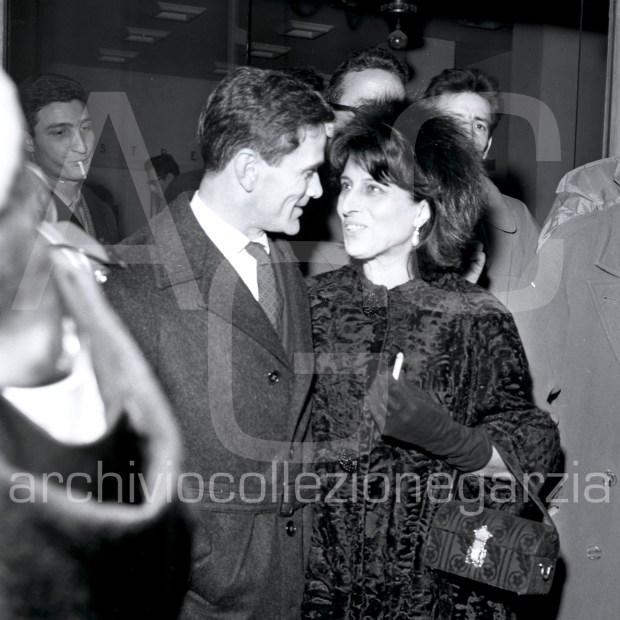
anna-magnani-pierpaolo-pasolini

Prima del film “accattone” in Francia 10/12/61

Pier Paolo Pasolini (Italian: [ˈpjɛr ˈpaːolo pazoˈliːni]; 5 March 1922 – 2 November 1975) was an Italian film director, poet, writer and intellectual. Pasolini also distinguished himself as an actor, journalist, philosopher, novelist, playwright, filmmaker, painter and political figure.

He remains a controversial personality in Italy to this day due to his blunt style and the focus of some of his works on taboo sexual matters, but he is an established major figure in European literature and cinematic arts. His murder prompted an outcry in some circles of Italy, with its circumstances continuing to be a matter of heated debate.

Anna Magnani (Italian pronunciation: [ˈanna maɲˈɲaːni]; 7 March 1908 – 26 September 1973) was an Italian stage and film actress.She won the Academy Award for Best Actress, along with four other international awards, for her portrayal of a Sicilian widow in The Rose Tattoo.

Born in Rome, she worked her way through Rome’s Academy of Dramatic Art by singing at night clubs. During her career, her only child was stricken by polio when he was 18 months old and remained crippled.

She was referred to as “La Lupa,” the “perennial toast of Rome” and a “living she-wolf symbol” of the cinema. Time magazine described her personality as “fiery”, and drama critic Harold Clurman said her acting was “volcanic”. In the realm of Italian cinema she was “passionate, fearless, and exciting,” an actress that film historian Barry Monush calls “the volcanic earth mother of all Italian cinema.”[3] Director Roberto Rossellini called her “the greatest acting genius since Eleonora Duse”. Playwright Tennessee Williams became an admirer of her acting and wrote The Rose Tattoo specifically for her to star in, a role for which she received an Oscar in 1955.

After meeting director Goffredo Alessandrini she received her first screen role in La cieca di Sorrento (The Blind Woman of Sorrento) (1934) and later achieved international fame in Rossellini’s Rome, Open City (1945), considered the first significant movie to launch the Italian neorealism movement in cinema.As an actress she became recognized for her dynamic and forceful portrayals of “earthy lower-class women” in such films as L’Amore (1948), Bellissima (1951), The Rose Tattoo (1955), The Fugitive Kind (1959) and Mamma Roma (1962). As early as 1950 Life magazine had already stated that Magnani was “one of the most impressive actresses since Garbo”.

https://youtu.be/r-TcOhgZNek

#SophiaLoren

Sophia Loren, nome d’arte di Sofia Villani Scicolone (Roma, 20 settembre 1934), è un’attrice italiana.

Tra le più celebri attrici della storia del cinema, la Loren entra nel mondo della settima arte giovanissima e si impone ben presto, agli inizi degli anni cinquanta, come sex symbol grazie al corpo da maggiorata. Da Vittorio De Sica sarà diretta in film come La ciociara, che le valse l’Oscar alla migliore attrice, il primo dato ad un’attrice in un film non in lingua inglese e l’unica attrice insieme a Marion Cotillard a detenere questo record. Nel 1965, per il film Matrimonio all’italiana, riceverà una seconda candidatura all’Oscar, mentre nel 1991 le verrà assegnato un Oscar alla carriera.

Durante la sua lunga carriera, ha vinto 2 Oscar, 5 Golden Globe, un Leone d’oro, la Coppa Volpi a Venezia, un Prix d’interprétation féminine a Cannes, un Orso d’oro alla carriera a Berlino, un BAFTA, 9 David di Donatello (di cui quattro riconoscimenti speciali) e 3 Nastri d’argento. Nel 1999, l’American Film Institute (31 premi) ha inserito la Loren al ventunesimo posto tra le più grandi star della storia del cinema, fra le 25 attrici della classifica la Loren è l’unica attrice ancora in vita.


cannes-sofia-loren-busta-3935-ritoccata-010cannes 1959


Sophia Loren (/sˈfə ləˈrɛn/; Italian pronunciation: [soˈfiːa ˈlɔːren]; born Sofia Villani Scicolone [soˈfiːa vilˈlaːni ʃʃikoˈloːne], 20 September 1934) is an Italian film actress. Encouraged to enroll in acting lessons after entering a beauty pageant, Loren began her film career in 1950 at age 15. She appeared in several bit parts and minor roles in the early part of the decade, until her five-picture contract with Paramount in 1956 launched her international career. Notable film appearances around this time include The Pride and the Passion, Houseboat, and It Started in Naples.

Her talents as an actress were not recognized until her performance as Cesira in Vittorio De Sica’s Two Women; Loren’s performance earned her the Academy Award for Best Actress in 1962 and made her the first artist to win an Oscar for a foreign-language performance. She holds the record for having earned six David di Donatello Awards for Best Actress, the most ever received: Two Women; Yesterday, Today and Tomorrow; Marriage Italian Style (for which she was nominated for a second Oscar); Sunflower; The Voyage; and A Special Day. After starting her family in the early 1970s, Loren spent less time on her acting career and chose to make only occasional film appearances. In later years, she has appeared in American films such as Grumpier Old Men and Nine.

Aside from the Academy Award, she has won a Grammy Award, five special Golden Globes, a BAFTA Award, a Laurel Award, the Best Actress Award at the Cannes Film Festival, and the Honorary Academy Award in 1991. In 1995, she received the Cecil B. DeMille Award for lifetime achievements, one of many such awards. In 1999, Loren was acknowledged as one of the top 25 female American Screen Legends in the American Film Institute’s survey, AFI’s 100 Years…100 Stars.

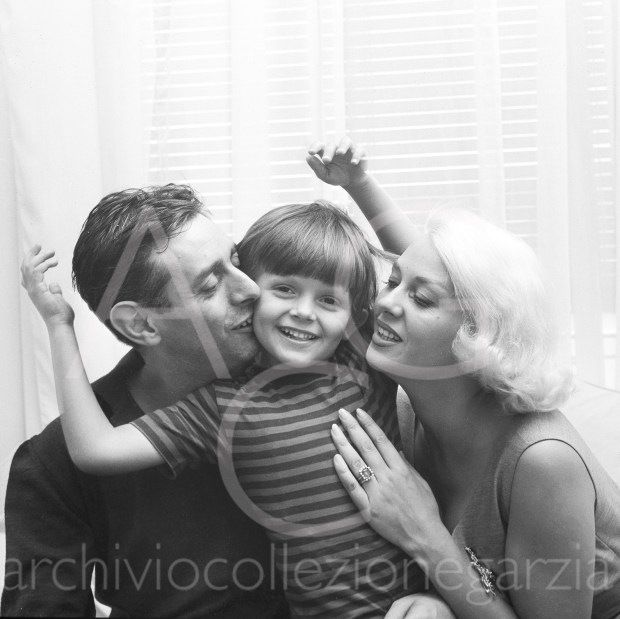
#DarioFo #FrancaRame #JacopoFo

Dario Fo (Sangiano, 24 marzo 1926 – Milano, 13 ottobre 2016) è stato un drammaturgo, attore, regista, scrittore, autore, illustratore, pittore, scenografo e attivista italiano.

 Vincitore del premio Nobel per la letteratura nel 1997 (già candidato nel febbraio 1975[2]), i suoi lavori teatrali fanno uso degli stilemi comici propri della Commedia dell’arte italiana e sono rappresentati con successo in tutto il mondo. In quanto attore, regista, scrittore, scenografo, costumista e impresario della sua stessa compagnia, Fo è uomo di teatro a tutto tondo.

È famoso per i suoi testi teatrali di satira politica e sociale e per l’impegno politico di sinistra. Con la moglie Franca Rame fu tra gli esponenti del Soccorso Rosso Militante.

Franca Rame (Parabiago, 18 luglio 1929 – Milano, 29 maggio 2013) è stata un’attrice teatrale, drammaturga e politica italiana.

Jacopo Fo (Roma, 31 marzo 1955) è uno scrittore, attore, regista, fumettista, blogger e attivista italiano.


Dario Fo (Italian pronunciation: [ˈdaːrjo ˈfɔ]; 24 March 1926 – 13 October 2016) was an Italian actor-playwright, comedian, singer, theatre director, stage designer, songwriter, painter and political campaigner of the Italian left-wing, recipient of the 1997 Nobel Prize in Literature. “Arguably the most widely performed contemporary playwright in world theatre”, much of his dramatic work depends on improvisation and comprises the recovery of “illegitimate” forms of theatre, such as those performed by giullari (medieval strolling players) and, more famously, the ancient Italian style of commedia dell’arte.

His plays have been translated into 30 languages and performed across the world, including in Argentina, Chile, England, Scotland, the Netherlands, Poland, Romania, South Africa, South Korea, Spain, Sri Lanka,  Sweden, and Yugoslavia. His work of the 1960s, 1970s and 1980s is peppered with criticisms of assassinations, corruption, organised crime, racism, Roman Catholic theology and war. Throughout the 1990s and 2000s, he took to lampooning Forza Italia and its leader Silvio Berlusconi, while his targets of the 2010s have included the banks amid the European sovereign-debt crisis. Also in the 2010s, he became the main ideologue of the Five Star Movement, the anti-establishment party led by Beppe Grillo, often referred by its members as “the Master“.

Fo’s solo pièce célèbre, titled Mistero Buffo and performed across Europe, Canada and Latin America over a 30-year period, is recognised as one of the most controversial and popular spectacles in postwar European theatre and has been denounced by the Vatican as “the most blasphemous show in the history of television”. The title of the original English translation of Non Si Paga! Non Si Paga! (Can’t Pay? Won’t Pay!) has passed into the English language. “The play captures something universal in actions and reactions of the working class.”

His receipt of the 1997 Nobel Prize in Literature marked the “international acknowledgment of Fo as a major figure in twentieth-century world theatre”.  The Swedish Academy praised Fo as a writer “who emulates the jesters of the Middle Ages in scourging authority and upholding the dignity of the downtrodden”. He owned and operated a theatre company. Fo was an atheist.

Jacopo Fo (born 31 March 1955) is an Italian writer-actor and director. He is the son of playwrights Franca Rame and Dario Fo.

His 1992 book Lo Zen e l’arte di scopare (Zen and the Art of Fucking) sold more than 70,000 copies. It formed the basis of the 1994 monologue Sesso? Grazie, tanto per gradire! (Sex? Thanks, Don’t Mind If I Do!), which Jacopo Fo worked on with his father and mother, featuring educational pieces on topics such as AIDS, contraception, sex education and sexual repression. The government of Silvio Berlusconi, recently risen to power, banned Italians under the age of 18 from seeing it over fears, it said, that the play could “cause offence to the common decency which requires respect for spheres of decency, and provoke distress among adolescent spectators, with possible effects on their behaviour in relation to sex”, thus defeating the original purpose of the performance. Much free publicity ensued, with the censorship issue being debated in the national parliament, teachers calling for it to be performed, and audiences and both Italian and foreign intellectuals signing a petition calling for the ban to be overturned.

Jacopo Fo has in more recent times been prominent in the political campaign of Beppe Grillo

Franca Rame (18 July 1929 – 29 May 2013) was an Italian theatre actress, playwright and political activist. She was married to Nobel laureate playwright Dario Fo and is the mother of writer Jacopo Fo. Fo dedicated his Nobel Prize to her.


fo-rame-b-4166-w

milano agosto 1959


#DomenicoModugno

Domenico Modugno (Polignano a Mare, 9 gennaio 1928 – Lampedusa, 6 agosto 1994) è stato un cantautore, chitarrista, attore, regista e uomo politico italiano.

Considerato uno dei padri della canzone italiana e uno tra i più prolifici artisti in generale, avendo scritto e inciso circa 230 canzoni, interpretato 38 film per il cinema e 7 per la televisione, nonché recitato in 13 spettacoli teatrali, condotto alcuni programmi televisivi, e vinto quattro Festival di Sanremo: universalmente nota è la prima di tali quattro vittorie, quella del 1958 (primo cantautore in gara nella storia della manifestazione) con Nel blu dipinto di blu, ma ribattezzata quasi subito dal pubblico Volare, destinata a diventare una delle canzoni italiane più conosciute, se non la più conosciuta al mondo, tanto da vendere 800 000 copie in Italia e oltre 22 milioni nel mondo. Modugno è anche uno dei due cantanti italiani (l’altro è Renato Carosone), ad aver venduto dischi negli Stati Uniti senza inciderli in inglese. Nei suoi ultimi anni fu anche deputato e dirigente del Partito Radicale. È tra gli artisti italiani che hanno venduto il maggior numero di dischi con oltre 70 milioni di copie.

Domenico Modugno (Italian pronunciation: [doˈmeːniko moˈduɲɲo]; 9 January 1928 – 6 August 1994) was an Italian singer, songwriter, actor, guitarist, and later in life, a member of the Italian Parliament. He is known for his 1958 international hit song “Nel blu dipinto di blu”. He is considered the first Italian cantautore.


for contacts and prints: archiviocollezionegarzia@gmail.com


modugno-pulita2-copia

#VittorioDeSica #Addioallearmi #AFarewelltoArms

Vittorio Domenico Stanislao Gaetano Sorano De Sica (Sora, 7 luglio 1901 – Neuilly-sur-Seine, 13 novembre 1974) è stato un attore, regista e sceneggiatore italiano.

Tra i cineasti più influenti della storia del cinema, è stato inoltre attore di teatro e documentarista. È considerato uno dei padri del neorealismo e, allo stesso tempo, uno dei maggiori registi ed interpreti della commedia all’italiana.


nel 1958 – Nomination come Miglior attore non protagonista nel ruolo del maggiore Alessandro Rinaldi per Addio Alle Armi 

Addio alle armi (A Farewell to Arms) è un romanzo dello scrittore statunitense Ernest Hemingway, pubblicato nel 1929.

Il romanzo, parzialmente basato su esperienze personali dello scrittore (che negli ultimi mesi della prima guerra mondiale aveva prestato servizio come conducente di ambulanze nella Croce Rossa Americana, era stato ferito e aveva avuto un rapporto affettivo con una infermiera americana, Agnes von Kurowsky), racconta una storia di amore e di guerra che si svolge in Italia prima, durante e dopo la battaglia di Caporetto. Si tratta di uno dei romanzi più significativi, oltre che di successo, dell’intero Novecento.

La pubblicazione del libro fu vietata in Italia fino al 1945 perché il contenuto fu ritenuto lesivo dell’onore delle Forze Armate dalla dittatura fascista: vi viene descritta la disfatta dell’esercito italiano a Caporetto del 1917 e la diserzione del protagonista. La traduzione in italiano era stata già scritta clandestinamente nel 1943 da Fernanda Pivano, che per questo motivo venne arrestata a Torino.

Addio alle armi (A Farewell to Arms) è un film del 1957, diretto da Charles Vidor e, non accreditato, da John Huston. La regia della seconda unità fu affidata ad Andrew Marton, neppure lui accreditato nei titoli del film. È il secondo film tratto dall’omonimo romanzo di Ernest Hemingway, dopo quello di Frank Borzage del 1932.


Vittorio De Sica (Italian pronunciation: [vitˈtɔːrjo de ˈsiːka]; 7 July 1901 – 13 November 1974) was an Italian director and actor, a leading figure in the neorealist movement.

Four of the films he directed won Academy Awards: Sciuscià and Bicycle Thieves were awarded honorary Oscars, while Ieri, oggi, domani and Il giardino dei Finzi Contini won the Best Foreign Language Film Oscar. Indeed, the great critical success of Sciuscià (the first foreign film to be so recognized by the Academy of Motion Picture Arts and Sciences) and Bicycle Thieves helped establish the permanent Best Foreign Film Oscar. These two films generally are considered part of the canon of classic cinema.[1] Bicycle Thieves was cited by Turner Classic Movies as one of the 15 most influential films in cinema history.[2]

De Sica was also nominated for the 1957 Oscar for Best Supporting Actor for playing Major Rinaldi in American director Charles Vidor’s 1957 adaptation of Ernest Hemingway’s A Farewell to Arms, a movie that was panned by critics and proved a box office flop. De Sica’s acting was considered the highlight of the film.

de-sica-addio-alle-armi-b-1599004

https://youtu.be/ufzWP0iieY8


A © is a novel by Ernest Hemingway set during the Italian campaign of World War I. The book, published in 1929, is a first-person account of American Frederic Henry, serving as a Lieutenant (“Tenente”) in the ambulance corps of the Italian Army. The title is taken from a poem by 16th-century English dramatist George Peele.

A Farewell to Arms is about a love affair between the expatriate American Henry and Catherine Barkley against the backdrop of the First World War, cynical soldiers, fighting and the displacement of populations. The publication of A Farewell to Arms cemented Hemingway’s stature as a modern American writer,became his first best-seller, and is described by biographer Michael Reynolds as “the premier American war novel from that debacle World War I.”

The novel has been adapted for the stage, initially in 1930 and subsequently, for film in 1932 and 1957, and as a television miniseries in 1966.


#LeoLonganesi #PierpaoloPasolini

-Leopoldo Longanesi, detto Leo (Bagnacavallo, 30 agosto 1905 – Milano, 27 settembre 1957), è stato un giornalista, pittore, disegnatore, editore e aforista italiano.

Nella sua vasta produzione pubblicistica, il gusto per la tradizione si fuse con un atteggiamento intellettuale anticonformista. Il successo che arrise alle sue riviste e alle sue iniziative editoriali gli ritagliò un ruolo di opinion maker politico-culturale, che Longanesi ricoprì per tutto l’arco della sua carriera.

-Pier Paolo Pasolini (Bologna, 5 marzo 1922 – Roma, 2 novembre 1975) è stato un poeta, scrittore, cineasta, sceneggiatore, drammaturgo e giornalista italiano, considerato tra i maggiori artisti e intellettuali del XX secolo. Culturalmente versatile, si distinse in numerosi campi, lasciando contributi anche come pittore, romanziere, linguista, traduttore e saggista, non solo in lingua italiana, ma anche friulana.

Attento osservatore dei cambiamenti della società italiana dal secondo dopoguerra sino alla metà degli anni settanta, suscitò spesso forti polemiche e accesi dibattiti per la radicalità dei suoi giudizi, assai critici nei riguardi delle abitudini borghesi e della nascente società dei consumi, come anche nei confronti del Sessantotto e dei suoi protagonisti. Il suo rapporto con la propria omosessualità fu al centro del suo personaggio pubblico.

longanesi pasolini b. 3755 001

#MinaMazzini

“Se non avessi la mia voce vorrei avere quella di una
giovane ragazza italiana di nome Mina”

Sarah Vaughan. 1968.


Mina è la più grande voce italiana di sempre. Ma non solo. Per gli italiani Mina è un’icona al pari di altri grandi “marchi”che parlano di qualità eccelsa nel mondo, quali Ferrari o Fellini. Nell’immaginario collettivo per gli italiani Mina è un patrimonio del quale andare orgogliosi.

Mina ha incarnato il modello del talento e della diva dello spettacolo sulle scene, in televisone e nei suoi dischi. Ha fatto la storia della televisione italiana negli anni ’60 e ’70 per poi decidere di non apparirvi più. Ha interpretato le canzoni di successo che hanno accompagnato la vita quotidiana degli italiani per 40 anni. Mina pubblica un lavoro discografico inedito ogni anno.

Oggi è forse l’unico caso al mondo di un artista che non si concede ai media (infatti non rilascia interviste e non fa né recitals né apparizioni pubbliche da più di 20 anni) rimanendo ugualmente al primo posto in classifica ogni volta che pubblica un nuovo disco.

Oltre a intensificare la sua attività discografica, negli ultimi anni Mina ha scritto su importanti testate, incarico in cui si è rivelata padrona di un pensiero importante: protagonista di seguitissimi editoriali dove il suo talento come artista e la sua acutezza e credibilità l’hanno portata ad essere autorevole come editorialista tanto quanto come cantante.
Con l’ironia che il suo “talento totale” le ha costantemente assicurato, Mina, già da molti anni prima che si parlasse di “look”, ha sempre giocato con la sua immagine, stravolgendola nelle copertine dei suoi dischi, che sono anche state oggetto di mostre nei musei italiani. Mina ha sempre precorso i tempi e amato confrontarsi con le nuove tecnologie. Nel 2001 ha aperto le porte del suo studio di registrazione attraverso internet, dando in streaming un filmato dove registrava live.
Le richieste di poter vedere Mina in questo documento filmato al server dell’operatore Wind telecomunicazioni s.p.a. sono state addirittura 50 milioni, facendo collassare l’intero sistema…

Mina è un’artista eclettica e versatile che ha interpretato musica di tutti i generi spaziando tra i diversi stili con assoluta proprietà di linguaggio.


“If I didn’t have my own voice, I’d like to have the voice of a young Italian girl named Mina”

Sarah Vaughan. 1968.


Mina is the greatest Italian singer of all times, but not only. For Italians, Mina is an icon equally as important as the biggest and best known names about which they boast as proof that Italy has the highest quality everything in the world, like Ferrari or Fellini. In the Italian collective imagination, Mina is a national treasure to be proud of and jealously guarded.

During the ‘60s and the ‘70s Mina embodied the very essence of the ultra-talented superstar on stage, in TV and in her records. She made television history and then suddenly, inexplicably decided to retire. She sang Italy’s greatest hits, which for over 40 years have been the leitmotiv of the everyday life of the Italian people. Nowadays Mina releases one record a year. She is perhaps the only artist in the world that does not offer herself up to the media – as a matter of fact, she does not grant interviews, has not appeared in concert or made any other public appearance for more than 20 years. Yet, all her new albums reach number one in the national hit parade.

In addition to her recordings, in recent years Mina has published as freelance journalist in important newspapers and magazines, revealing a penchant for deep, thought-provoking insight. Her successful columns have earned her a new, wide-flung reputation as a talented editorialist, demonstrating intelligence and adding wide journalistic credibility to her fame as singer.

Thanks to her capacity for “self-irony” that her unrivalled talent has always assured her, Mina has always laughed about, played and gambled with her imagine, varying it in a thousand ways in the media and even on her record sleeves, many of which have been placed on exhibit in Italian museums of art. Always ahead of her times, Mina remains on the cutting edge even in new technologies. In 2001 she opened the doors of her recording studios to the WWW by streaming an extended version of the videotaped session of her new album. The night the video went on-line, the server was overwhelmed with over 50,000 connection requests and the entire system crashed.

Mina is an eclectic, versatile artist completely at ease with a repertoire spanning all musical genres, all of which she has sung with masterful panache.

da bio ufficiale

mina parr b.5165 W


#BrigitteBardot

Brigitte Anne Marie Bardot, anche conosciuta come B.B. (“Bri-Bri” da bambina) (Parigi, 28 settembre 1934), è un’attrice, ex modella, cantante, ballerina e attivista francese. Dopo gli esordi come danzatrice classica, diviene prima modella, posando per svariate copertine di riviste di moda, quindi attrice e infine, dal 1962, cantante. Negli anni del successo si consacrò come un’icona sexy. Dal 1962, inoltre, è un’attivista per i diritti degli animali, attività che l’ha assorbita completamente a partire dal suo abbandono del cinema avvenuto nel 1972.

Brigitte Bardot, née Brigitte Anne-Marie Bardot le 28 septembre 1934 à Paris, est une actrice de cinéma, ancien mannequin et chanteuse française, militante de la cause animale, fondatrice et présidente de la fondation qui porte son nom. Figure féminine des années 1950 et 1960, elle est une star mondiale, l’égérie et la muse des plus grands artistes de l’époque. Emblème de l’émancipation des femmes et de la liberté sexuelle, elle passe des rôles de femme enfant à ceux de femme fatale. Elle tourne avec les plus grands réalisateurs, incarnant des personnages à l’élégante légèreté et à la sensualité photogénique. Elle devient rapidement un sex-symbol et acquiert une renommée internationale. Avec à son actif 48 films et plus de 80 chansons en près de vingt et un ans de carrière, Brigitte Bardot, tout aussi connue sous les initiales de « BB », est une des artistes françaises les plus célèbres au monde. Elle met un terme à sa carrière d’actrice en 1973 et se consacre dès lors à la défense des animaux.

Brigitte Anne-Marie Bardot (French: [bʁiʒit baʁˈdo]; born 28 September 1934) is a French actress, singer and fashion model, who later became an animal rights activist. She was one of the best known sex symbols of the 1950s and 1960s and was widely referred to by her initials, B.B.

Bardot was an aspiring ballerina in early life. She started her acting career in 1952 and after appearing in 16 routine comedy films, with limited international release, became world-famous in 1957, with the controversial film And God Created Woman. Bardot caught the attention of French intellectuals. She was the subject of Simone de Beauvoir’s 1959 essay, The Lolita Syndrome, which described Bardot as a “locomotive of women’s history” and built upon existentialist themes to declare her the first and most liberated woman of post-war France.  She later starred in Jean-Luc Godard’s 1963 film Le Mépris. For her role in Louis Malle’s 1965 film Viva Maria! Bardot was nominated for a BAFTA Award for Best Foreign Actress. From 1969 to 1978, Bardot was the official face of Marianne (who had previously been anonymous) to represent the liberty of France.

Bardot retired from the entertainment industry in 1973. During her career in show business, she starred in 47 films, performed in several musical shows and recorded over 60 songs. She was awarded the Legion of Honour in 1985 but refused to receive it. After her retirement, she established herself as an animal rights activist. During the 2000s, she generated controversy by criticizing immigration and Islam in France and has been fined five times for inciting racial hatred


b.b. saint tropez b.5537001

#SergioEndrigo

Sergio Endrigo (Pola, 15 giugno 1933 – Roma, 7 settembre 2005) è stato un cantautore italiano.

Ha vinto il Festival di Sanremo 1968 con Canzone per te, è arrivato secondo nel 1969 con Lontano dagli occhi e terzo nel 1970 con L’arca di Noè; nel corso della sua carriera ha collaborato con scrittori e poeti come Gianni Rodari, Pier Paolo Pasolini, Vinicius de Moraes e Giuseppe Ungaretti e con musicisti come Toquinho e Luis Bacalov.

Sergio Endrigo (15 June 1933 – 7 September 2005) was an Italian singer-songwriter.

Born in Pola, Istria, he has been often compared—for style and nature—to authors of the so-called “Genoa school” like Gino Paoli, Fabrizio De André, Luigi Tenco, and Bruno Lauzi.

He won the Sanremo Music Festival in 1968 with the song “Canzone per te”, sung with Roberto Carlos. The same year he represented Italy at the Eurovision Song Contest 1968 with the song “Marianne.”

Sergio Endrigo (Pula, 15 juin 1933 – Rome, 7 septembre 2005) est un auteur-compositeur-interprète italien. Il a remporté le Festival de Sanremo en 1968 et participé au concours Eurovision de la chanson de la même année

Sergio Endrigo est né à Pula en Istrie. Son style et ses compositions est souvent estimé similaire comparé à ceux des auteurs de l’« école de Gênes » comme Gino Paoli, Fabrizio De André, Luigi Tenco, Giorgio Gaber et Bruno Lauzi.

Sergio Endrigo remporte le Festival de Sanremo en 1968 avec la chanson Canzone per te, chanté avec Roberto Carlos. La même année il représente l’Italie à l’Eurovision Song Contest 1968 avec la chanson Marianne.


sergio endrigo b.5540 W

#LaurenceOlivier #CharlieChaplin

Laurence Kerr Olivier, barone Olivier (Dorking, 22 maggio 1907 – Ashurst, 11 luglio 1989) è stato un attore cinematografico, attore teatrale e regista britannico.

Tra i grandi attori del XX secolo, detiene il singolare primato di aver ricevuto prima l’Oscar alla carriera e poi come attore (per la sua interpretazione nell’Amleto, da lui stesso prodotto e diretto). Nel 1979 riceverà un secondo Oscar alla carriera.

L’American Film Institute ha inserito Olivier al quattordicesimo posto tra le più grandi star della storia del cinema.

Laurence Kerr Olivier, Baron Olivier, OM, Kt (/ˈlɒrəns kɜːr ɒˈlɪvi/; 22 May 1907 – 11 July 1989) was an English actor who, along with his contemporaries Ralph Richardson and John Gielgud, dominated the British stage of the mid-20th century. He also worked in films throughout his career, playing more than fifty cinema roles. Late in his career, he had considerable success in television roles.

Sir Charles Spencer Chaplin, noto come Charlie Chaplin (Londra, 16 aprile 1889 – Corsier-sur-Vevey, 25 dicembre 1977), è stato un attore, comico, regista, sceneggiatore, compositore e produttore cinematografico britannico, autore di oltre novanta film e tra i più importanti e influenti cineasti del XX secolo.

Sir Charles SpencerCharlieChaplin, KBE (16 April 1889 – 25 December 1977) was an English comic actor, filmmaker, and composer who rose to fame in the silent era. Chaplin became a worldwide icon through his screen persona “the Tramp” and is considered one of the most important figures in the history of the film industry. His career spanned more than 75 years, from childhood in the Victorian era until a year before his death in 1977, and encompassed both adulation and controversy.

ChaplinOliver Valer b4457 W


https://youtu.be/DE2R7s5SCSQ