attori stranieri – actors

#MarleneDietrich #OrsonWelles

Marie Magdalene “Marlene” Dietrich /maɐ̯’le:nə ‘di:tʀɪç/ (Berlino, 27 dicembre 1901 – Parigi, 6 maggio 1992) è stata un’attrice e cantante tedesca naturalizzata statunitense.

Fra le più note icone del mondo cinematografico della prima metà del Novecento, la Dietrich fu un vero e proprio mito, lasciando un’impronta duratura attraverso la sua recitazione, le sue immagini e l’interpretazione delle canzoni (arricchite da una voce ammaliante e sensuale). La Dietrich fu una delle prime dive grazie ad un insieme di qualità, raramente ripetuto dopo di lei, che fu sufficiente a farla entrare nella leggenda dello show business quale modello di femme fatale per antonomasia. Il suo mito nacque e si sviluppò in contrapposizione a quello della divina Greta Garbo, entrambe star di punta di due compagnie di produzione rivali.

L’American Film Institute ha inserito la Dietrich al nono posto tra le più grandi star della storia del cinema.


-George Orson Welles (Kenosha, 6 maggio 1915 – Los Angeles, 10 ottobre 1985) è stato un attore, regista, sceneggiatore, scrittore, drammaturgo e produttore cinematografico statunitense.

 È considerato uno degli artisti più versatili e innovativi del Novecento in ambito teatrale, radiofonico e cinematografico. Conquistò il successo all’età di ventitré anni grazie allo spettacolo radiofonico La guerra dei mondi, trasmissione che, leggenda narra, scatenò il panico in buona parte degli Stati Uniti, facendo credere alla popolazione di essere sotto attacco da parte dei marziani. Questo insolito debutto gli diede la celebrità e gli fece ottenere un contratto per un film all’anno con la casa di produzione cinematografica RKO, da realizzare con assoluta libertà artistica. Nonostante questa vantaggiosa clausola, solo uno dei progetti previsti poté vedere la luce: Quarto potere (1941), il più grande successo cinematografico di Welles, considerato “il più bel film della storia del cinema” secondo un sondaggio della rivista britannica Sight & Sound che ha interpellato oltre 250 critici e registi cinematografici.

La carriera successiva di Welles fu ostacolata da una lunga serie di difficoltà e inconvenienti che non gli permise di continuare a lavorare a Hollywood e che lo costrinse a trasferirsi in Europa, dove continuò a cercare di realizzare le proprie opere finanziandosi soprattutto con apparizioni in film altrui. Fra i suoi molti progetti, Welles riuscì a realizzare e dirigere film come: Macbeth (1948), Otello (1952), L’infernale Quinlan (1958), Il processo (1962), F come falso (1975) ed altri.

La sua fama è aumentata dopo la sua morte, avvenuta nel 1985, ed è considerato uno dei maggiori registi cinematografici e teatrali del XX secolo[]. Palma d’oro a Cannes nel 1952 (all’epoca Gran Prix du Festival), ricevette, tra gli altri riconoscimenti, l’Oscar alla carriera nel 1971. Nel 2002 è stato votato dal British Film Institute come il più grande regista di tutti i tempi. L’American Film Institute ha inserito Welles al sedicesimo posto tra le più grandi star della storia del cinema.
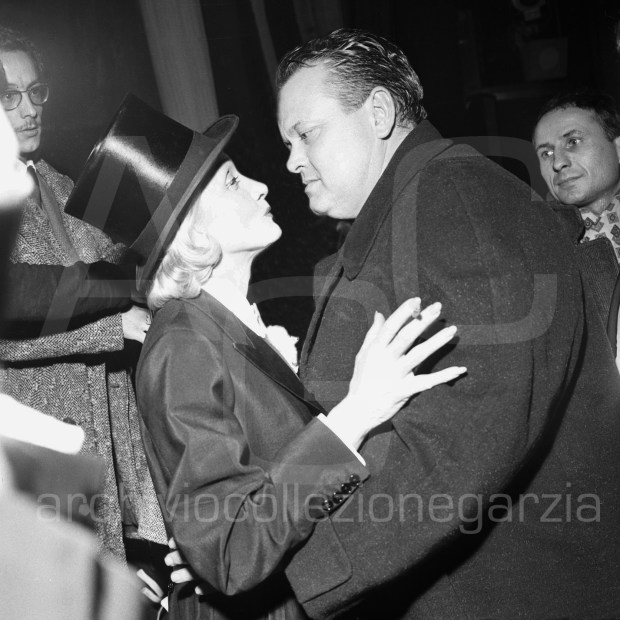
marlene-dietrich001-w

theatre de l’Etoile 1959

Marie MagdaleneMarleneDietrich (/mɑːrˈlnəˈdtrɪk/, German pronunciation: [maɐ̯ˈleːnə ˈdiːtʁɪç]; 27 December 1901 – 6 May 1992)was a German actress and singer who held both German and American citizenship.Throughout her unusually long career, which spanned from the 1910s to the 1980s, she maintained popularity by continually reinventing herself.

In the 1920s in Berlin, Dietrich acted on the stage and in silent films. Her performance as Lola-Lola in The Blue Angel (1930) brought her international fame and resulted in a contract with Paramount Pictures. Dietrich starred in Hollywood films such as Morocco (1930), Shanghai Express (1932), and Desire (1936). She successfully traded on her glamorous persona and “exotic” looks, and became one of the highest-paid actresses of the era. Throughout World War II, she was a high-profile entertainer in the United States. Although she still made occasional films after the war, Dietrich spent most of the 1950s to the 1970s touring the world as a marquee live-show performer.

Dietrich was noted for her humanitarian efforts during the war, housing German and French exiles, providing financial support and even advocating their US citizenship. For her work on improving morale on the front lines during the war, she received several honors from the United States, France, Belgium, and Israel. In 1999, the American Film Institute named Dietrich the ninth-greatest female star of classic Hollywood cinema.

George Orson Welles (/ˈwɛlz/; May 6, 1915 – October 10, 1985) was an American actor, director, writer, and producer who worked in theatre, radio, and film. He is remembered for his innovative work in all three: in theatre, most notably Caesar (1937), a Broadway adaptation of William Shakespeare’s Julius Caesar; in radio, the legendary 1938 broadcast “The War of the Worlds”; and in film, Citizen Kane (1941), consistently ranked as one of the all-time greatest films.

Welles directed a number of high-profile stage productions for the Federal Theatre Project in his early twenties, including an adaptation of Macbeth with an entirely African American cast, and the political musical The Cradle Will Rock. In 1937 he and John Houseman founded the Mercury Theatre, an independent repertory theatre company that presented a series of productions on Broadway through 1941. Welles found national and international fame as the director and narrator of a 1938 radio adaptation of H. G. Wells’ novel The War of the Worlds performed for his radio anthology series The Mercury Theatre on the Air. It reportedly caused widespread panic when listeners thought that an invasion by extraterrestrial beings was actually occurring. Although some contemporary sources claim these reports of panic were mostly false and overstated, they rocketed Welles to notoriety.

His first film was Citizen Kane (1941), which he co-wrote, produced, directed, and starred in as Charles Foster Kane. Welles was an outsider to the studio system and directed only 13 full-length films in his career. He struggled for creative control on his projects early on with the major film studios and later in life with a variety of independent financiers, and his films were either heavily edited or remained unreleased. His distinctive directorial style featured layered and nonlinear narrative forms, uses of lighting such as chiaroscuro, unusual camera angles, sound techniques borrowed from radio, deep focus shots, and long takes. He has been praised as “the ultimate auteur”.

Welles followed up Citizen Kane with critically acclaimed films including The Magnificent Ambersons in 1942 and Touch of Evil in 1958. Although these three are his most acclaimed films, critics have argued other works of his, such as The Lady from Shanghai (1947) and Chimes at Midnight (1966),are underappreciated.

In 2002, Welles was voted the greatest film director of all time in two British Film Institute polls among directors and critics,and a survey of critical consensus, best-of lists, and historical retrospectives calls him the second most acclaimed director of all time (behind Alfred Hitchcock). Known for his baritone voice, Welles was an actor in radio and film, a Shakespearean stage actor, and a magician noted for presenting troop variety shows in the war years.

fonti wikipedia

#JackPalance

Jack Palance, nato Volodymyr Palahniuk (Hazle Township, 18 febbraio 1919 – Montecito, 10 novembre 2006), è stato un attore e pittore statunitense.

Ha lavorato per il cinema, il teatro e la televisione ed è stato premiato nel 1992 con l’Oscar al miglior attore non protagonista per la sua interpretazione dell’anziano cow-boy Curly Washburn nel film Scappo dalla città – La vita, l’amore e le vacche.

Ebbe altre due nomination all’Academy: nel 1952 per il film So che mi ucciderai e nel 1953 per il ruolo del pistolero nel western classico Il cavaliere della valle solitaria al fianco di Alan Ladd, Van Heflin e Jean Arthur.

È ricordato per le sue numerose interpretazioni in ruoli di duro in film di genere western o gangsteristico.

Jack Palance pronounced PAL-ance (born Volodymyr Palahniuk (Ukrainian: Володимир Палагню́к); February 18, 1919 – November 10, 2006) was an American actor and singer. He was nominated for three Academy Awards, all for Best Actor in a Supporting Role, winning in 1992 for his role in City Slickers.

j-palance-b-5778-w

28 dicembre 1961

#RomySchneider

Romy Schneider, pseudonimo di Rosemarie Magdalena Albach-Retty (Vienna, 23 settembre 1938 – Parigi, 29 maggio 1982), è stata un’attrice tedesca naturalizzata francese.

La vera svolta nella carriera di Romy Schneider avvenne con il film L’amante pura (1958). Durante la lavorazione conobbe Alain Delon e con lui ebbe una lunga relazione sentimentale, trasferendosi a Parigi. Da questo momento recitò in film di produzione prevalentemente francese e italiana, come La piscina (1968) di Jacques Deray, La Califfa (1970) di Alberto Bevilacqua, Ludwig (1973) di Luchino Visconti, dove fu una ben diversa Elisabetta di Baviera, e La morte in diretta (1979) di Bertrand Tavernier, distinguendosi per la luminosa bellezza e il temperamento drammatico.

Romy Schneider (23 September 1938 – 29 May 1982) was a film actress born in Vienna who held German and French citizenship. She started her career in the German Heimatfilm genre in the early 1950s when she was 15. From 1955 to 1957, she played the central character of Empress Elisabeth of Austria in the Austrian Sissi trilogy. Schneider moved to France where she made successful and critically acclaimed films with some of the most notable film directors of that era.


romy-schneider-b3914-1959

#GaryCooper

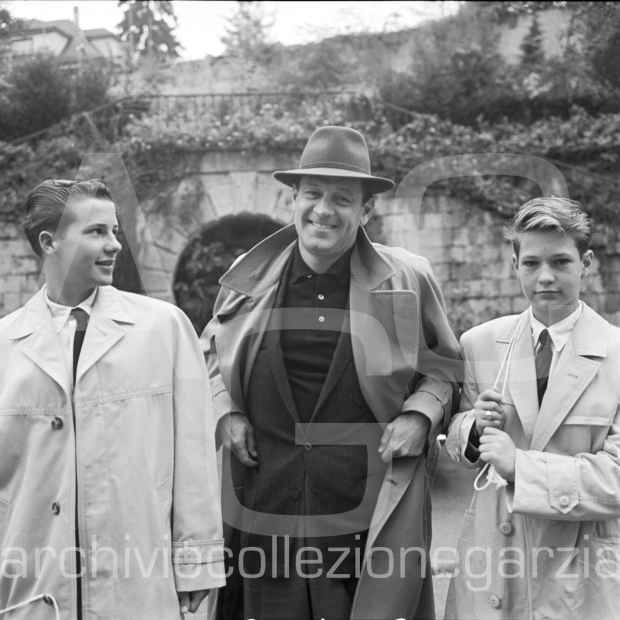
Gary Cooper, nato Frank James Cooper (Helena, 7 maggio 1901 – Beverly Hills, 13 maggio 1961), è stato un attore statunitense.

È stato candidato 5 volte all’Oscar, vincendolo in due occasioni, nel 1942 e nel 1953, ai quali se ne aggiunse uno alla carriera nel 1961. Eroe per eccellenza del western e del melodramma hollywoodiano, l’American Film Institute ha inserito Cooper all’undicesimo posto tra le più grandi star della storia del cinema.

Per il suo contributo all’industria cinematografica, Gary Cooper è ricordato con una stella presso la Hollywood Walk of Fame, all’altezza del 6243 di Hollywood Boulevard (Los Angeles). Nel 1966 fu riconosciuto come uno dei migliori cowboy e un omaggio alla sua memoria è presente al National Cowboy & Western Heritage Museum (Museo dei ricordi dei Cowboy e del West) a Oklahoma City, nello Stato dell’Oklahoma.

gary-cooper-w                                                                                      Gary Cooper  a Cap d’Antiques luglio 1959       @ archiviocollezionegarzia


https://youtu.be/qZil728hUy0

Gary Cooper (born Frank James Cooper; May 7, 1901 – May 13, 1961) was an American film actor known for his natural, authentic, and understated acting style and screen performances. His career spanned thirty-five years, from 1925 to 1960, and included leading roles in eighty-four feature films. He was a major movie star from the end of the silent film era through the end of the golden age of Classical Hollywood. His screen persona appealed strongly to both men and women, and his range of performances included roles in most major movie genres. Cooper’s ability to project his own personality onto the characters he played contributed to his appearing natural and authentic on screen. The screen persona he sustained throughout his career represented the ideal American hero.

Cooper began his career as a film extra and stunt rider and soon landed acting roles. After establishing himself as a Western hero in his early silent films, Cooper became a movie star in 1929 with his first sound picture, The Virginian. In the early 1930s, he expanded his heroic image to include more cautious characters in adventure films and dramas such as A Farewell to Arms (1932) and The Lives of a Bengal Lancer (1935). During the height of his career, Cooper portrayed a new type of hero—a champion of the common man—in films such as Mr. Deeds Goes to Town (1936), Meet John Doe (1941), Sergeant York (1941), The Pride of the Yankees (1942), and For Whom the Bell Tolls (1943).

In the postwar years, he portrayed more mature characters at odds with the world in films such as The Fountainhead (1949) and High Noon (1952). In his final films, Cooper played non-violent characters searching for redemption in films such as Friendly Persuasion (1956) and Man of the West (1958).

He married New York debutante Veronica Balfe in 1933, and the couple had one daughter. Their marriage was interrupted by a three-year separation precipitated by Cooper’s love affair with Patricia Neal. Cooper received the Academy Award for Best Actor for his roles in Sergeant York and High Noon. He also received an Academy Honorary Award for his career achievements in 1961. He was one of the top ten film personalities for twenty-three consecutive years, and was one of the top money-making stars for eighteen years. The American Film Institute (AFI) ranked Cooper eleventh on its list of the twenty five greatest male stars of classic Hollywood cinema.


#OrsonWelles

George Orson Welles (Kenosha, 6 maggio 1915 – Los Angeles, 10 ottobre 1985) è stato un attore, regista, sceneggiatore, scrittore, drammaturgo e produttore cinematografico statunitense.

È considerato uno degli artisti più versatili e innovativi del Novecento in ambito teatrale, radiofonico e cinematografico. Conquistò il successo all’età di ventitré anni grazie allo spettacolo radiofonico La guerra dei mondi, trasmissione che, leggenda narra, scatenò il panico in buona parte degli Stati Uniti, facendo credere alla popolazione di essere sotto attacco da parte dei marziani. Questo insolito debutto gli diede la celebrità e gli fece ottenere un contratto per un film all’anno con la casa di produzione cinematografica RKO, da realizzare con assoluta libertà artistica. Nonostante questa vantaggiosa clausola, solo uno dei progetti previsti poté vedere la luce: Quarto potere (1941), il più grande successo cinematografico di Welles, considerato “il più bel film della storia del cinema” secondo un sondaggio della rivista britannica Sight & Sound che ha interpellato oltre 250 critici e registi cinematografici.

La carriera successiva di Welles fu ostacolata da una lunga serie di difficoltà e inconvenienti che non gli permise di continuare a lavorare a Hollywood e che lo costrinse a trasferirsi in Europa, dove continuò a cercare di realizzare le proprie opere finanziandosi soprattutto con apparizioni in film altrui. Fra i suoi molti progetti, Welles riuscì a realizzare e dirigere film come: Macbeth (1948), Otello (1952), L’infernale Quinlan (1958), Il processo (1962), F come falso (1975) ed altri.

La sua fama è aumentata dopo la sua morte, avvenuta nel 1985, ed è considerato uno dei maggiori registi cinematografici e teatrali del XX secolo. Palma d’oro a Cannes nel 1952 (all’epoca Gran Prix du Festival), ricevette, tra gli altri riconoscimenti, l’Oscar alla carriera nel 1971. Nel 2002 è stato votato dal British Film Institute come il più grande regista di tutti i tempi. L’American Film Institute ha inserito Welles al sedicesimo posto tra le più grandi star della storia del cinema.

George Orson Welles (/ˈwɛlz/; May 6, 1915 – October 10, 1985) was an American actor, director, writer, and producer who worked in theatre, radio, and film. He is remembered for his innovative work in all three: in theatre, most notably Caesar (1937), a Broadway adaptation of William Shakespeare’s Julius Caesar; in radio, the 1938 broadcast “The War of the Worlds”, one of the most famous in the history of radio; and in film, Citizen Kane (1941), consistently ranked as one of the all-time greatest films.

Welles directed a number of high-profile stage productions for the Federal Theatre Project in his early twenties, including an innovative adaptation of Macbeth with an entirely African American cast, and the political musical The Cradle Will Rock. In 1937 he and John Houseman founded the Mercury Theatre, an independent repertory theatre company that presented an acclaimed series of productions on Broadway through 1941. Welles found national and international fame as the director and narrator of a 1938 radio adaptation of H. G. Wells’ novel The War of the Worlds performed for his radio anthology series The Mercury Theatre on the Air. It reportedly caused widespread panic when listeners thought that an invasion by extraterrestrial beings was actually occurring. Although some contemporary sources claim these reports of panic were mostly false and overstated, they rocketed Welles to notoriety.

His first film was Citizen Kane (1941), which he co-wrote, produced, directed, and starred in as Charles Foster Kane. Welles was an outsider to the studio system and directed only 13 full-length films in his career. He struggled for creative control on his projects early on with the major film studios and later in life with a variety of independent financiers, and his films were either heavily edited or remained unreleased. His distinctive directorial style featured layered and nonlinear narrative forms, innovative uses of lighting such as chiaroscuro, unusual camera angles, sound techniques borrowed from radio, deep focus shots, and long takes. He has been praised as a major creative force and as “the ultimate auteur”.

Welles followed up Citizen Kane with critically acclaimed films including The Magnificent Ambersons in 1942 and Touch of Evil in 1958. Although these three are his most acclaimed films, critics have argued other works of his, such as The Lady from Shanghai (1947) and Chimes at Midnight (1966), are underappreciated.

In 2002, Welles was voted the greatest film director of all time in two British Film Institute polls among directors and critics, and a wide survey of critical consensus, best-of lists, and historical retrospectives calls him the most acclaimed director of all time. Well known for his baritone voice, Welles was a well-regarded actor in radio and film, a celebrated Shakespearean stage actor, and an accomplished magician noted for presenting troop variety shows in the war years.

cannes-b-3914-orson-welles


#CharlesAznavour

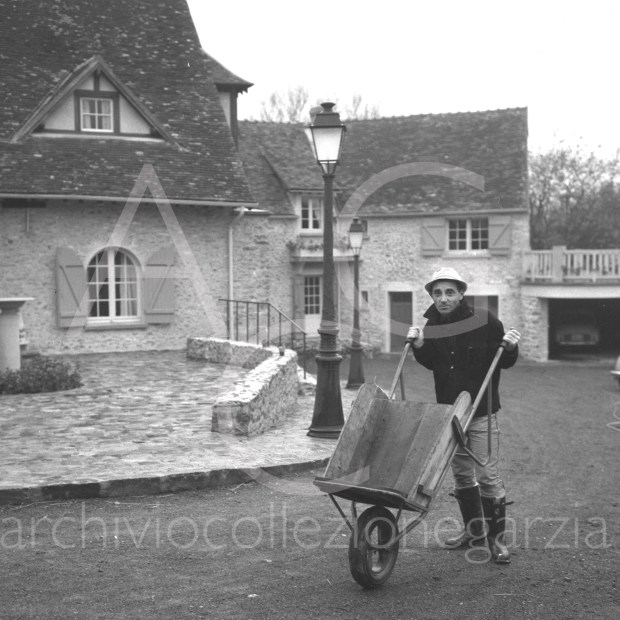
Charles Aznavour, nome d’arte di Chahnourh Varinag Aznavourian (armeno: Շահնուր Վաղինակ Ազնավուրեան; Parigi, 22 maggio 1924), è un cantautore, attore e diplomatico francese di origine armena.

Noto con il soprannome di Charles Aznavoice, è anche detto il “Frank Sinatra d’Europa”. Insignito della Legion d’Onore per il lustro dato alla Francia, è ambasciatore dell’Armenia in Svizzera dal 12 febbraio 2009.

Aznavour canta in sette lingue e ha venduto oltre 300 milioni di dischi nel mondo.

Charles Aznavour (en arménien Շառլ Ազնաւուր), né Shahnourh Varinag Aznavourian (Շահնուր Վաղինակ Ազնաւուրեան) le 22 mai 1924 à Paris, est un auteur-compositeur-interprète, acteur, écrivain et diplomate français. Il obtient en décembre 2008 la nationalité arménienne, lors de sa nomination au poste d’ambassadeur d’Arménie.

Pendant ses soixante-dix ans de carrière, Charles Aznavour a écrit plus de huit cent chansons. Sur disque, il en a enregistré plus de mille deux cents, chantées dans huit langues différentes. Au total, le chanteur totalise aujourd’hui plus de 180 millions de disques vendus à travers le monde

Il réside à Saint-Sulpice (Canton de Vaud), en Suisse, où il est l’ambassadeur de l’Arménie et le représentant permanent de ce pays auprès de l’ONU (auparavant, il était depuis 1995 le représentant permanent de l’Arménie auprès de l’Unesco).

Charles Aznavour (French pronunciation: [ʃaʁl aznavuʁ]; born Shahnour Varinag Aznavourian on 22 May 1924) is a French and Armenian singer, songwriter, actor, public activist and diplomat. Aznavour is known for his unique tenor voice: clear and ringing in its upper reaches, with gravelly and profound low notes. He has written over 800 songs and recorded over 1,200, sung in eight languages and sold more than 180 million records.

He is one of France’s most popular and enduring singers. He has been dubbed France’s Frank Sinatra, while music critic Stephen Holden has described Aznavour as “French pop deity.” He is also arguably the most famous Armenian of his time.In 1998, Aznavour was named Entertainer of the Century by CNN and users of Time Online from around the globe. He was recognized as the century’s outstanding performer, with nearly 18% of the total vote, edging out Elvis Presley and Bob Dylan.

He has sung for presidents, popes and royalty, as well as at humanitarian events. In response to the 1988 Armenian earthquake, he founded the charitable organization Aznavour for Armenia along with his long-time friend impresario Levon Sayan. In 2009, he was appointed ambassador of Armenia to Switzerland, as well as Armenia’s permanent delegate to the United Nations at Geneva. Aznavour is the longest standing “A list” star, still filling major venues all over the world. He started his most recent tour in 2014.

charl-aznavour-w

https://youtu.be/Vank6dS5w7k


#BrigitteBardot

Brigitte Anne Marie Bardot, anche conosciuta come B.B. (“Bri-Bri” da bambina) (Parigi, 28 settembre 1934), è un’attrice, ex modella, cantante, ballerina e attivista francese. Dopo gli esordi come danzatrice classica, diviene prima modella, posando per svariate copertine di riviste di moda, quindi attrice e infine, dal 1962, cantante. Negli anni del successo si consacrò come un’icona sexy. Dal 1962, inoltre, è un’attivista per i diritti degli animali, attività che l’ha assorbita completamente a partire dal suo abbandono del cinema avvenuto nel 1972.

Brigitte Bardot, née Brigitte Anne-Marie Bardot le 28 septembre 1934 à Paris, est une actrice de cinéma, ancien mannequin et chanteuse française, militante de la cause animale, fondatrice et présidente de la fondation qui porte son nom. Figure féminine des années 1950 et 1960, elle est une star mondiale, l’égérie et la muse des plus grands artistes de l’époque. Emblème de l’émancipation des femmes et de la liberté sexuelle, elle passe des rôles de femme enfant à ceux de femme fatale. Elle tourne avec les plus grands réalisateurs, incarnant des personnages à l’élégante légèreté et à la sensualité photogénique. Elle devient rapidement un sex-symbol et acquiert une renommée internationale. Avec à son actif 48 films et plus de 80 chansons en près de vingt et un ans de carrière, Brigitte Bardot, tout aussi connue sous les initiales de « BB », est une des artistes françaises les plus célèbres au monde. Elle met un terme à sa carrière d’actrice en 1973 et se consacre dès lors à la défense des animaux.

Brigitte Anne-Marie Bardot (French: [bʁiʒit baʁˈdo]; born 28 September 1934) is a French actress, singer and fashion model, who later became an animal rights activist. She was one of the best known sex symbols of the 1950s and 1960s and was widely referred to by her initials, B.B.

Bardot was an aspiring ballerina in early life. She started her acting career in 1952 and after appearing in 16 routine comedy films, with limited international release, became world-famous in 1957, with the controversial film And God Created Woman. Bardot caught the attention of French intellectuals. She was the subject of Simone de Beauvoir’s 1959 essay, The Lolita Syndrome, which described Bardot as a “locomotive of women’s history” and built upon existentialist themes to declare her the first and most liberated woman of post-war France.  She later starred in Jean-Luc Godard’s 1963 film Le Mépris. For her role in Louis Malle’s 1965 film Viva Maria! Bardot was nominated for a BAFTA Award for Best Foreign Actress. From 1969 to 1978, Bardot was the official face of Marianne (who had previously been anonymous) to represent the liberty of France.

Bardot retired from the entertainment industry in 1973. During her career in show business, she starred in 47 films, performed in several musical shows and recorded over 60 songs. She was awarded the Legion of Honour in 1985 but refused to receive it. After her retirement, she established herself as an animal rights activist. During the 2000s, she generated controversy by criticizing immigration and Islam in France and has been fined five times for inciting racial hatred


b.b. saint tropez b.5537001

#LaurenceOlivier #CharlieChaplin

Laurence Kerr Olivier, barone Olivier (Dorking, 22 maggio 1907 – Ashurst, 11 luglio 1989) è stato un attore cinematografico, attore teatrale e regista britannico.

Tra i grandi attori del XX secolo, detiene il singolare primato di aver ricevuto prima l’Oscar alla carriera e poi come attore (per la sua interpretazione nell’Amleto, da lui stesso prodotto e diretto). Nel 1979 riceverà un secondo Oscar alla carriera.

L’American Film Institute ha inserito Olivier al quattordicesimo posto tra le più grandi star della storia del cinema.

Laurence Kerr Olivier, Baron Olivier, OM, Kt (/ˈlɒrəns kɜːr ɒˈlɪvi/; 22 May 1907 – 11 July 1989) was an English actor who, along with his contemporaries Ralph Richardson and John Gielgud, dominated the British stage of the mid-20th century. He also worked in films throughout his career, playing more than fifty cinema roles. Late in his career, he had considerable success in television roles.

Sir Charles Spencer Chaplin, noto come Charlie Chaplin (Londra, 16 aprile 1889 – Corsier-sur-Vevey, 25 dicembre 1977), è stato un attore, comico, regista, sceneggiatore, compositore e produttore cinematografico britannico, autore di oltre novanta film e tra i più importanti e influenti cineasti del XX secolo.

Sir Charles SpencerCharlieChaplin, KBE (16 April 1889 – 25 December 1977) was an English comic actor, filmmaker, and composer who rose to fame in the silent era. Chaplin became a worldwide icon through his screen persona “the Tramp” and is considered one of the most important figures in the history of the film industry. His career spanned more than 75 years, from childhood in the Victorian era until a year before his death in 1977, and encompassed both adulation and controversy.

ChaplinOliver Valer b4457 W


https://youtu.be/DE2R7s5SCSQ


#WilliamHolden

William Holden, nome d’arte di William Franklin Beedle Junior (O’Fallon, 17 aprile 1918 – Santa Monica, 12 novembre 1981), è stato un attore statunitense.

L’American Film Institute ha inserito Holden al venticinquesimo posto tra le più grandi star della storia del cinema.


Nato ad O’Fallon, nell’Illinois, fu registrato all’anagrafe come William Franklin Beedle Junior; di famiglia benestante (il padre era un chimico industriale e la madre un’insegnante), all’età di tre anni William si trasferì con i genitori a Pasadena (California). Durante il periodo di studio allo Junior College di Pasadena, partecipò a rappresentazioni per le radio locali e recitò con la compagnia teatrale Pasadena Playhouse, facendosi notare da un talent scout della Paramount Pictures, che nel 1937 lo portò a Hollywood. L’esordio nel cinema avvenne l’anno successivo nel film Prison Farm (1938). Il primo ruolo da protagonista arrivò nel 1939 con il film Passione – Il ragazzo d’oro, accanto a Barbara Stanwyck[2] e Adolphe Menjou, in cui interpretò il ruolo di un pugile diviso fra la boxe e il desiderio di fare il violinista. Dopo che la Columbia Pictures ebbe rilevato metà del contratto, Holden alternò interpretazioni per le due compagnie in film di scarso valore prima di arruolarsi nei paracadutisti durante la Seconda guerra mondiale.

Tornato dalla guerra, dopo alcune commedie di modesto successo, la sua carriera ebbe una svolta decisiva quando Billy Wilder lo chiamò ad interpretare il ruolo di Joe Gillis, lo scrittore-gigolò di belle speranze in Viale del tramonto (1950) accanto a Gloria Swanson. Questo ruolo di “rottura” con il passato determinò la definitiva consacrazione al successo di Holden, che apparve in seguito in una serie di film nei quali seppe unire al bell’aspetto la propensione ai ruoli di eroe cinico e distaccato: la sua strepitosa interpretazione del prigioniero di guerra Sefton in Stalag 17 – L’inferno dei vivi gli fece vincere un Premio Oscar quale migliore attore protagonista.

In seguito fu il tormentato vagabondo Hal Carter in Picnic[3] (1955) e lo sfortunato prigioniero americano di Il ponte sul fiume Kwai (1957). Oltre a questi interpretò con altrettanto successo una serie di ruoli più solari in commedie brillanti, come il giornalista in Nata ieri (1950) o il biondo playboy, fratello minore di Humphrey Bogart, nel celebre Sabrina (1954). Fu ottimo interprete romantico nel ruolo di un corrispondente di guerra in L’amore è una cosa meravigliosa (1955) accanto a Jennifer Jones, una delle pellicole sentimentali più celebri di tutti i tempi ed inoltre nel ruolo dell’architetto americano Robert Lomax ne Il mondo di Suzie Wong, accanto alla esordiente Nancy Kwan. Holden inoltre partecipò a molti altri film di livello più basso, obbligato dagli Studios che mantennero il contratto iniziale per costringerlo a lavorare.

Holden fu sposato con l’attrice Ardis Ankerson, in arte Brenda Marshall, dal 1941 al 1971, anno del divorzio. La coppia ebbe due figli, Peter (1944) e Scott (1946-2005); Holden adottò inoltre Virginia, la figlia che Brenda aveva avuto dal primo matrimonio. Nel 1954, durante le riprese di Sabrina, Holden e la co-protagonista Audrey Hepburn ebbero una relazione. La Hepburn ruppe il rapporto quando Holden le rivelò che aveva subìto una vasectomia[senza fonte]. Durante un viaggio-safari a metà degli anni cinquanta, Holden si innamorò dell’Africa e negli anni successivi si occupò a lungo della salvaguardia della fauna locale. Iniziò a trascorrere molto del suo tempo come proprietario e gestore di una riserva in Kenya, il Mount Kenya Safari Club, fondato nel 1959 a Nanyuki.

Diventato un abile uomo d’affari, alla fine degli anni cinquanta, per sfuggire al fisco statunitense, Holden si stabilì in Svizzera con la famiglia, ma continuò a viaggiare per ragioni professionali, dividendosi tra altre due residenze in Kenya e a Hong Kong. All’inizio degli anni sessanta il suo matrimonio entrò in crisi e Holden iniziò una relazione con l’attrice francese Capucine, durata due anni. Anche dopo la separazione i due rimasero amici. Negli anni settanta condivise la passione per l’Africa con l’attrice Stefanie Powers, alla quale fu sentimentalmente legato. La Powers è diventata poi presidente della William Holden Wildlife Foundation, tuttora attiva nella battaglia in difesa degli animali in via di estinzione e nel finanziamento di corsi di educazione ecologica per 10.000 studenti ogni anno.

  • William Holden (April 17, 1918 – November 12, 1981) was an American actor who was one of the biggest box office draws of the 1950s through the 1970s. He won the Academy Award for Best Actor in 1953 for his role in Stalag 17, and a Primetime Emmy Award for Outstanding Lead Actor for his role in the 1973 television film The Blue Knight.

Holden starred in some of Hollywood’s most popular and critically acclaimed films, including such blockbusters as Sunset Boulevard, Sabrina, The Bridge on the River Kwai, The Wild Bunch, Picnic, The Towering Inferno, and Network. He was named one of the “Top 10 Stars of the Year” six times (1954–1958, 1961), and appeared as 25th on the American Film Institute’s list of 25 greatest male stars of Classic Hollywood Cinema.

Holden was best man at the marriage of his friend Ronald Reagan to Nancy Davis in 1952; however, he never involved himself in politics. While in Italy in 1966, Holden killed another driver in a drunk driving incident. He received an eight-month suspended sentence for vehicular manslaughter.

Holden maintained a home in Switzerland and also spent much of his time working for wildlife conservation as a managing partner in an animal preserve in Africa. His Mount Kenya Safari Club in Nanyuki (founded 1959) became a mecca for the international jet set On a trip to Africa, he fell in love with the wildlife and became increasingly concerned with the animal species that were beginning to decrease in population. With the help of his partners, he created the Mount Kenya Game Ranch and inspired the creation of the William Holden Wildlife Foundation.The Mount Kenya Game Ranch works to assist in Kenya with the wildlife education of its youth.

w.holden+moglie b.4320 Ω 003


https://youtu.be/4TXdeANRpEY

#KimNovak

  • Kim Novak, nome d’arte di Marylin Pauline Novak (Chicago, 13 febbraio 1933), è un’attrice statunitense.  Inizia la sua carriera come modella e, nel 1951, viene scelta per la campagna pubblicitaria di una marca di frigoriferi.

Trasferitasi a Los Angeles, viene scelta per una particina senza battute in La linea francese (1954), accanto a Jane Russell e Gilbert Roland; il film non riscuote un grande successo e il nome della Novak non compare neppure nei titoli di coda, ma i produttori hollywoodiani la notano ugualmente; dopo il rifiuto di Rita Hayworth, è chiamata a sostituirla in Criminale di turno (1954) di Richard Quine, accanto a Fred MacMurray, film in cui la Novak già dimostra la sua abilità nell’impersonare una scaltra seduttrice. È l’inizio della sua brillante carriera.

Durante tutti gli anni cinquanta, i produttori la contrappongono a Marilyn Monroe, di cui ha le forme, e a Grace Kelly, di cui possiede la grazia. Viene diretta da Otto Preminger nel dramma sociale L’uomo dal braccio d’oro (1955), a fianco di Frank Sinatra, mentre l’anno successivo è protagonista accanto a William Holden nel romantico Picnic (1956). Interpreta principalmente commedie, come i successi Una strega in paradiso (1958), in cui forma un affiatato terzetto con James Stewart e Jack Lemmon, e Pal Joey (1957), in cui dà prova di un notevole talento, tanto da non temere la concorrenza della co-protagonista Rita Hayworth.

La Novak ha 25 anni quando entra nel gotha del cinema grazie al capolavoro La donna che visse due volte (Vertigo) (1958) di Alfred Hitchcock, in cui interpreta efficacemente il doppio ruolo di Madeleine/Judy, in sostituzione di Vera Miles, che essendo incinta aveva rifiutato il film (ma che avrà poi un ruolo in Psyco).

  • Marilyn Pauline Novak, professionally known as Kim Novak (born February 13, 1933), is a retired American film and television actress.

She began her career in 1954 after signing with Columbia Pictures. There, she became a successful actress, starring in a string of movies, among them the critically acclaimed Picnic (1955). She later starred in such popular successes as The Man with the Golden Arm (1955) and Pal Joey (1957). However, she is perhaps best known today for her “dual role” as both Judy Barton and Madeleine Elster in Alfred Hitchcock’s classic thriller Vertigo (1958). Novak was popular in box office popularity polls, and she starred opposite several top leading men of the era, including James Stewart, William Holden, Frank Sinatra, Tyrone Power, and Kirk Douglas.

Although still young, her career declined in the early 1960s, and after several years in a series of lackluster films, she withdrew from acting in 1966. She has only sporadically returned since. She later returned to the screen in The Mirror Crack’d (1980), and had a regular role on the prime time series Falcon Crest (1986–87). After a disappointing experience during the filming of Liebestraum (1991), she has permanently retired from acting, stating she has no desire to return.

k. novak b.3960001